Department of Psychology, Boston University, Boston, MA 02215, USA.
Cogn Affect Behav Neurosci. 2011 Mar;11(1):1-12. doi: 10.3758/s13415-010-0006-x.
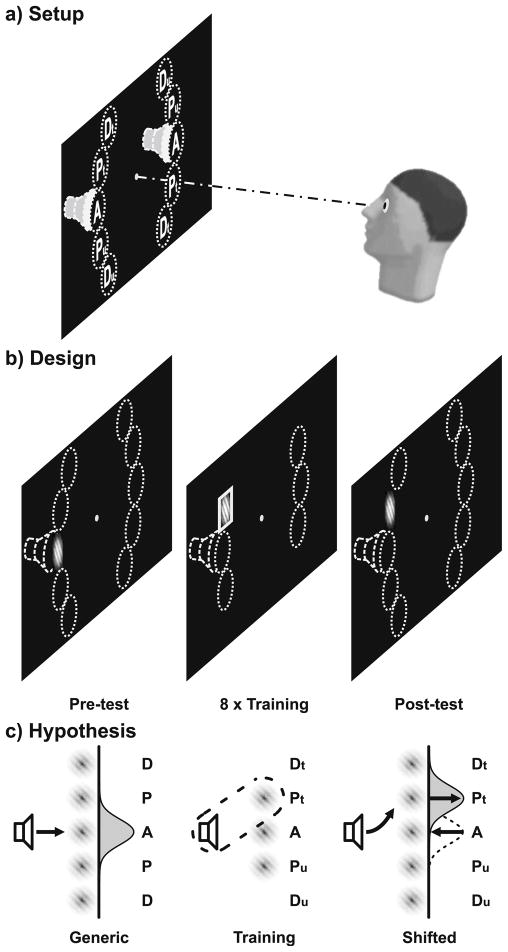
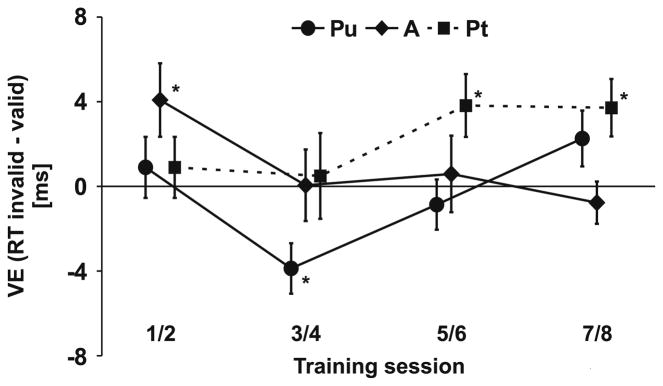
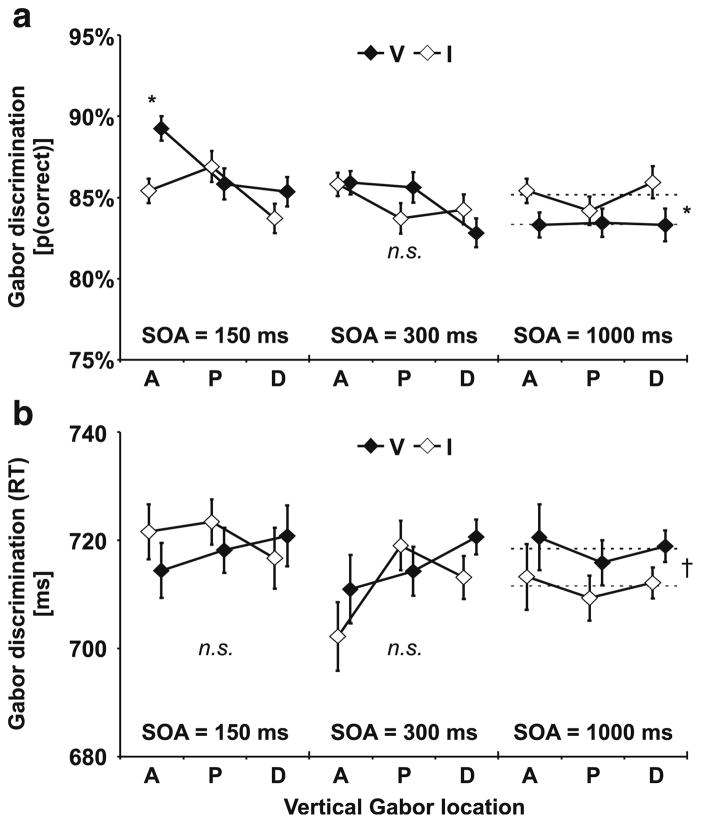
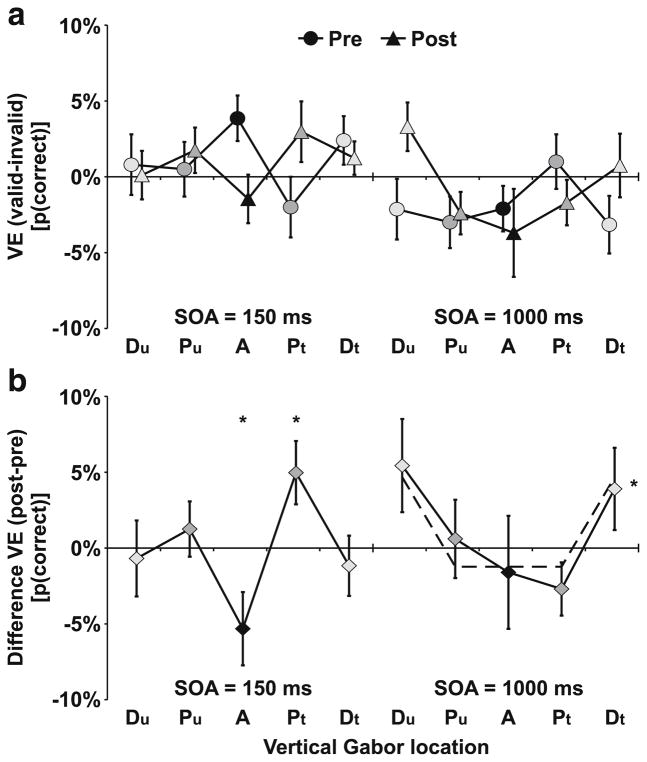
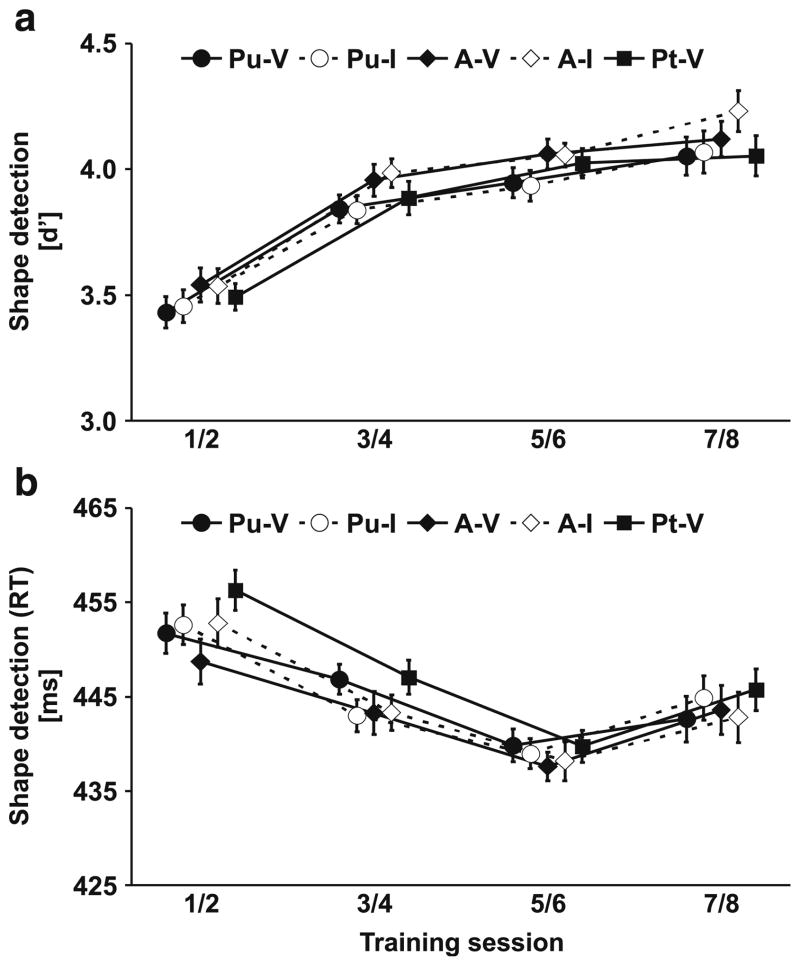
Previous research has shown that sounds facilitate perception of visual patterns appearing immediately after the sound but impair perception of patterns appearing after some delay. Here we examined the spatial gradient of the fast crossmodal facilitation effect and the slow inhibition effect in order to test whether they reflect separate mechanisms. We found that crossmodal facilitation is only observed at visual field locations overlapping with the sound, whereas crossmodal inhibition affects the whole hemifield. Furthermore, we tested whether multisensory perceptual learning with misaligned audio-visual stimuli reshapes crossmodal facilitation and inhibition. We found that training shifts crossmodal facilitation towards the trained location without changing its range. By contrast, training narrows the range of inhibition without shifting its position. Our results suggest that crossmodal facilitation and inhibition reflect separate mechanisms that can both be reshaped by multisensory experience even in adult humans. Multisensory links seem to be more plastic than previously thought.
先前的研究表明,声音可以促进在声音之后立即出现的视觉模式的感知,但会损害在某些延迟后出现的模式的感知。在这里,我们研究了快速跨模态促进效应和缓慢抑制效应的空间梯度,以检验它们是否反映了不同的机制。我们发现,跨模态促进仅在与声音重叠的视野位置观察到,而跨模态抑制则影响整个半视野。此外,我们测试了使用非对齐的视听刺激进行多感觉知觉学习是否会改变跨模态促进和抑制。我们发现,训练将跨模态促进转移到训练位置而不改变其范围。相比之下,训练缩小了抑制的范围,而不改变其位置。我们的结果表明,跨模态促进和抑制反映了不同的机制,即使在成年人类中,多感觉经验也可以重塑它们。多感觉联系似乎比以前认为的更具可塑性。