Division of Plant & Soil Sciences, West Virginia University, Morgantown, WV 26506-6108, USA.
J Exp Bot. 2011 Mar;62(6):2079-91. doi: 10.1093/jxb/erq400. Epub 2011 Jan 31.
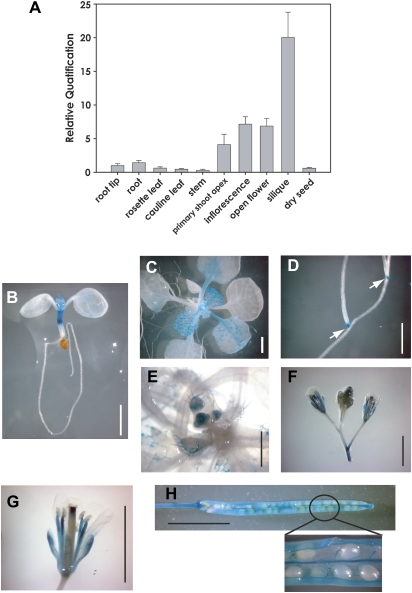
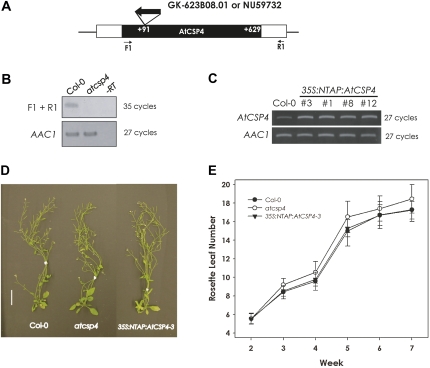
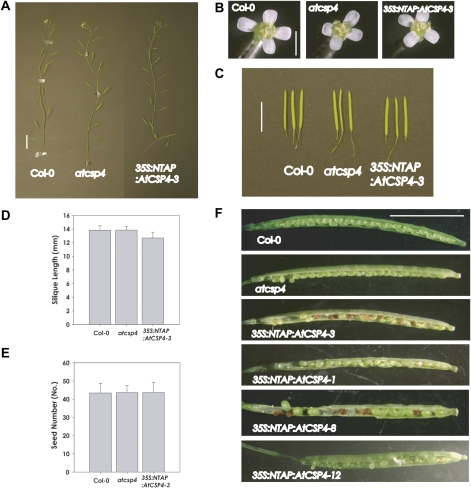
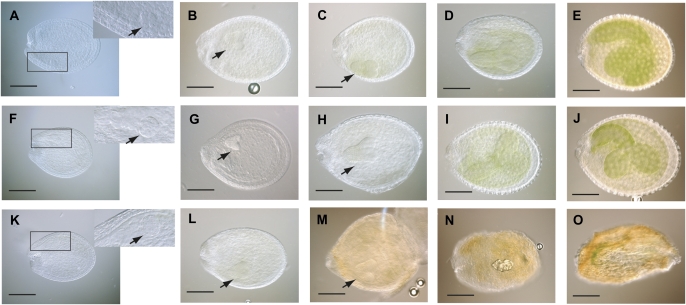
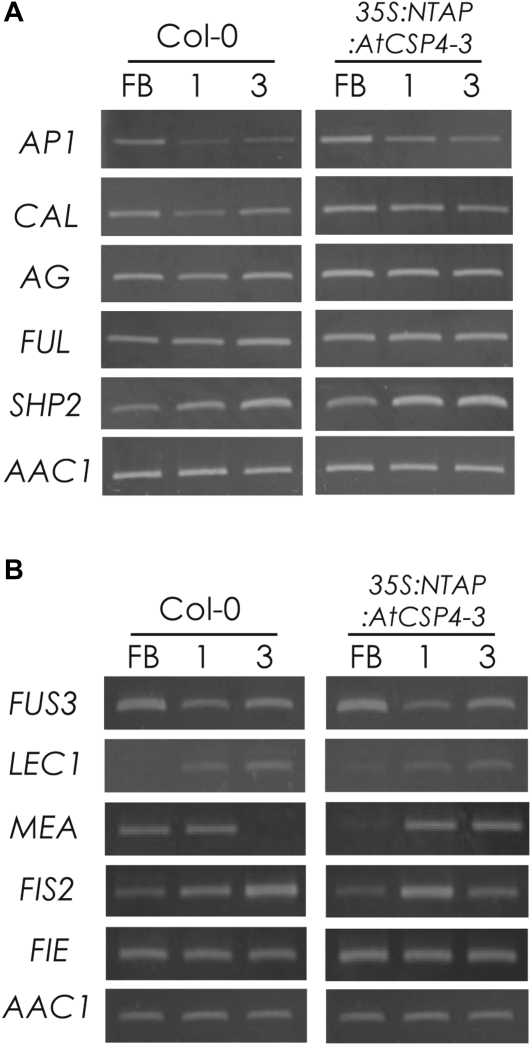
Eukaryotic cold shock domain proteins are nucleic acid-binding proteins that are involved in transcription, translation via RNA chaperone activity, RNA editing, and DNA repair during tissue developmental processes and stress responses. Cold shock domain proteins have been functionally implicated in important developmental transitions, including embryogenesis, in both animals and plants. Arabidopsis thaliana cold shock domain protein 4 (AtCSP4) contains a well conserved cold shock domain (CSD) and glycine-rich motifs interspersed by two retroviral-like CCHC zinc fingers. AtCSP4 is expressed in all tissues but accumulates in reproductive tissues and those undergoing cell divisions. Overexpression of AtCSP4 reduces silique length and induces embryo lethality. Interestingly, a T-DNA insertion atcsp4 mutant does not exhibit any morphological abnormalities, suggesting that the related AtCSP2 gene is functionally redundant with AtCSP4. During silique development, AtCSP4 overexpression induced early browning and shrunken seed formation beginning with the late heart embryo stage. A 50% segregation ratio of the defective seed phenotype was consistent with the phenotype of endosperm development gene mutants. Transcripts of FUS3 and LEC1 genes, which regulate early embryo formation, were not altered in the AtCSP4 overexpression lines. On the other hand, MEA and FIS2 transcripts, which are involved in endosperm development, were affected by AtCSP4 overexpression. Additionally, AtCSP4 overexpression resulted in up-regulation of several MADS-box genes (AP1, CAL, AG, and SHP2) during early stages of silique development. Collectively, these data suggest that AtCSP4 plays an important role during the late stages of silique development by affecting the expression of several development-related genes.
真核生物冷休克域蛋白是一类与核酸结合的蛋白,在组织发育过程和应激反应中通过 RNA 伴侣活性、翻译、RNA 编辑和 DNA 修复参与转录。冷休克域蛋白在动物和植物的重要发育转变中具有功能作用,包括胚胎发生。拟南芥冷休克域蛋白 4(AtCSP4)含有一个保守的冷休克域(CSD)和富含甘氨酸的基序,其间散布着两个逆转录病毒样 CCHC 锌指。AtCSP4 在所有组织中表达,但在生殖组织和正在进行细胞分裂的组织中积累。AtCSP4 的过表达会缩短蒴果的长度并导致胚胎致死。有趣的是,atcsp4 突变体的 T-DNA 插入并没有表现出任何形态异常,这表明相关的 AtCSP2 基因在功能上与 AtCSP4 冗余。在蒴果发育过程中,AtCSP4 的过表达诱导早期褐变和皱缩种子的形成,从晚期心形胚胎阶段开始。缺陷种子表型的 50%分离比与胚乳发育基因突变体的表型一致。调节早期胚胎形成的 FUS3 和 LEC1 基因的转录物在 AtCSP4 的过表达系中没有改变。另一方面,参与胚乳发育的 MEA 和 FIS2 转录物受到 AtCSP4 过表达的影响。此外,AtCSP4 的过表达导致在蒴果发育的早期阶段几个 MADS 框基因(AP1、CAL、AG 和 SHP2)的上调。总之,这些数据表明 AtCSP4 在蒴果发育的晚期阶段通过影响几个与发育相关基因的表达发挥重要作用。