Division of Cell Biology and Biophysics, School of Biological Sciences, University of Missouri, Kansas City, Missouri, United States of America.
PLoS One. 2011 Jan 25;6(1):e16120. doi: 10.1371/journal.pone.0016120.
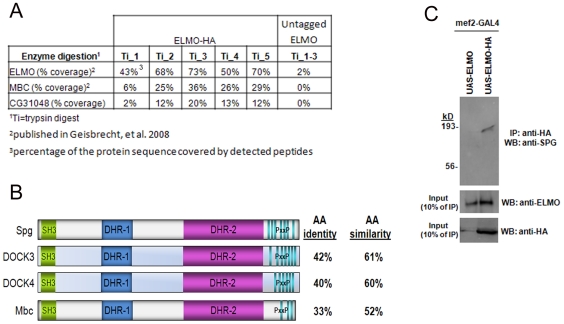
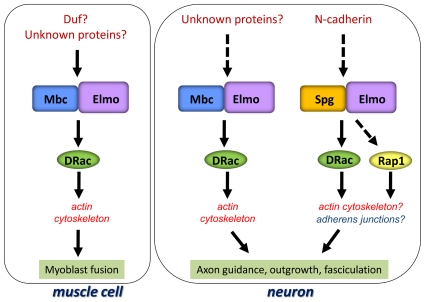
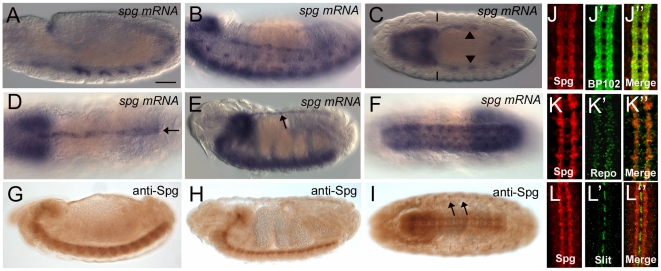
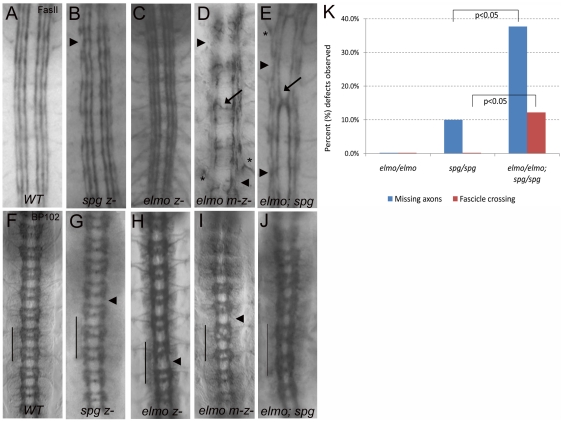
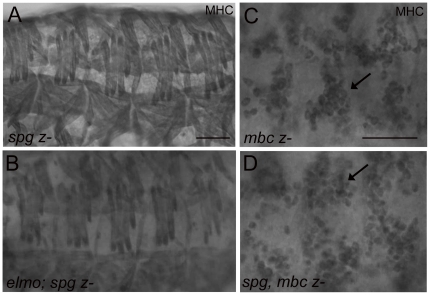
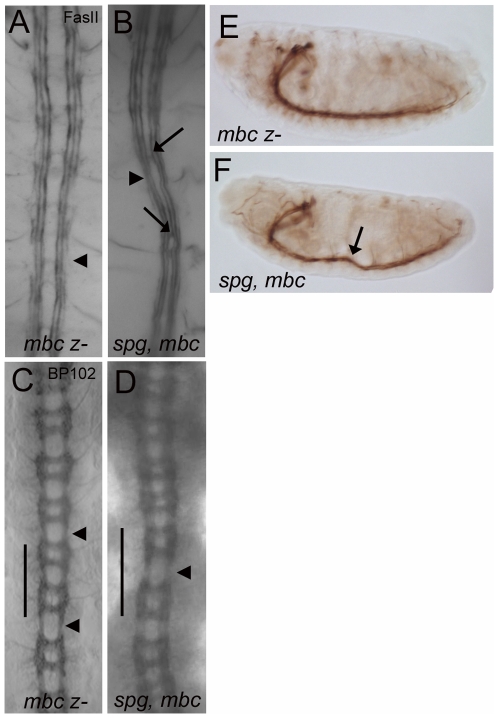
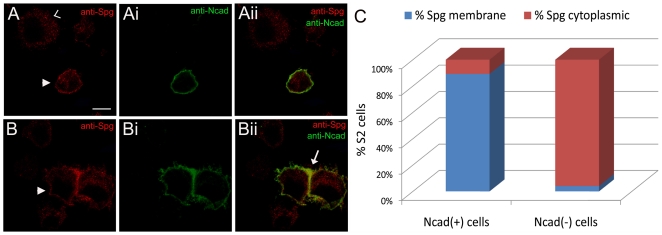
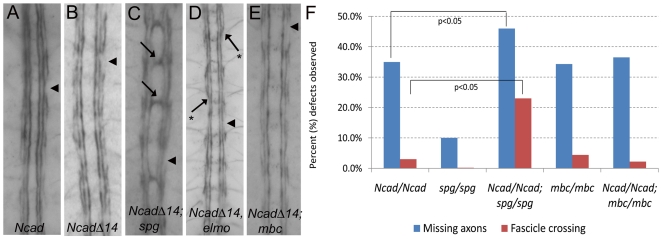
Cell morphogenesis, which requires rearrangement of the actin cytoskeleton, is essential to coordinate the development of tissues such as the musculature and nervous system during normal embryonic development. One class of signaling proteins that regulate actin cytoskeletal rearrangement is the evolutionarily conserved CDM (C. elegansCed-5, human DOCK180, DrosophilaMyoblast city, or Mbc) family of proteins, which function as unconventional guanine nucleotide exchange factors for the small GTPase Rac. This CDM-Rac protein complex is sufficient for Rac activation, but is enhanced upon the association of CDM proteins with the ELMO/Ced-12 family of proteins. We identified and characterized the role of Drosophila Sponge (Spg), the vertebrate DOCK3/DOCK4 counterpart as an ELMO-interacting protein. Our analysis shows Spg mRNA and protein is expressed in the visceral musculature and developing nervous system, suggesting a role for Spg in later embryogenesis. As maternal null mutants of spg die early in development, we utilized genetic interaction analysis to uncover the role of Spg in central nervous system (CNS) development. Consistent with its role in ELMO-dependent pathways, we found genetic interactions with spg and elmo mutants exhibited aberrant axonal defects. In addition, our data suggests Ncad may be responsible for recruiting Spg to the membrane, possibly in CNS development. Our findings not only characterize the role of a new DOCK family member, but help to further understand the role of signaling downstream of N-cadherin in neuronal development.
细胞形态发生,需要肌动蛋白细胞骨架的重排,对于协调肌肉和神经系统等组织在正常胚胎发育中的发育至关重要。一类调节肌动蛋白细胞骨架重排的信号蛋白是进化上保守的 CDM(秀丽隐杆线虫 Ced-5、人类 DOCK180、果蝇 Myoblast city 或 Mbc)家族蛋白,它们作为小 GTPase Rac 的非典型鸟嘌呤核苷酸交换因子发挥作用。这个 CDM-Rac 蛋白复合物足以激活 Rac,但在 CDM 蛋白与 ELMO/Ced-12 家族蛋白结合时会增强。我们鉴定并表征了果蝇 Sponge(Spg)的作用,它是脊椎动物 DOCK3/DOCK4 的对应物,是 ELMO 相互作用蛋白。我们的分析表明 Spg mRNA 和蛋白在内脏肌肉和发育中的神经系统中表达,表明 Spg 在后期胚胎发生中发挥作用。由于 spg 的母性 null 突变体在发育早期死亡,我们利用遗传相互作用分析来揭示 Spg 在中枢神经系统(CNS)发育中的作用。与它在 ELMO 依赖途径中的作用一致,我们发现与 spg 和 elmo 突变体的遗传相互作用表现出异常的轴突缺陷。此外,我们的数据表明 Ncad 可能负责将 Spg 招募到膜上,可能在 CNS 发育中。我们的发现不仅描述了一个新的 DOCK 家族成员的作用,还有助于进一步了解 N-钙粘蛋白下游信号在神经元发育中的作用。