International Laboratory for Tropical Agricultural Biotechnology, Donald Danforth Plant Science Center, St Louis, Missouri, United States of America.
PLoS One. 2011 Jan 25;6(1):e16256. doi: 10.1371/journal.pone.0016256.
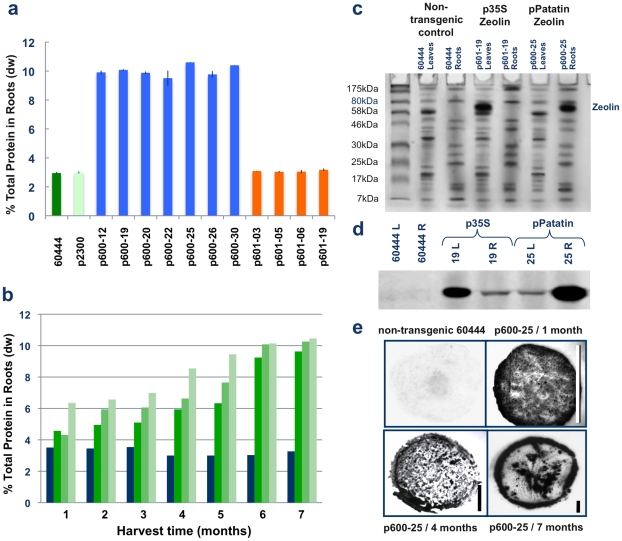
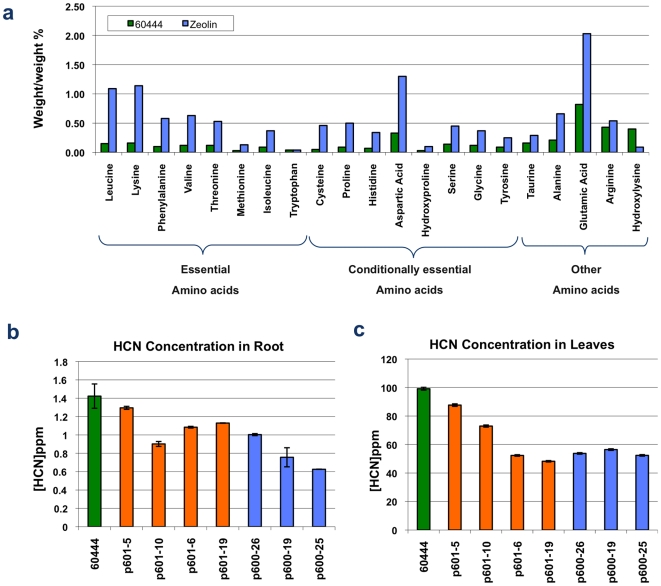
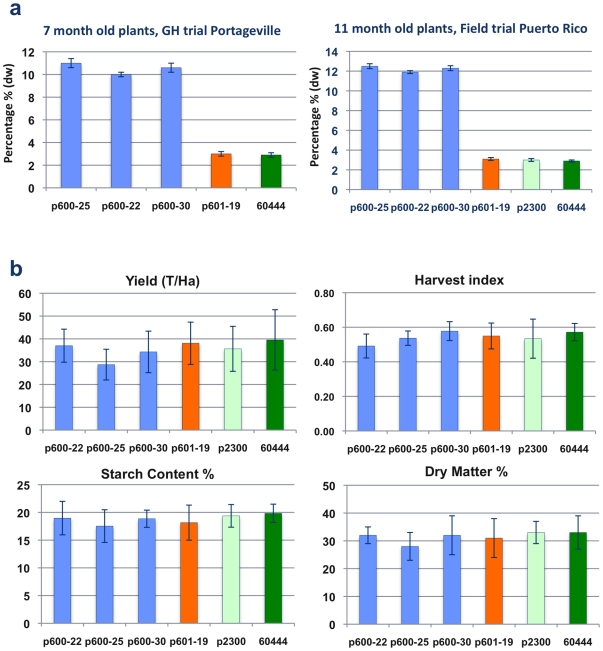
Although calorie dense, the starchy, tuberous roots of cassava provide the lowest sources of dietary protein within the major staple food crops (Manihot esculenta Crantz). (Montagnac JA, Davis CR, Tanumihardjo SA. (2009) Compr Rev Food Sci Food Saf 8:181-194). Cassava was genetically modified to express zeolin, a nutritionally balanced storage protein under control of the patatin promoter. Transgenic plants accumulated zeolin within de novo protein bodies localized within the root storage tissues, resulting in total protein levels of 12.5% dry weight within this tissue, a fourfold increase compared to non-transgenic controls. No significant differences were seen for morphological or agronomic characteristics of transgenic and wild type plants in the greenhouse and field trials, but relative to controls, levels of cyanogenic compounds were reduced by up to 55% in both leaf and root tissues of transgenic plants. Data described here represent a proof of concept towards the potential transformation of cassava from a starchy staple, devoid of storage protein, to one capable of supplying inexpensive, plant-based proteins for food, feed and industrial applications.
虽然热量密集,但木薯的淀粉状块根是主要主食作物中提供最低膳食蛋白质的来源(Manihot esculenta Crantz)。(Montagnac JA、Davis CR、Tanumihardjo SA.(2009)Compr Rev Food Sci Food Saf 8:181-194)。木薯经过基因改造,表达了 zeolin,这是一种受 patatin 启动子控制的营养均衡的储存蛋白。转基因植物在根储存组织内的新形成的蛋白质体中积累了 zeolin,导致该组织的总蛋白质水平达到干重的 12.5%,比非转基因对照增加了四倍。在温室和田间试验中,转基因和野生型植物的形态或农艺特征没有明显差异,但与对照相比,转基因植物的叶片和根组织中的氰化物含量降低了多达 55%。这里描述的数据代表了将木薯从缺乏储存蛋白的淀粉主食转化为能够为食品、饲料和工业应用提供廉价植物蛋白的概念验证。