Laboratory of Experimental Virology, Department of Medical Microbiology, Center for Infection and Immunity Amsterdam, Academic Medical Center of the University of Amsterdam, Amsterdam, The Netherlands.
PLoS One. 2011 Jan 24;6(1):e16118. doi: 10.1371/journal.pone.0016118.
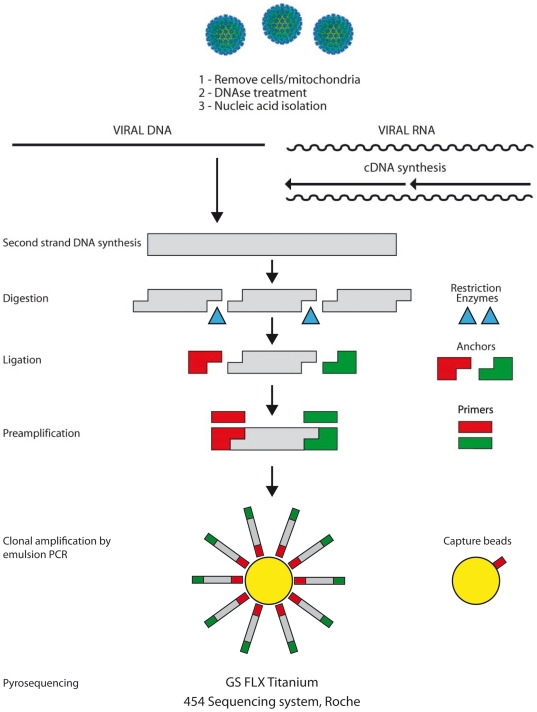
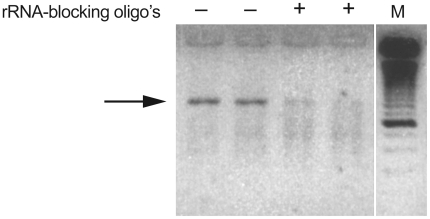
In 5-40% of respiratory infections in children, the diagnostics remain negative, suggesting that the patients might be infected with a yet unknown pathogen. Virus discovery cDNA-AFLP (VIDISCA) is a virus discovery method based on recognition of restriction enzyme cleavage sites, ligation of adaptors and subsequent amplification by PCR. However, direct discovery of unknown pathogens in nasopharyngeal swabs is difficult due to the high concentration of ribosomal RNA (rRNA) that acts as competitor. In the current study we optimized VIDISCA by adjusting the reverse transcription enzymes and decreasing rRNA amplification in the reverse transcription, using hexamer oligonucleotides that do not anneal to rRNA. Residual cDNA synthesis on rRNA templates was further reduced with oligonucleotides that anneal to rRNA but can not be extended due to 3'-dideoxy-C6-modification. With these modifications >90% reduction of rRNA amplification was established. Further improvement of the VIDISCA sensitivity was obtained by high throughput sequencing (VIDISCA-454). Eighteen nasopharyngeal swabs were analysed, all containing known respiratory viruses. We could identify the proper virus in the majority of samples tested (11/18). The median load in the VIDISCA-454 positive samples was 7.2 E5 viral genome copies/ml (ranging from 1.4 E3-7.7 E6). Our results show that optimization of VIDISCA and subsequent high-throughput-sequencing enhances sensitivity drastically and provides the opportunity to perform virus discovery directly in patient material.
在 5-40%的儿童呼吸道感染中,诊断结果仍然为阴性,这表明患者可能感染了一种尚未被发现的病原体。病毒发现 cDNA-AFLP(VIDISCA)是一种基于识别限制酶切割位点、连接接头和随后通过 PCR 扩增的病毒发现方法。然而,由于核糖体 RNA(rRNA)的浓度很高,作为竞争物,直接在鼻咽拭子中发现未知病原体是很困难的。在本研究中,我们通过调整反转录酶和减少反转录中的 rRNA 扩增,使用不与 rRNA 退火的六聚体寡核苷酸来优化 VIDISCA。用与 rRNA 退火但由于 3'-二脱氧-C6 修饰而不能延伸的寡核苷酸进一步减少 rRNA 模板上的残余 cDNA 合成。通过这些修饰,建立了 rRNA 扩增减少 >90%。通过高通量测序(VIDISCA-454)进一步提高了 VIDISCA 的灵敏度。分析了 18 个鼻咽拭子,均含有已知的呼吸道病毒。我们可以在大多数测试样本(11/18)中识别出正确的病毒。VIDISCA-454 阳性样本中的中位数负荷为 7.2 E5 病毒基因组拷贝/ml(范围为 1.4 E3-7.7 E6)。我们的结果表明,VIDISCA 的优化和随后的高通量测序大大提高了灵敏度,并提供了直接在患者标本中进行病毒发现的机会。