Sun Joseph C, Lopez-Verges Sandra, Kim Charles C, DeRisi Joseph L, Lanier Lewis L
Memorial Sloan-Kettering Cancer Center, New York, NY 10065, USA.
J Immunol. 2011 Feb 15;186(4):1891-7. doi: 10.4049/jimmunol.1003035.
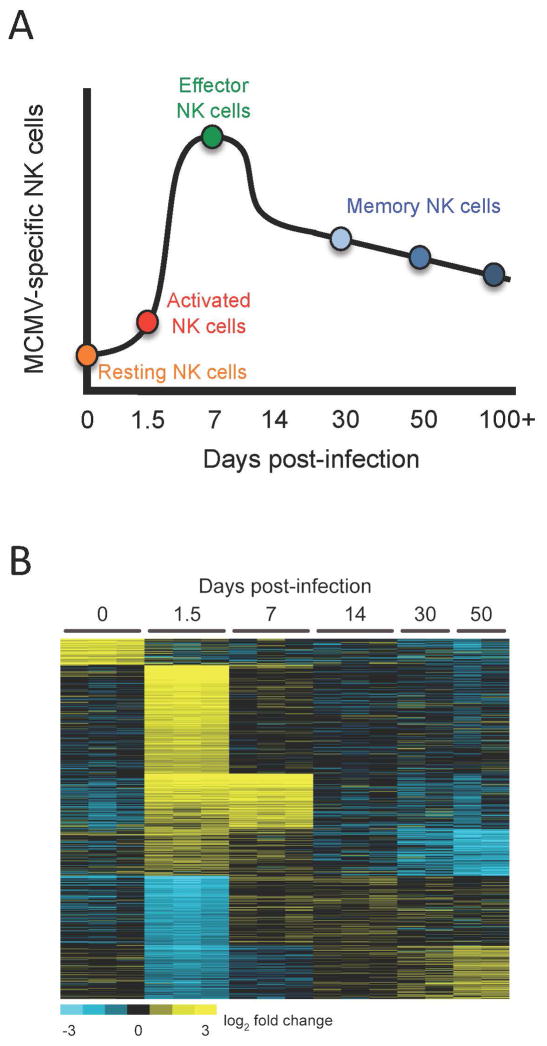
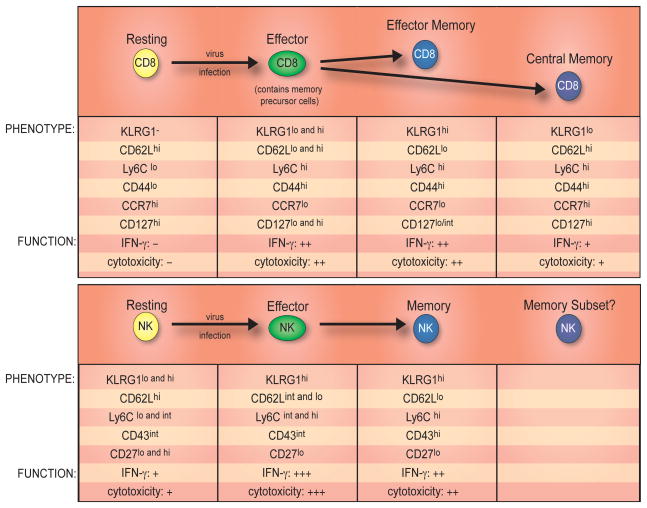
Immunological memory is a hallmark of the adaptive immune system. However, the ability to remember and respond more robustly against a second encounter with the same pathogen has been described in organisms lacking T and B cells. Recently, NK cells have been shown to mediate Ag-specific recall responses in several different model systems. Although NK cells do not rearrange the genes encoding their activating receptors, NK cells experience a selective education process during development, undergo a clonal-like expansion during virus infection, generate long-lived progeny (i.e., memory cells), and mediate more efficacious secondary responses against previously encountered pathogens--all characteristics previously ascribed only to T and B cells in mammals. This review describes past findings leading up to these new discoveries, summarizes the evidence for and characteristics of NK cell memory, and discusses the attempts and future challenges to identify these long-lived memory NK cell populations in humans.
免疫记忆是适应性免疫系统的一个标志。然而,在缺乏T细胞和B细胞的生物体中,也已发现存在对再次遇到的相同病原体具有更强记忆和反应的能力。最近,自然杀伤(NK)细胞已被证明在几种不同的模型系统中介导抗原特异性回忆反应。尽管NK细胞不会重排编码其激活受体的基因,但NK细胞在发育过程中会经历一个选择性的“教育”过程,在病毒感染期间会进行克隆样扩增,产生长寿后代(即记忆细胞),并介导针对先前遇到的病原体的更有效的二次反应——所有这些特征以前仅归因于哺乳动物中的T细胞和B细胞。本综述描述了促成这些新发现的过往研究结果,总结了NK细胞记忆的证据和特征,并讨论了在人类中识别这些长寿记忆NK细胞群体的尝试及未来挑战。