Experimental Studies, National Heart and Lung Institute, Imperial College London, London, United Kingdom.
Am J Respir Cell Mol Biol. 2011 Oct;45(4):746-52. doi: 10.1165/rcmb.2010-0304OC. Epub 2011 Feb 4.
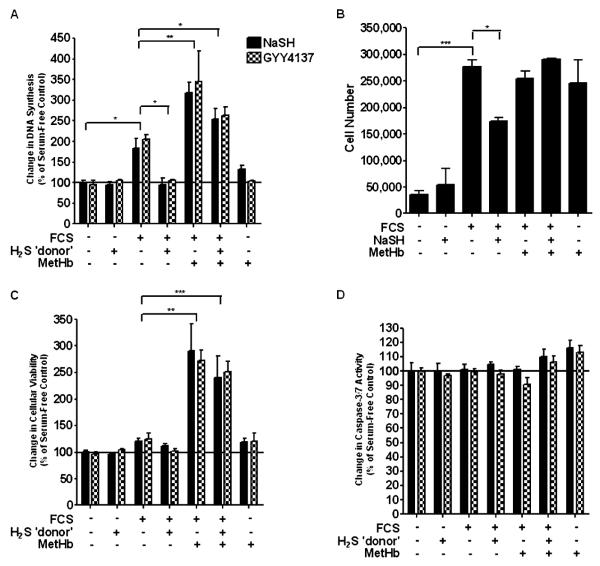
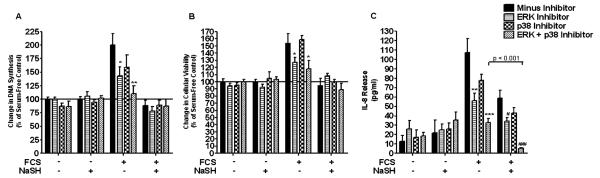
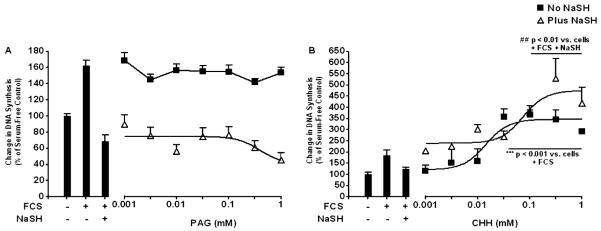
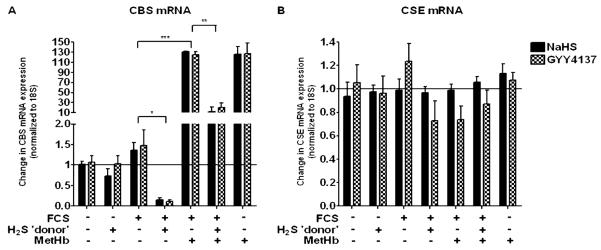
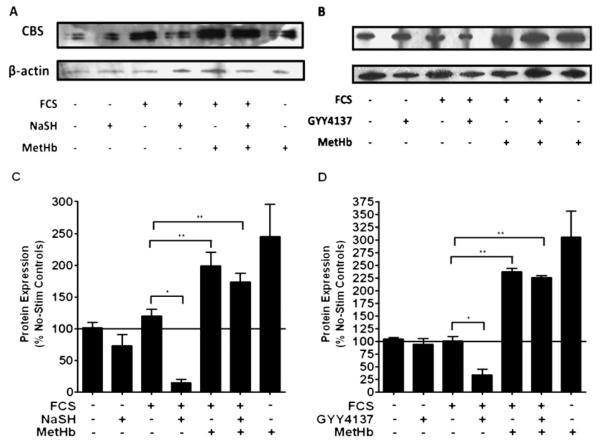
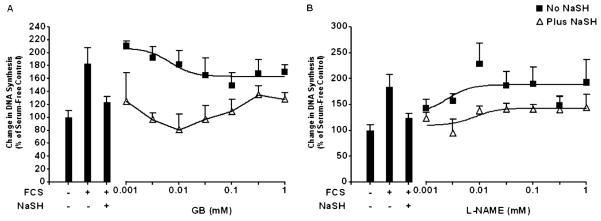
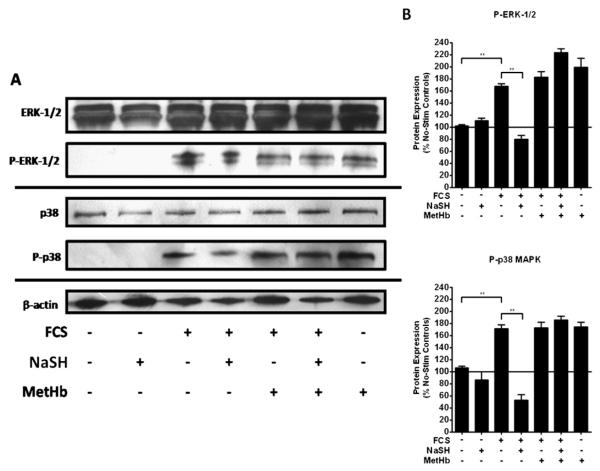
Hydrogen sulfide (H(2)S) is synthesized intracellularly by the enzymes cystathionine-γ-lyase and cystathionine-β-synthase (CBS), and is proposed to be a gasotransmitter with effects in modulating inflammation and cellular proliferation. We determined a role of H(2)S in airway smooth muscle (ASM) function. ASM were removed from resection or transplant donor lungs and were placed in culture. Proliferation of ASM was induced by FCS and the proinflammatory cytokine, IL-1β. Proliferation of ASM and IL-8 release were measured by bromodeoxyuridine incorporation and ELISA, respectively. Exposure of ASM to H(2)S "donors" inhibited this proliferation and IL-8 release. Methemoglobin, a scavenger of endogenous H(2)S, increased DNA synthesis induced by FCS and IL-1β. In addition, methemoglobin increased IL-8 release induced by FCS, but not by IL-1β, indicating a role for endogenous H(2)S in these systems. Inhibition of CBS, but not cystathionine-γ-lyase, reversed the inhibitory effect of H(2)S on proliferation and IL-8 release, indicating that this is dependent on CBS. CBS mRNA and protein expression were inhibited by H(2)S donors, and were increased by methemoglobin, indicating that CBS is the main enzyme responsible for endogenous H(2)S production. Finally, we found that exogenous H(2)S inhibited the phosphorylation of extracellular signal-regulated kinase-1/2 and p38, which could represent a mechanism by which H(2)S inhibited cellular proliferation and IL-8 release. In summary, H(2)S production provides a novel mechanism for regulation of ASM proliferation and IL-8 release. Therefore, regulation of H(2)S may represent a novel approach to controlling ASM proliferation and cytokine release that is found in patients with asthma.
硫化氢 (H(2)S) 是由胱硫醚-γ-裂解酶和胱硫醚-β-合酶 (CBS) 在内细胞合成的,被提出是一种具有调节炎症和细胞增殖作用的气体递质。我们确定了 H(2)S 在气道平滑肌 (ASM) 功能中的作用。ASM 从切除或移植供体肺中取出,并置于培养中。FCS 和促炎细胞因子 IL-1β 诱导 ASM 增殖。通过溴脱氧尿苷掺入和 ELISA 分别测量 ASM 的增殖和 IL-8 释放。ASM 暴露于 H(2)S“供体”抑制这种增殖和 IL-8 释放。高铁血红蛋白,内源性 H(2)S 的清除剂,增加 FCS 和 IL-1β 诱导的 DNA 合成。此外,高铁血红蛋白增加了由 FCS 诱导但不由 IL-1β 诱导的 IL-8 释放,表明内源性 H(2)S 在这些系统中起作用。CBS 的抑制,但不是胱硫醚-γ-裂解酶的抑制,逆转了 H(2)S 对增殖和 IL-8 释放的抑制作用,表明这依赖于 CBS。CBS mRNA 和蛋白表达被 H(2)S 供体抑制,被高铁血红蛋白增加,表明 CBS 是负责内源性 H(2)S 产生的主要酶。最后,我们发现外源性 H(2)S 抑制了细胞外信号调节激酶-1/2 和 p38 的磷酸化,这可能是 H(2)S 抑制细胞增殖和 IL-8 释放的机制。总之,H(2)S 的产生为 ASM 增殖和 IL-8 释放的调节提供了一种新的机制。因此,H(2)S 的调节可能代表控制哮喘患者中 ASM 增殖和细胞因子释放的一种新方法。