
利用 Morpholino 和 Gal80 延迟斑马鱼中的 Gal4 驱动的基因表达。
Delaying Gal4-driven gene expression in the zebrafish with morpholinos and Gal80.
机构信息
Laboratory of Sensory Cell Biology and Organogenesis, Centre de Regulació Genòmica, Barcelona, Spain.
出版信息
PLoS One. 2011 Jan 26;6(1):e16587. doi: 10.1371/journal.pone.0016587.
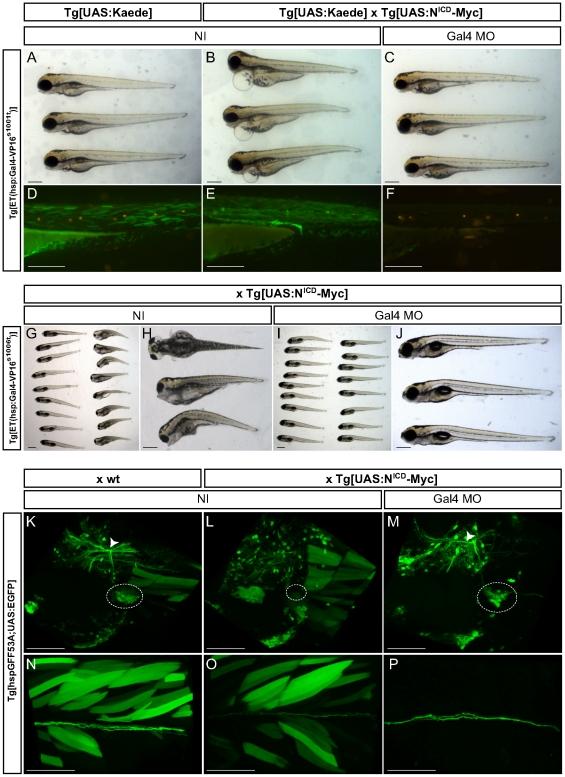
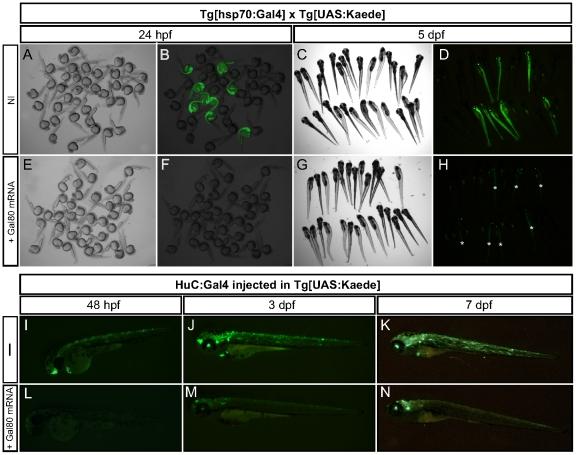
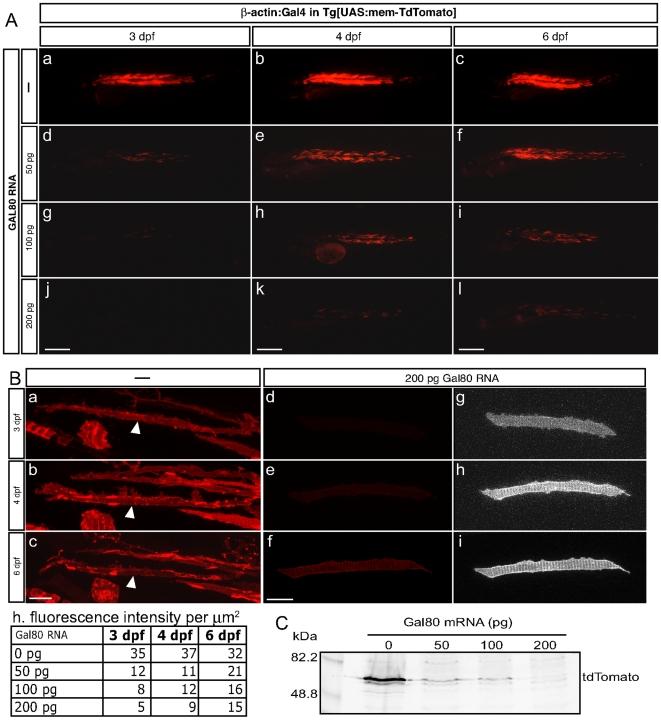
The modular Gal4/UAS gene expression system has become an indispensable tool in modern biology. Several large-scale gene- and enhancer-trap screens in the zebrafish have generated hundreds of transgenic lines expressing Gal4 in unique patterns. However, the early embryonic expression of the Gal4 severely limits their use for studies on regeneration or behavior because UAS-driven effectors could disrupt normal organogenesis. To overcome this limitation, we explored the use of the Gal4 repressor Gal80 in transient assays and with stable transgenes to temporally control Gal4 activity. We also validated a strategy to delay Gal4-driven gene expression using a morpholino targeted to Gal4. The first approach is limited to transgenes expressing the native Gal4. The morphant approach can also be applied to transgenic lines expressing the Gal4-VP16 fusion protein. It promises to become a standard approach to delay Gal4-driven transgene expression and enhance the genetic toolkit for the zebrafish.
模块化 Gal4/UAS 基因表达系统已成为现代生物学不可或缺的工具。在斑马鱼中进行的几个大规模基因和增强子陷阱筛选已经产生了数百种以独特模式表达 Gal4 的转基因系。然而,Gal4 的早期胚胎表达严重限制了它们在再生或行为研究中的应用,因为 UAS 驱动的效应物可能会破坏正常的器官发生。为了克服这一限制,我们探索了使用 Gal4 抑制剂 Gal80 在瞬时测定和稳定转染体中临时控制 Gal4 活性。我们还验证了一种使用针对 Gal4 的 morpholino 延迟 Gal4 驱动的基因表达的策略。第一种方法仅限于表达天然 Gal4 的转基因。形态发生抑制物的方法也可以应用于表达 Gal4-VP16 融合蛋白的转基因系。它有望成为延迟 Gal4 驱动的转基因表达的标准方法,并增强斑马鱼的遗传工具包。


 Zotero 插件