Lam Pui-ying, Harvie Elizabeth A, Huttenlocher Anna
Program in Cellular and Molecular Biology, University of Wisconsin-Madison, Madison, Wisconsin, United States of America ; Department of Medical Microbiology and Immunology, University of Wisconsin-Madison, Madison, Wisconsin, United States of America.
Department of Medical Microbiology and Immunology, University of Wisconsin-Madison, Madison, Wisconsin, United States of America ; Microbiology Doctoral Training Program, University of Wisconsin-Madison, Madison, Wisconsin, United States of America.
PLoS One. 2013 Dec 19;8(12):e84436. doi: 10.1371/journal.pone.0084436. eCollection 2013.
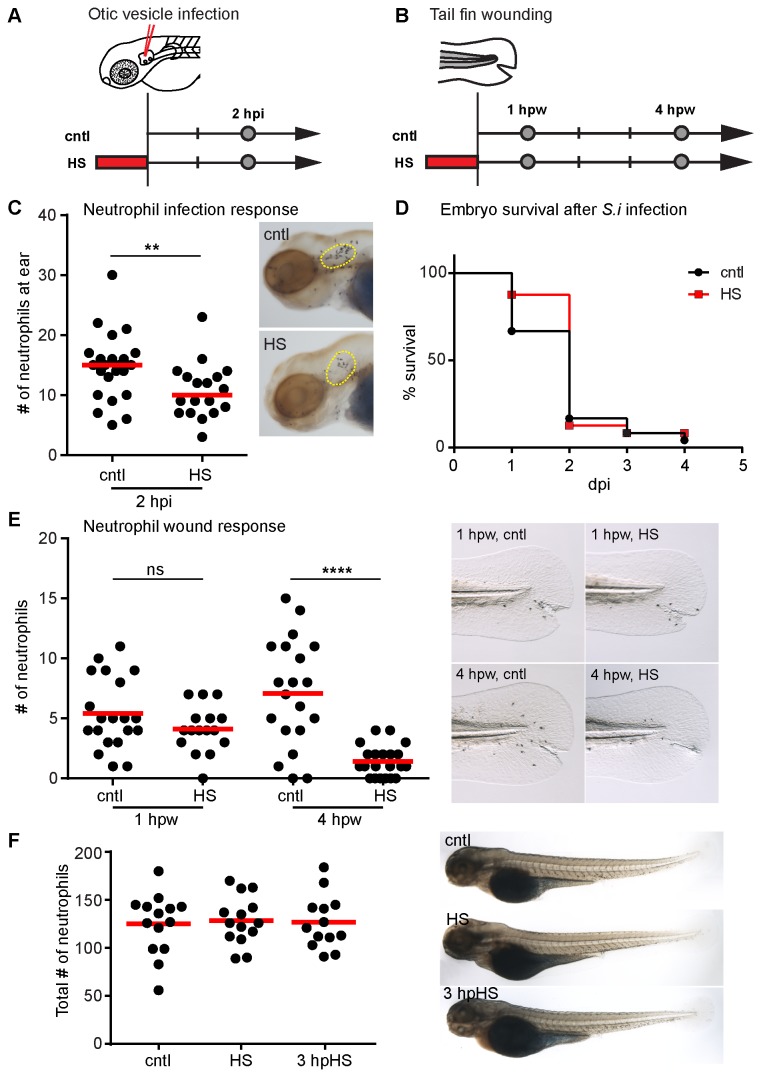
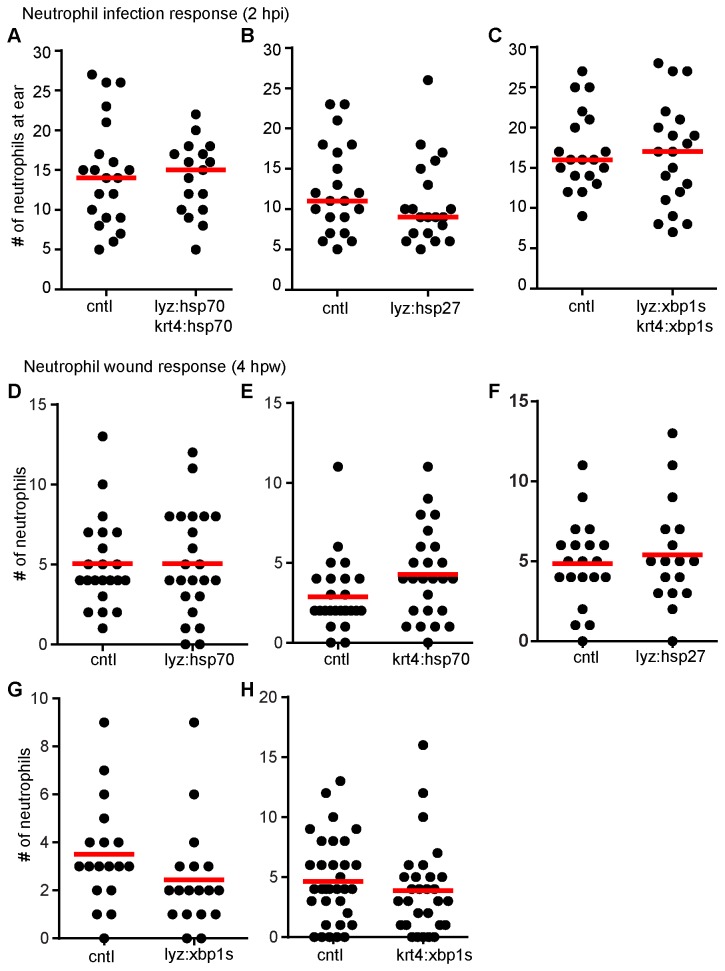
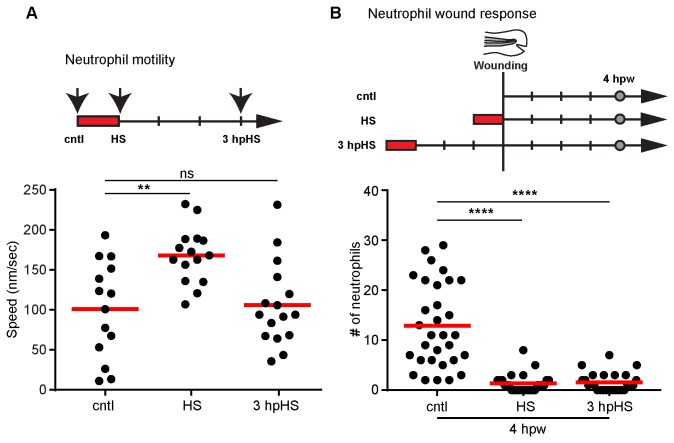
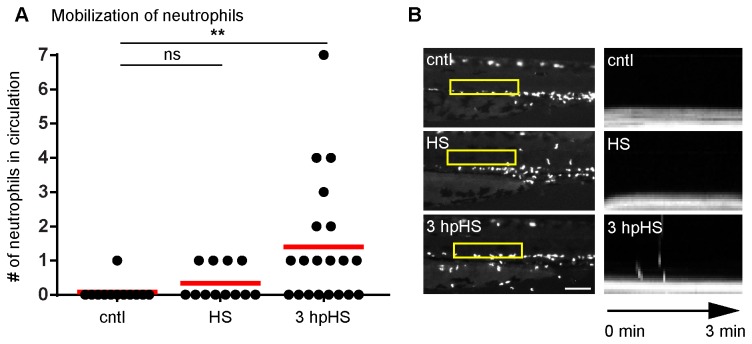
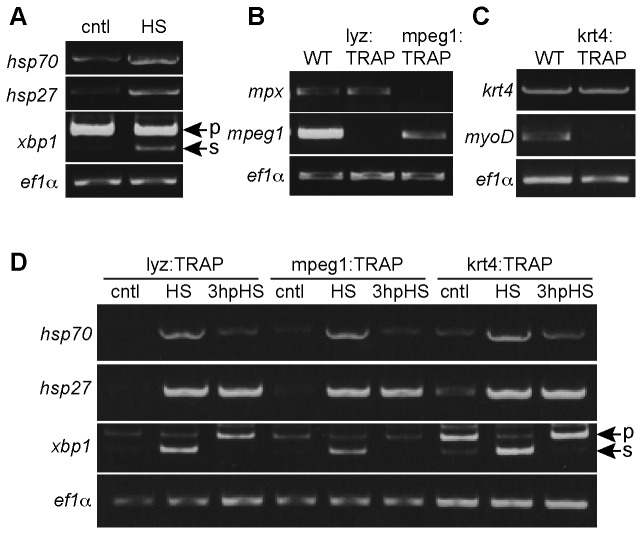
Heat shock is a routine method used for inducible gene expression in animal models including zebrafish. Environmental temperature plays an important role in the immune system and infection progression of ectotherms. In this study, we analyzed the impact of short-term heat shock on neutrophil function using zebrafish (Danio rerio) as an animal model. Short-term heat shock decreased neutrophil recruitment to localized Streptococcus iniae infection and tail fin wounding. Heat shock also increased random neutrophil motility transiently and increased the number of circulating neutrophils. With the use of the translating ribosome affinity purification (TRAP) method for RNA isolation from specific cell types such as neutrophils, macrophages and epithelial cells, we found that heat shock induced the immediate expression of heat shock protein 70 (hsp70) and a prolonged expression of heat shock protein 27 (hsp27). Heat shock also induced cell stress as detected by the splicing of X-box binding protein 1 (xbp1) mRNA, a marker for endoplasmic reticulum (ER) stress. Exogenous expression of Hsp70, Hsp27 and spliced Xbp1 in neutrophils or epithelial cells did not reproduce the heat shock induced effects on neutrophil recruitment. The effect of heat shock on neutrophils is likely due to a combination of complex changes, including, but not limited to changes in gene expression. Our results indicate that routine heat shock can alter neutrophil function in zebrafish. The findings suggest that caution should be taken when employing a heat shock-dependent inducible system to study the innate immune response.
热休克是一种用于在包括斑马鱼在内的动物模型中诱导基因表达的常规方法。环境温度在变温动物的免疫系统和感染进程中起着重要作用。在本研究中,我们以斑马鱼(Danio rerio)为动物模型,分析了短期热休克对中性粒细胞功能的影响。短期热休克减少了中性粒细胞向局部海豚链球菌感染部位和尾鳍伤口处的募集。热休克还短暂增加了中性粒细胞的随机运动能力,并增加了循环中性粒细胞的数量。通过使用翻译核糖体亲和纯化(TRAP)方法从特定细胞类型(如中性粒细胞、巨噬细胞和上皮细胞)中分离RNA,我们发现热休克诱导了热休克蛋白70(hsp70)的即时表达和热休克蛋白27(hsp27)的延长表达。热休克还通过X盒结合蛋白1(xbp1)mRNA的剪接检测到诱导了细胞应激,xbp1是内质网(ER)应激的标志物。在中性粒细胞或上皮细胞中外源表达Hsp70、Hsp27和剪接后的Xbp1并没有重现热休克对中性粒细胞募集的诱导作用。热休克对中性粒细胞的影响可能是由于多种复杂变化的综合作用,包括但不限于基因表达的变化。我们的结果表明,常规热休克可以改变斑马鱼中性粒细胞的功能。这些发现表明,在使用热休克依赖性诱导系统研究先天免疫反应时应谨慎。