Centro de Investigación en Sanidad Animal del Instituto Nacional de Investigación y Tecnología Agraria y Alimentaria (CISA-INIA), Ctra Algete-El Casar, s/n, 28130 Valdeolmos (Madrid), Spain.
Vet Res. 2011 Jan 18;42(1):11. doi: 10.1186/1297-9716-42-11.
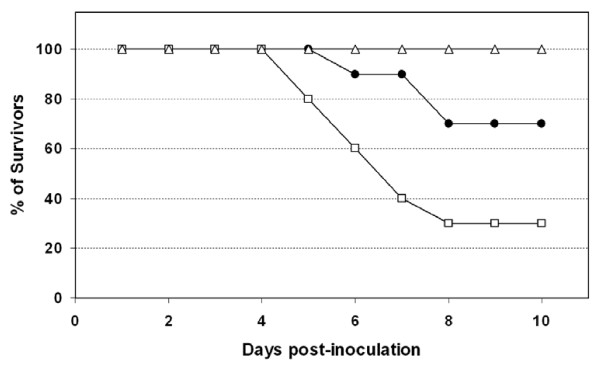
West Nile virus (WNV) is an emerging zoonotic pathogen whose geographic spread and incidence in humans, horses and birds has increased significantly in recent years. WNV has long been considered a mild pathogen causing self-limiting outbreaks. This notion has changed as WNV is causing large epidemics with a high impact on human and animal health. This has been particularly noteworthy since its introduction into North America in 1999. There, native bird species have been shown to be highly susceptible to WNV infection and disease with high mortalities. For this reason, the effect of WNV infection in North American bird species has been thoroughly studied by means of experimental inoculations in controlled trials. To a lesser extent, European wild birds have been shown to be affected clinically by WNV infection. Yet experimental studies on European wild bird species are lacking. The red-legged partridge (Alectoris rufa) is a gallinaceous bird indigenous to the Iberian Peninsula, widely distributed in South Western Europe. It plays a key role in the Mediterranean ecosystem and constitutes an economically important game species. As such it is raised intensively in outdoor facilities. In this work, red-legged partridges were experimentally infected with two recent WNV isolates from the Western Mediterranean area: Morocco/2003 and Spain/2007. All inoculated birds became viremic and showed clinical disease, with mortality rates of 70% and 30%, respectively. These results show that Western Mediterranean WNV variants can be pathogenic for some European bird species, such as the red-legged partridge.
西尼罗河病毒(WNV)是一种新兴的人畜共患病原体,近年来其在人类、马和鸟类中的地理传播和发病率显著增加。WNV 长期以来被认为是一种轻度病原体,引起自限性爆发。随着 WNV 引起大流行并对人类和动物健康造成重大影响,这种观念已经发生了变化。自 1999 年该病毒被引入北美以来,这一点尤其引人注目。在北美,当地的鸟类物种已被证明对 WNV 感染和疾病高度敏感,死亡率很高。出于这个原因,WNV 感染对北美的鸟类物种的影响已通过在对照试验中的实验接种进行了彻底研究。在较小程度上,欧洲野生鸟类已被证明受到 WNV 感染的临床影响。然而,对欧洲野生鸟类的实验研究还很缺乏。红腿鹧鸪(Alectoris rufa)是一种原产于伊比利亚半岛的鹧鸪,广泛分布于西南欧。它在地中海生态系统中起着关键作用,是一种具有重要经济意义的狩猎物种。因此,它在户外设施中被集约化饲养。在这项工作中,红腿鹧鸪被实验性地感染了来自西地中海地区的两种最近的 WNV 分离株:摩洛哥/2003 和西班牙/2007。所有接种的鸟类都出现了病毒血症并表现出临床疾病,死亡率分别为 70%和 30%。这些结果表明,西地中海 WNV 变体可能对一些欧洲鸟类物种(如红腿鹧鸪)具有致病性。