The Clinical Research, Investigation, and Systems Modeling of Acute Illness Center, Department of Critical Care Medicine, University of Pittsburgh School of Medicine, 3350 Terrace Street, Pittsburgh, PA 15261, USA.
Nat Rev Nephrol. 2011 Apr;7(4):209-17. doi: 10.1038/nrneph.2011.13. Epub 2011 Feb 22.
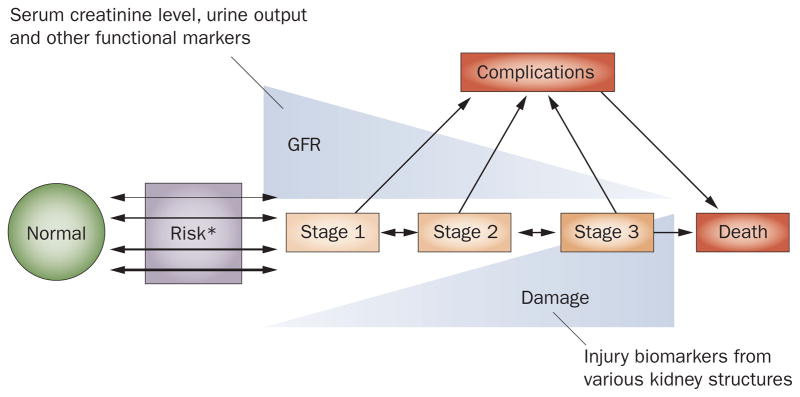
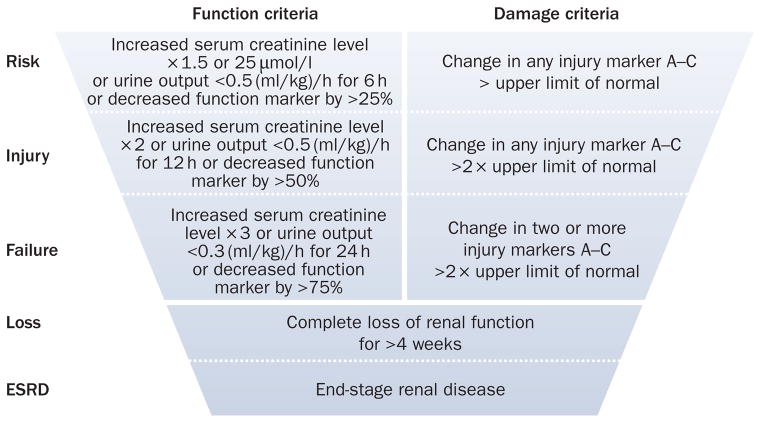
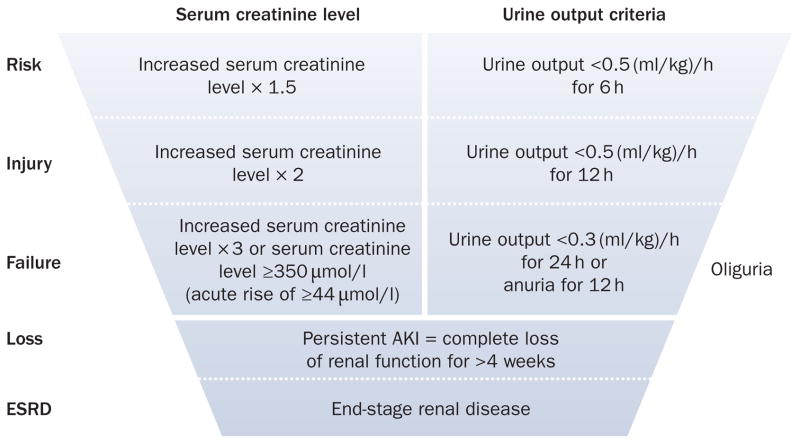
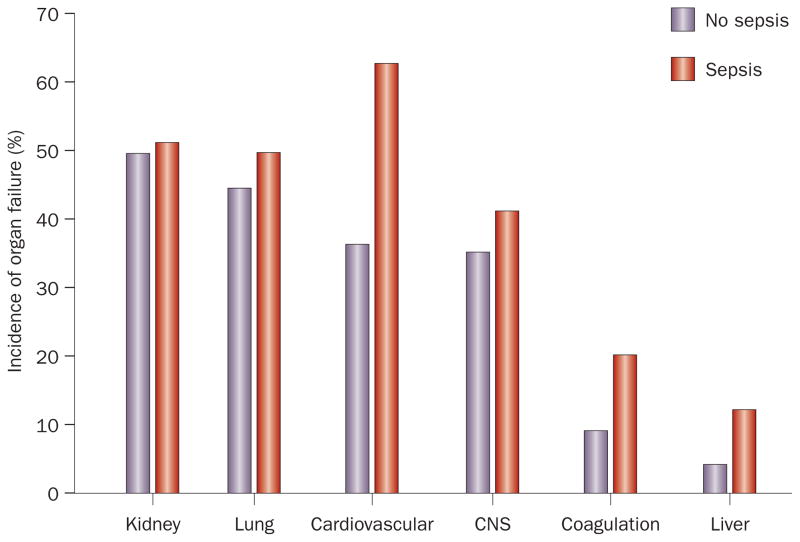
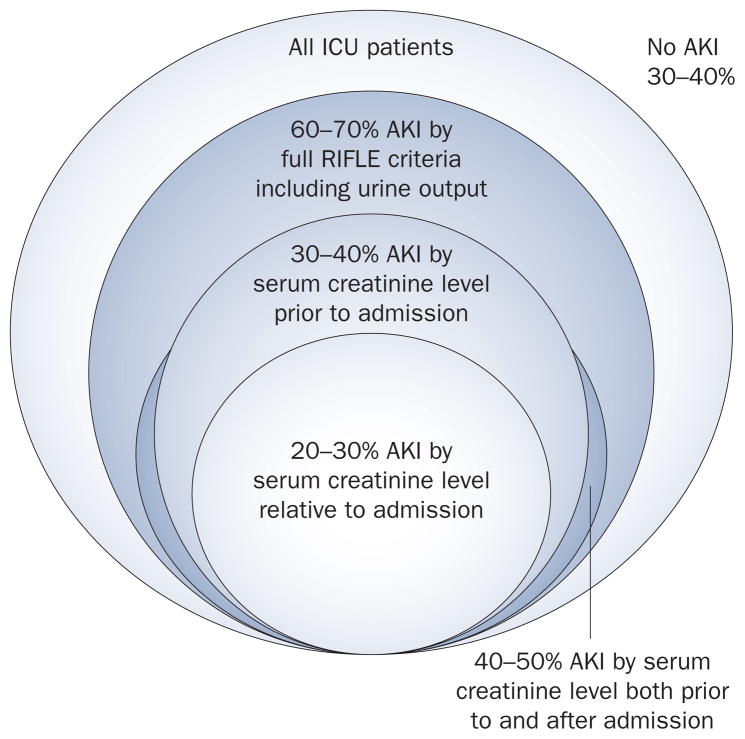
Acute kidney injury (AKI) is common (especially during critical illness), increasing in incidence, and is associated with considerable morbidity and mortality. The Risk, Injury, Failure, Loss, and End-stage renal disease (RIFLE) classification currently provides a standardized estimate of incidence and outcomes from AKI. Despite advances in the understanding of the pathogenesis of human AKI, our ability to assess kidney function is limited and functional impairment poorly correlates with structural injury to the kidneys. Emerging novel biomarkers are, however, likely to further enhance risk stratification, facilitate early diagnosis, enable early enrollment in therapeutic trials, and assess prognosis. Sepsis remains the leading cause of AKI among the critically ill and over the past few years insights into the pathogenesis of AKI in sepsis are beginning to shift attention from renal blood flow to inflammation-mediated organ injury. Emerging evidence suggests that survivors of AKI incur long-term risks for developing chronic kidney disease and end-stage renal disease compared with those without AKI. Despite decades of research, no specific therapy for AKI other than supportive care currently exists and further work is required to better understand the pathogenesis of AKI during critical illness and to develop novel treatments.
急性肾损伤(AKI)很常见(尤其是在危重病期间),发病率不断上升,并与相当大的发病率和死亡率相关。风险、损伤、衰竭、丧失和终末期肾病(RIFLE)分类目前提供了 AKI 发病率和结局的标准化估计。尽管人们对人类 AKI 的发病机制有了更多的了解,但我们评估肾功能的能力有限,肾功能障碍与肾脏的结构损伤相关性较差。然而,新兴的新型生物标志物可能会进一步增强风险分层,促进早期诊断,使患者能够更早地参与治疗试验,并评估预后。脓毒症仍然是危重病患者 AKI 的主要原因,在过去的几年中,对脓毒症中 AKI 发病机制的认识开始将注意力从肾血流转移到炎症介导的器官损伤。新出现的证据表明,与没有 AKI 的患者相比,AKI 的幸存者发生慢性肾脏病和终末期肾病的长期风险更高。尽管经过几十年的研究,目前除了支持性治疗外,尚无针对 AKI 的特定治疗方法,因此需要进一步研究以更好地了解危重病期间 AKI 的发病机制,并开发新的治疗方法。