Department of Microbiology, Australian Research Council Centre of Excellence in Structural and Functional Microbial Genomics, Monash University, Victoria, Australia.
PLoS One. 2011 Feb 8;6(2):e16869. doi: 10.1371/journal.pone.0016869.
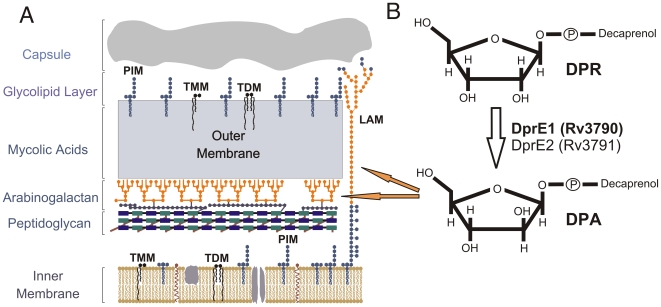
The unique cell wall of bacteria of the suborder Corynebacterineae is essential for the growth and survival of significant human pathogens including Mycobacterium tuberculosis and Mycobacterium leprae. Drug resistance in mycobacteria is an increasingly common development, making identification of new antimicrobials a priority. Recent studies have revealed potent anti-mycobacterial compounds, the benzothiazinones and dinitrobenzamides, active against DprE1, a subunit of decaprenylphosphoribose 2' epimerase which forms decaprenylphosphoryl arabinose, the arabinose donor for mycobacterial cell wall biosynthesis. Despite the exploitation of Mycobacterium smegmatis in the identification of DprE1 as the target of these new antimicrobials and its use in the exploration of mechanisms of resistance, the essentiality of DprE1 in this species has never been examined. Indeed, direct experimental evidence of the essentiality of DprE1 has not been obtained in any species of mycobacterium.
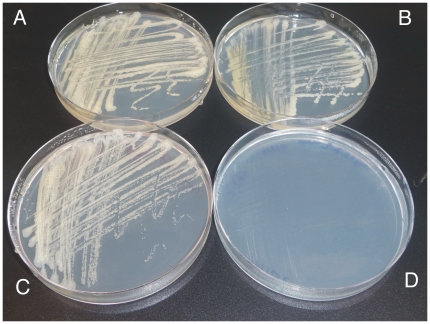
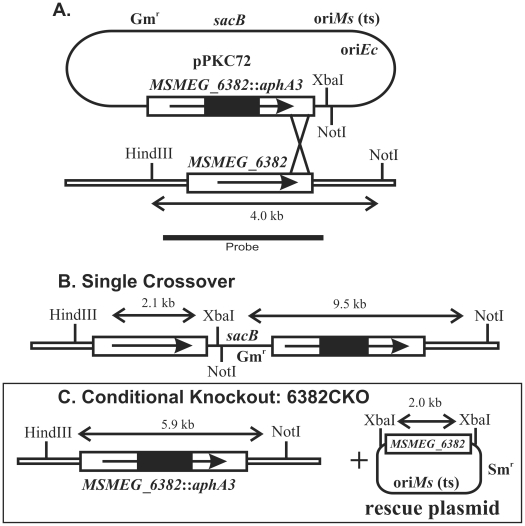
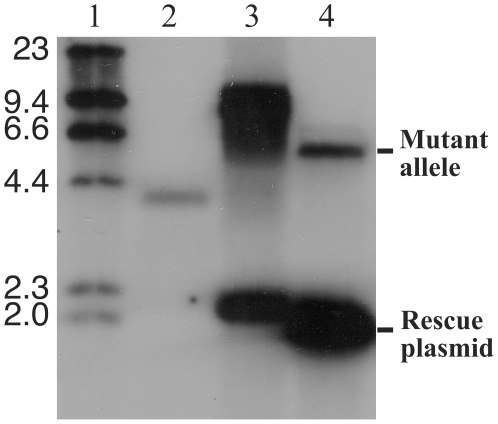
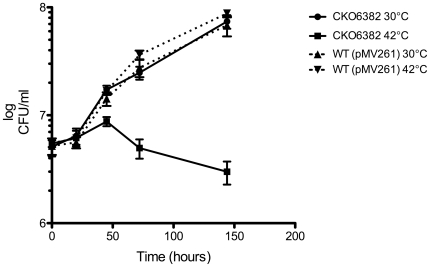
METHODOLOGY/PRINCIPAL FINDINGS: In this study we constructed a conditional gene knockout strain targeting the ortholog of dprE1 in M. smegmatis, MSMEG_6382. Disruption of the chromosomal copy of MSMEG_6382 was only possible in the presence of a plasmid-encoded copy of MSMEG_6382. Curing of this "rescue" plasmid from the bacterial population resulted in a cessation of growth, demonstrating gene essentiality.
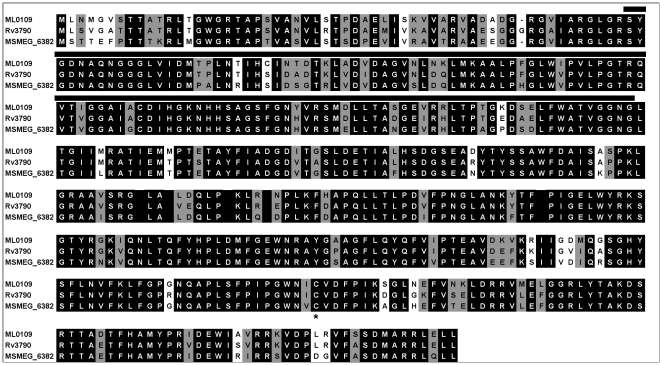
CONCLUSIONS/SIGNIFICANCE: This study provides the first direct experimental evidence for the essentiality of DprE1 in mycobacteria. The essentiality of DprE1 in M. smegmatis, combined with its conservation in all sequenced mycobacterial genomes, suggests that decaprenylphosphoryl arabinose synthesis is essential in all mycobacteria. Our findings indicate a lack of redundancy in decaprenylphosphoryl arabinose synthesis in M. smegmatis, despite the relatively large coding capacity of this species, and suggest that no alternative arabinose donors for cell wall biosynthesis exist. Overall, this study further validates DprE1 as a promising target for new anti-mycobacterial drugs.
棒状杆菌亚目的独特细胞壁对分枝杆菌的生长和生存至关重要,包括结核分枝杆菌和麻风分枝杆菌等重要的人类病原体。分枝杆菌的耐药性是一个日益普遍的问题,因此确定新的抗菌药物成为当务之急。最近的研究揭示了具有抗分枝杆菌活性的苯并噻嗪酮和二硝基苯甲酰胺化合物,它们作用于 DprE1,这是 decaprenylphosphoribose 2' 差向异构酶的一个亚基,该酶形成 decaprenylphosphoryl arabinose,这是分枝杆菌细胞壁生物合成的阿拉伯糖供体。尽管分枝杆菌的耻垢分枝杆菌被用于鉴定这些新抗菌药物的 DprE1 靶点及其在耐药机制探索中的应用,但该酶在该物种中的重要性从未被检验过。事实上,直接的实验证据表明,DprE1 在任何一种分枝杆菌中都是必需的。
方法/主要发现:在这项研究中,我们构建了一个靶向耻垢分枝杆菌 MSMEG_6382 同源基因 dprE1 的条件性基因敲除菌株。只有在存在质粒编码的 MSMEG_6382 拷贝的情况下,才能破坏染色体上的 MSMEG_6382 拷贝。从细菌群体中消除这种“挽救”质粒会导致生长停止,这证明了基因的必要性。
结论/意义:这项研究首次为分枝杆菌中 DprE1 的必要性提供了直接的实验证据。耻垢分枝杆菌中 DprE1 的必要性,以及它在所有已测序的分枝杆菌基因组中的保守性,表明 decaprenylphosphoryl arabinose 的合成在所有分枝杆菌中都是必需的。我们的研究结果表明,在耻垢分枝杆菌中,尽管其编码能力相对较大,但 decaprenylphosphoryl arabinose 的合成缺乏冗余,并且表明细胞壁生物合成没有替代的阿拉伯糖供体。总的来说,这项研究进一步验证了 DprE1 作为新型抗分枝杆菌药物的潜在靶点。