Dipartimento di Genetica e Microbiologia, Università degli Studi di Pavia, Pavia, Italy.
PLoS One. 2011;6(11):e26675. doi: 10.1371/journal.pone.0026675. Epub 2011 Nov 1.
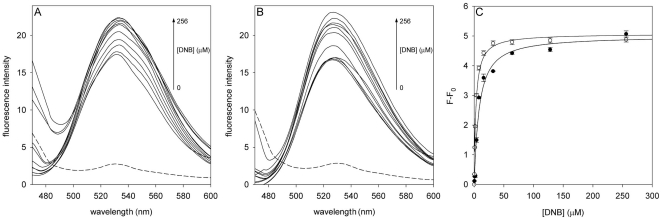
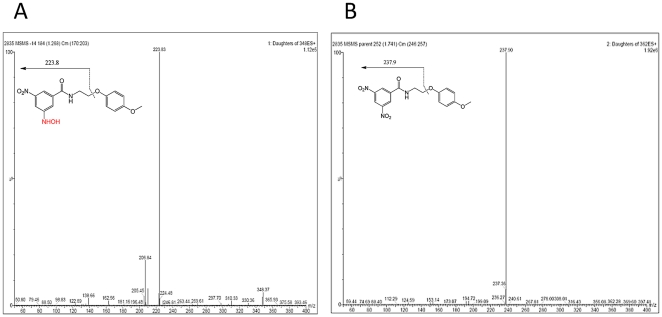
Tuberculosis is still a leading cause of death worldwide. The selection and spread of Mycobacterium tuberculosis multidrug-resistant (MDR-TB) and extensively drug-resistant strains (XDR-TB) is a severe public health problem. Recently, two different classes of chemical series, the benzothiazinones (BTZ) and the dinitrobenzamide (DNB) derivatives have been found to be highly active against M. tuberculosis, including XDR-TB strains. The target of BTZs is DprE1 protein which works in concert with DprE2 to form the heteromeric decaprenylphosphoryl-β-D-ribose 2'-epimerase, involved in Decaprenyl-Phospho-Arabinose (DPA) biosynthesis. Interestingly, it has been shown that the DNBs block the same pathway thus suggesting that both drugs could share the same target. Moreover, in Mycobacterium smegmatis the overexpression of the NfnB nitroreductase led to the inactivation of the BTZs by reduction of a critical nitro-group to an amino-group. In this work several spontaneous M. smegmatis mutants resistant to DNBs were isolated. Sixteen mutants, showing high levels of DNB resistance, exhibited a mutation in the Cys394 of DprE1. Using fluorescence titration and mass spectrometry it has been possible to monitor the binding between DprE1 and DNBs, achieving direct evidence that MSMEG_6382 is the cellular target of DNBs in mycobacteria. Additionally, M. smegmatis mutants having low levels of resistance to DNBs harbor various mutations in MSMEG_6503 gene encoding the transcriptional repressor of the nitroreductase NfnB. By LC/MS analysis it has been demonstrated that NfnB is responsible for DNB inactivation. Taken together, our data demonstrate that both DNB and BTZ drugs share common resistance mechanisms in M. smegmatis.
结核病仍然是全球范围内的主要死因。结核分枝杆菌多药耐药(MDR-TB)和广泛耐药(XDR-TB)菌株的选择和传播是一个严重的公共卫生问题。最近,两类不同的化学系列,苯并噻嗪酮(BTZ)和二硝基苯甲酰胺(DNB)衍生物被发现对结核分枝杆菌具有高度活性,包括 XDR-TB 菌株。BTZ 的靶标是 DprE1 蛋白,它与 DprE2 协同作用形成异源二聚体脱烯醇磷酸-β-D-核糖 2'-差向异构酶,参与脱烯醇磷酸阿拉伯糖(DPA)的生物合成。有趣的是,已经表明 DNB 阻断了相同的途径,因此表明两种药物可能具有相同的靶标。此外,在耻垢分枝杆菌中,NfnB 硝基还原酶的过表达导致 BTZ 的失活,通过将关键的硝基基团还原为氨基基团。在这项工作中,分离出了几种对 DNB 具有自发耐药性的耻垢分枝杆菌突变体。16 个表现出高水平 DNB 抗性的突变体显示 DprE1 中的 Cys394 发生突变。通过荧光滴定和质谱分析,已经可以监测 DprE1 与 DNBs 之间的结合,从而直接证明 MSMEG_6382 是分枝杆菌中 DNBs 的细胞靶标。此外,对 DNB 具有低水平抗性的耻垢分枝杆菌突变体在编码硝基还原酶 NfnB 的转录抑制剂 MSMEG_6503 基因中具有各种突变。通过 LC/MS 分析证明,NfnB 负责 DNB 的失活。总之,我们的数据表明,DNB 和 BTZ 药物在耻垢分枝杆菌中具有共同的耐药机制。