Zheng Chaowen, Li Siyuan, Mueller Johannes, Chen Cheng, Lyu Huanran, Yuan Guandou, Zamalloa Ane, Adofina Lissette, Srinivasan Parthi, Menon Krishna, Heaton Nigel, Immenschuh Stephan, Silva Ines, Rausch Vanessa, Hammad Seddik, Dooley Steven, Chokshi Shilpa, Riva Antonio, He Songqing, Mueller Sebastian
Division of Hepatobiliary Surgery, The First Affiliated Hospital of Guangxi Medical University, Nanning, Guangxi, China; Center for Alcohol Research, University of Heidelberg, Heidelberg, Germany.
Center for Alcohol Research, University of Heidelberg, Heidelberg, Germany.
Redox Biol. 2025 Jun 26;85:103742. doi: 10.1016/j.redox.2025.103742.
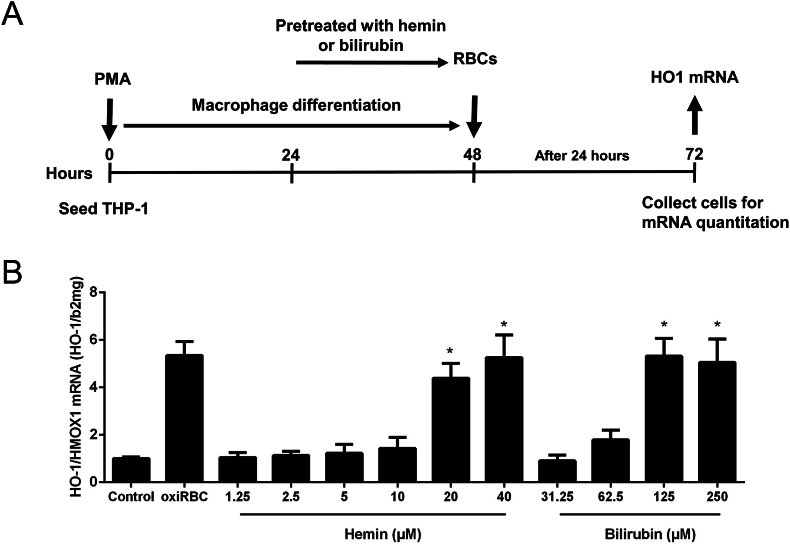
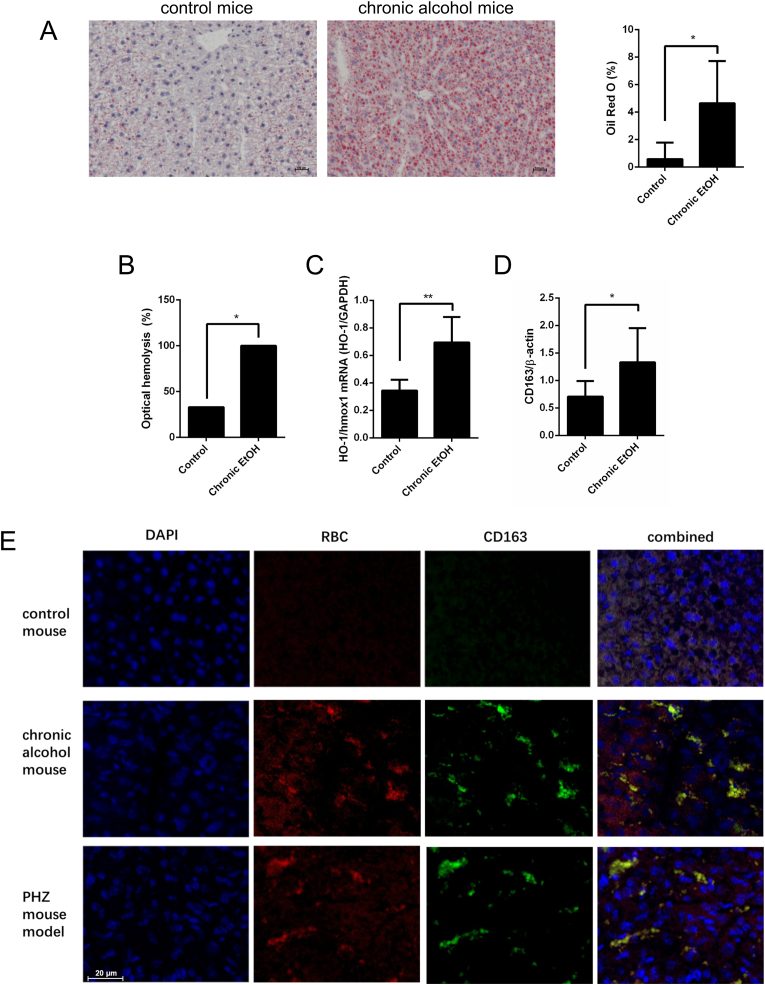
Alcohol-related liver disease (ALD) is the most common liver disease worldwide; however, its underlying molecular mechanisms remain poorly understood. Here, we identify ethanol-mediated hemolysis and erythrophagocytosis as major contributors to ALD pathogenesis using both in vitro and in vivo models, as well as surrogate markers such as heme oxygenase-1 (HO-1) and CD163, a scavenger receptor for hemoglobin-haptoglobin complexes. A key initial observation was the direct optical evidence of serum hemolysis in heavy drinkers, which diminished after one week of alcohol withdrawal. In parallel, soluble CD163 (sCD163) levels declined during alcohol detoxification correlating with liver damage and fibrosis stages. Moreover, red blood cells (RBCs) from heavy drinkers exhibited increased fragility under hemolytic stress. In ethanol-fed mice, we also observed serum hemolysis. Erythrophagocytosis in liver tissue was visualized by co-localization of CD163 and hemoglobin autofluorescence. In vitro studies confirmed that ethanol - at concentrations transiently present in the upper gastrointestinal tract during alcohol ingestion - directly induces hemolysis and primes RBCs for erythrophagocytosis through eryptosis, marked by externalization of phosphatidylserine. Both heme, released during hemolysis, and bilirubin, its degradation product, further amplified erythrophagocytosis at clinically relevant concentrations, suggesting a self-perpetuating cycle. The antioxidant N-acetylcysteine efficiently blocked ethanol-induced RBC priming for erythrophagocytosis. In conclusion, alcohol triggers a cascade of hemolysis, eryptosis, and erythrophagocytosis that may contribute to the pathogenesis of alcoholic hepatitis and end-stage ALD. sCD163 could serve as a noninvasive marker of hemolysis-associated macrophage activation. This mechanism opens new avenues for antioxidant-based therapies and may help to explain typical iron abnormalities, including ferroptosis, and hyperbilirubinemia in ALD.
酒精性肝病(ALD)是全球最常见的肝脏疾病;然而,其潜在的分子机制仍知之甚少。在此,我们使用体外和体内模型以及诸如血红素加氧酶-1(HO-1)和CD163(一种血红蛋白-触珠蛋白复合物的清道夫受体)等替代标志物,确定乙醇介导的溶血和红细胞吞噬是ALD发病机制的主要促成因素。一个关键的初步观察结果是重度饮酒者血清溶血的直接光学证据,在戒酒一周后这种现象有所减轻。同时,可溶性CD163(sCD163)水平在酒精解毒过程中下降,这与肝损伤和纤维化阶段相关。此外,重度饮酒者的红细胞(RBC)在溶血应激下表现出更高的脆性。在喂食乙醇的小鼠中,我们也观察到了血清溶血。通过CD163与血红蛋白自发荧光的共定位,在肝组织中可视化了红细胞吞噬现象。体外研究证实,乙醇——在酒精摄入期间上消化道中短暂存在的浓度——直接诱导溶血,并通过磷脂酰丝氨酸外化标记的红细胞凋亡使红细胞易于被吞噬。溶血过程中释放的血红素及其降解产物胆红素,在临床相关浓度下进一步放大了红细胞吞噬作用,提示存在一个自我延续的循环。抗氧化剂N-乙酰半胱氨酸有效地阻断了乙醇诱导的红细胞对红细胞吞噬的致敏作用。总之,酒精引发了一系列溶血、红细胞凋亡和红细胞吞噬过程,这可能有助于酒精性肝炎和终末期ALD的发病机制。sCD163可作为溶血相关巨噬细胞活化的非侵入性标志物。这一机制为基于抗氧化剂的治疗开辟了新途径,并可能有助于解释ALD中典型的铁异常,包括铁死亡和高胆红素血症。