Department of Medical Biochemistry and Genetics, University of Turku, Kiinamyllynkatu 10, 20520 Turku, Finland.
J Tissue Eng. 2010 Aug 1;2010:345806. doi: 10.4061/2010/345806.
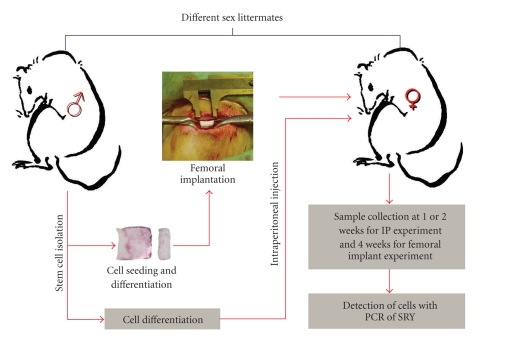
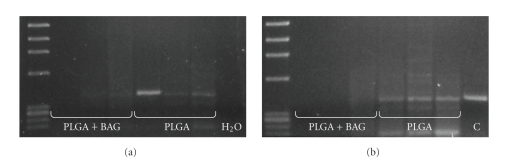
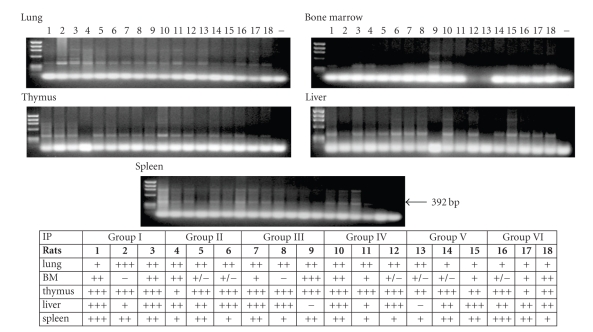
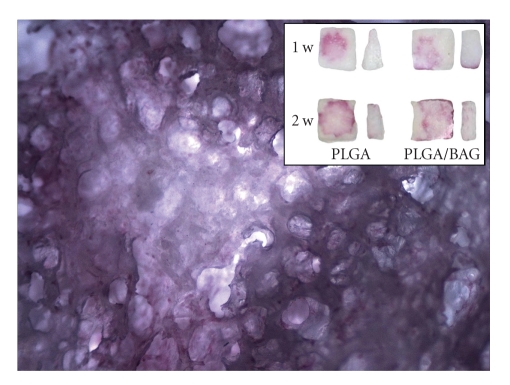
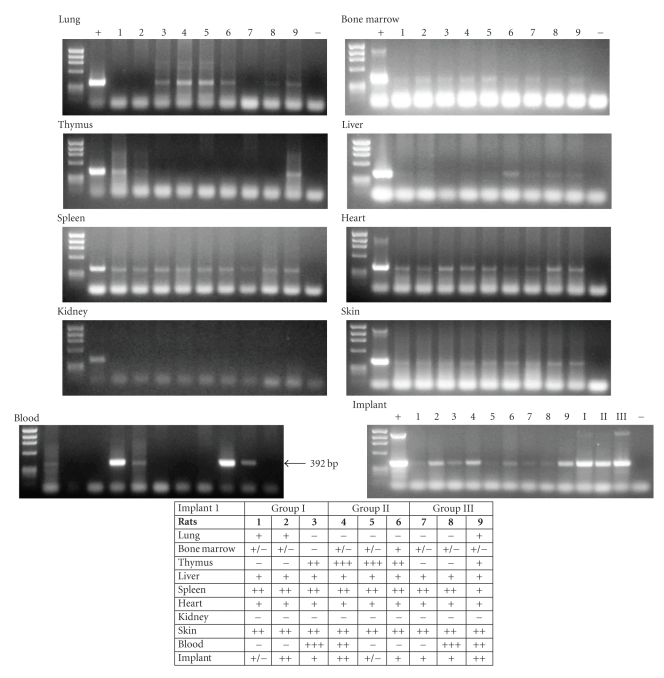
The fate of intraperitoneally injected or implanted male rat bone marrow-derived stromal cells inside female sibling host animals was traced using Y-chromosome-sensitive PCR. When injected intraperitoneally, Y-chromosome-positive cells were found in all studied organs: heart muscle, lung, thymus, liver, spleen, kidney, skin, and femoral bone marrow with a few exceptions regardless of whether they had gone through osteogenic differentiation or not. In the implant experiments, expanded donor cells were seeded on poly(lactide-co-glycolide) scaffolds and grown under three different conditions (no additives, in osteogenic media for one or two weeks) prior to implantation into corticomedullar femoral defects. Although the impact of osteogenic in vitro cell differentiation on cell migration was more obvious in the implantation experiments than in the intraperitoneal experiments, the donor cells stay alive when injected intraperitoneally or grown in an implant and migrate inside the host. However, when the implants contained bioactive glass, no signs of Y-chromosomal DNA were observed in all studied organs including the implants indicating that the cells had been eliminated.
使用 Y 染色体敏感 PCR 追踪雄性大鼠骨髓来源基质细胞在雌性同窝宿主动物体内的命运。当经腹腔注射时,无论是否经历过成骨分化,Y 染色体阳性细胞都存在于所有研究的器官中:心肌、肺、胸腺、肝、脾、肾、皮肤和股骨骨髓,只有少数例外。在植入实验中,将扩增的供体细胞接种在聚(乳酸-共-乙醇酸)支架上,并在植入前在三种不同条件下(无添加剂,在成骨培养基中培养一周或两周)生长。尽管体外成骨细胞分化对细胞迁移的影响在植入实验中比腹腔实验更为明显,但当经腹腔注射或在植入物中生长时,供体细胞仍能存活并迁移到宿主内部。然而,当植入物中含有生物活性玻璃时,在包括植入物在内的所有研究器官中均未观察到 Y 染色体 DNA 的迹象,表明细胞已被消除。