Charles Darwin University, Darwin, Northern Territory 0909, Australia.
Int J Health Geogr. 2011 Feb 25;10:15. doi: 10.1186/1476-072X-10-15.
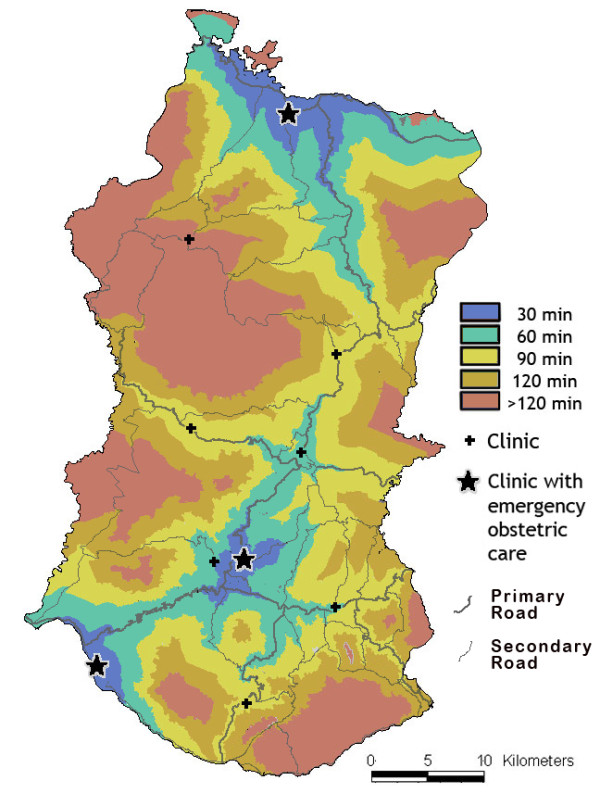
Despite the demonstrated utility of GIS for health applications, there are perceived problems in low resource settings: GIS software can be expensive and complex; input data are often of low quality. This study aimed to test the appropriateness of new, inexpensive and simple GIS tools in poorly resourced areas of a developing country. GIS applications were trialled in pilot studies based on mapping of health resources and health indicators at the clinic and district level in the predominantly rural province of Nusa Tenggara Timur in eastern Indonesia. The pilot applications were (i) rapid field collection of health infrastructure data using a GPS enabled PDA, (ii) mapping health indicator data using open source GIS software, and (iii) service availability mapping using a free modelling tool.
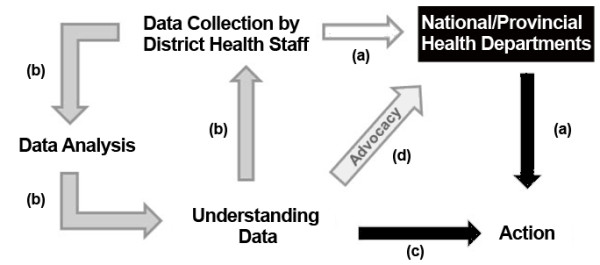
Through contextualised training, district and clinic staff acquired skills in spatial analysis and visualisation and, six months after the pilot studies, they were using these skills for advocacy in the planning process, to inform the allocation of some health resources, and to evaluate some public health initiatives.
We demonstrated that GIS can be a useful and inexpensive tool for the decentralisation of health data analysis to low resource settings through the use of free and simple software, locally relevant training materials and by providing data collection tools to ensure data reliability.
尽管 GIS 在卫生应用中已经得到了证明,但在资源匮乏的环境中仍存在一些问题:GIS 软件可能昂贵且复杂;输入数据的质量通常较低。本研究旨在测试在发展中国家资源匮乏地区使用新的、廉价且简单的 GIS 工具的适宜性。在印度尼西亚东部以农村为主的东努沙登加拉省,我们在试点研究中试用了 GIS 应用程序,这些研究基于诊所和地区层面的卫生资源和卫生指标的制图。试点应用包括:(i) 使用支持 GPS 的 PDA 快速现场收集卫生基础设施数据,(ii) 使用开源 GIS 软件绘制卫生指标数据,以及 (iii) 使用免费建模工具进行服务可用性制图。
通过有针对性的培训,地区和诊所工作人员获得了空间分析和可视化技能,并且在试点研究结束后的六个月后,他们将这些技能用于规划过程中的宣传,以告知部分卫生资源的分配,并评估一些公共卫生计划。
我们通过使用免费且简单的软件、本地相关的培训材料以及提供数据收集工具来确保数据的可靠性,展示了 GIS 可以成为将卫生数据分析去中心化到资源匮乏环境中的有用且廉价的工具。