Ray Nicolas, Ebener Steeve
Information, Evidence and Research, World Health Organization, 20 av, Appia, 1211 Geneva 27, Switzerland.
Int J Health Geogr. 2008 Dec 16;7:63. doi: 10.1186/1476-072X-7-63.
Access to health care can be described along four dimensions: geographic accessibility, availability, financial accessibility and acceptability. Geographic accessibility measures how physically accessible resources are for the population, while availability reflects what resources are available and in what amount. Combining these two types of measure into a single index provides a measure of geographic (or spatial) coverage, which is an important measure for assessing the degree of accessibility of a health care network.
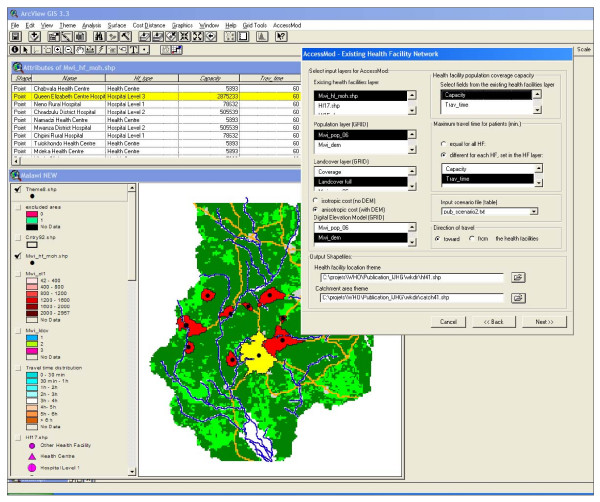
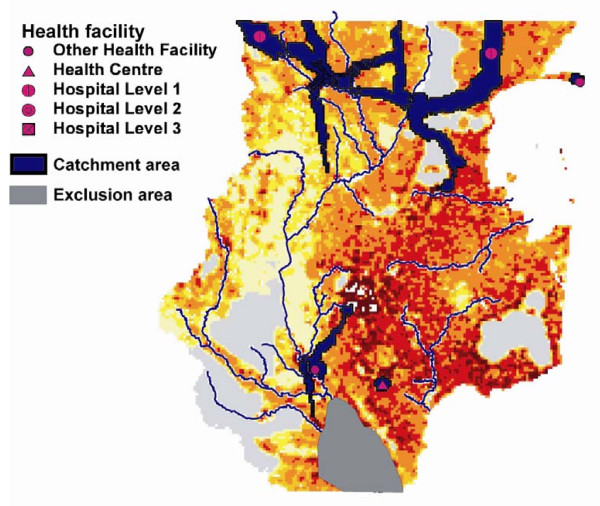
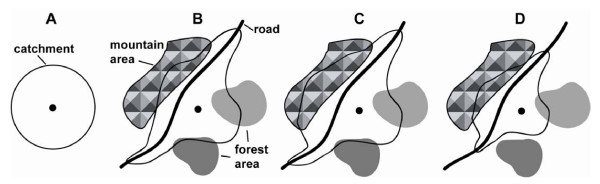
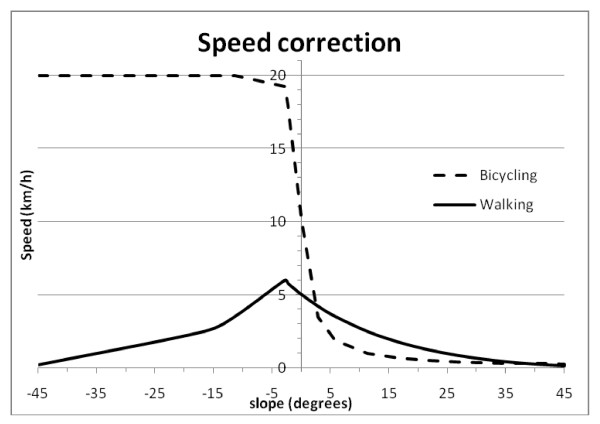
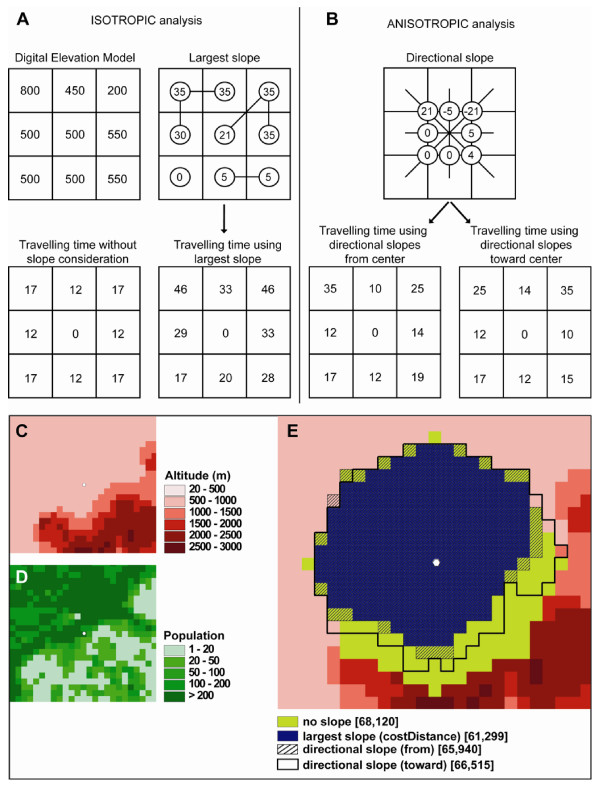
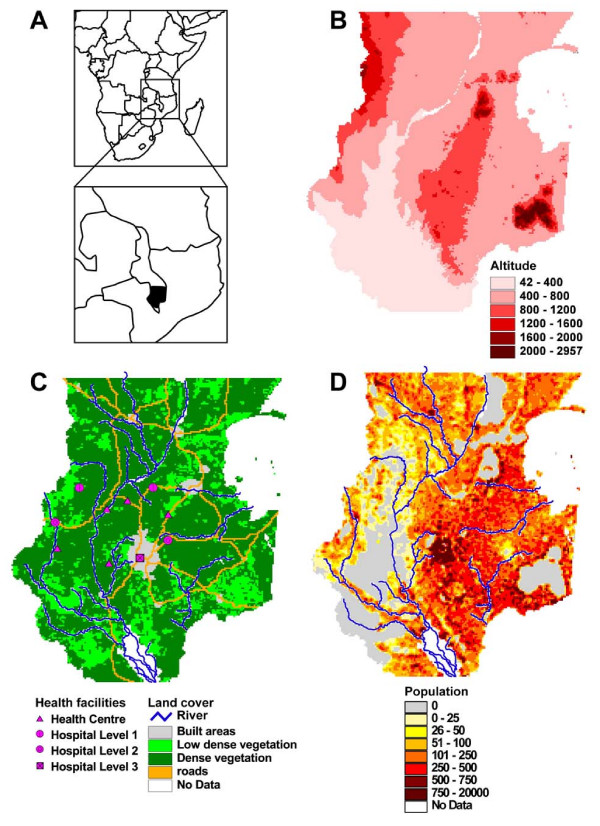
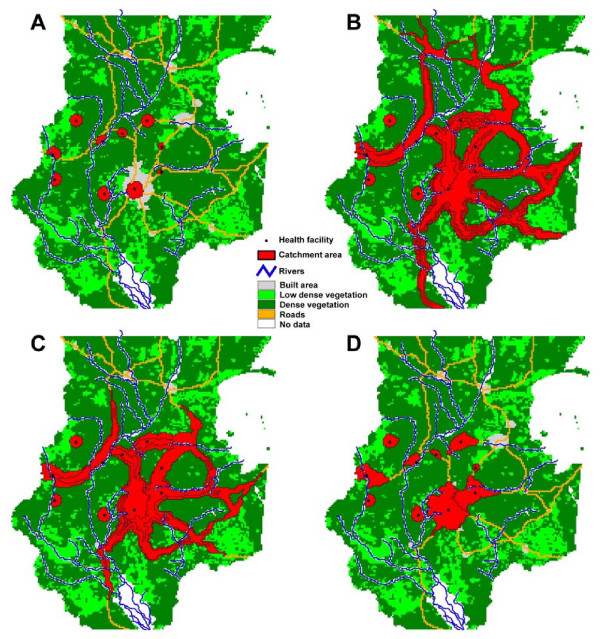
This paper describes the latest version of AccessMod, an extension to the Geographical Information System ArcView 3.x, and provides an example of application of this tool. AccessMod 3 allows one to compute geographic coverage to health care using terrain information and population distribution. Four major types of analysis are available in AccessMod: (1) modeling the coverage of catchment areas linked to an existing health facility network based on travel time, to provide a measure of physical accessibility to health care; (2) modeling geographic coverage according to the availability of services; (3) projecting the coverage of a scaling-up of an existing network; (4) providing information for cost effectiveness analysis when little information about the existing network is available. In addition to integrating travelling time, population distribution and the population coverage capacity specific to each health facility in the network, AccessMod can incorporate the influence of landscape components (e.g. topography, river and road networks, vegetation) that impact travelling time to and from facilities. Topographical constraints can be taken into account through an anisotropic analysis that considers the direction of movement. We provide an example of the application of AccessMod in the southern part of Malawi that shows the influences of the landscape constraints and of the modes of transportation on geographic coverage.
By incorporating the demand (population) and the supply (capacities of heath care centers), AccessMod provides a unifying tool to efficiently assess the geographic coverage of a network of health care facilities. This tool should be of particular interest to developing countries that have a relatively good geographic information on population distribution, terrain, and health facility locations.
医疗保健可从四个维度来描述:地理可及性、可获得性、经济可及性和可接受性。地理可及性衡量的是人口获取资源的实际便利程度,而可获得性反映的是现有资源及其数量。将这两种衡量方式整合为一个单一指标可得出地理(或空间)覆盖范围,这是评估医疗保健网络可及程度的一项重要指标。
本文介绍了AccessMod的最新版本,它是地理信息系统ArcView 3.x的一个扩展,并给出了该工具的应用示例。AccessMod 3使人们能够利用地形信息和人口分布来计算医疗保健的地理覆盖范围。AccessMod有四种主要类型的分析:(1)基于出行时间对与现有医疗机构网络相连的服务区域覆盖范围进行建模,以衡量获得医疗保健的实际便利程度;(2)根据服务的可获得性对地理覆盖范围进行建模;(3)预测现有网络扩大规模后的覆盖范围;(4)在关于现有网络的信息很少时,为成本效益分析提供信息。除了整合出行时间、人口分布以及网络中每个医疗机构特定的人口覆盖能力外,AccessMod还能纳入影响往返医疗机构出行时间的景观要素(如地形、河流和道路网络、植被)的影响。可以通过考虑移动方向的各向异性分析来考虑地形限制。我们给出了AccessMod在马拉维南部应用的一个示例,该示例展示了景观限制和交通方式对地理覆盖范围的影响。
通过纳入需求(人口)和供给(医疗保健中心的能力),AccessMod提供了一个统一的工具来有效评估医疗机构网络的地理覆盖范围。对于在人口分布、地形和医疗机构位置方面拥有相对良好地理信息的发展中国家而言,这个工具应会特别有用。