LaBrie Joseph W, Kenney Shannon R, Lac Andrew
Department of Psychology, Loyola Marymount University, Los Angeles, California 90045, USA.
J Drug Educ. 2010;40(4):361-78. doi: 10.2190/DE.40.4.c.
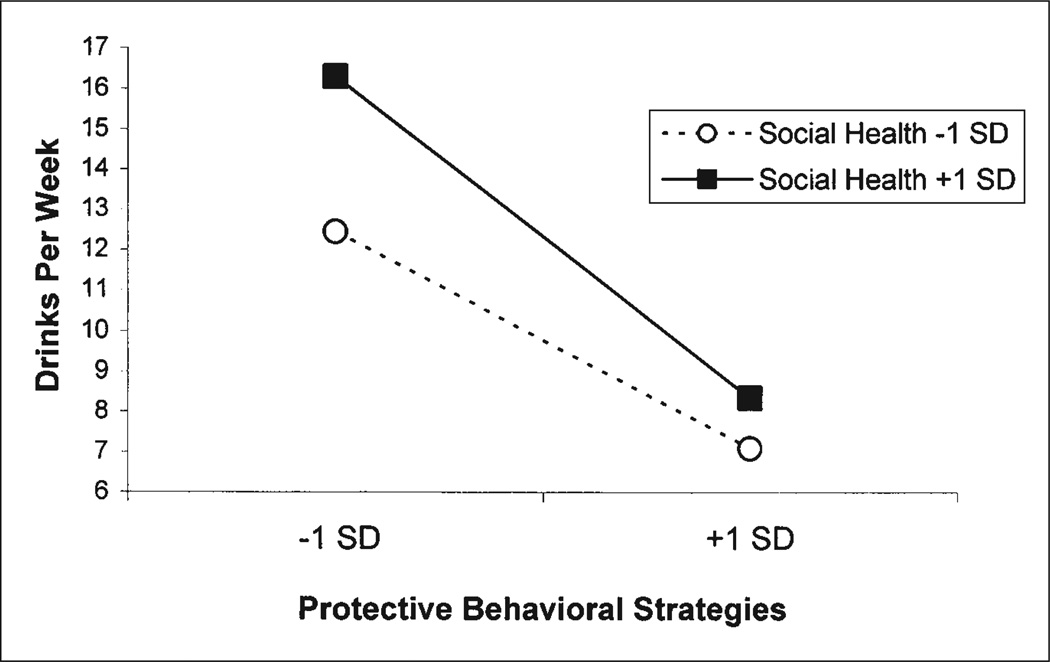
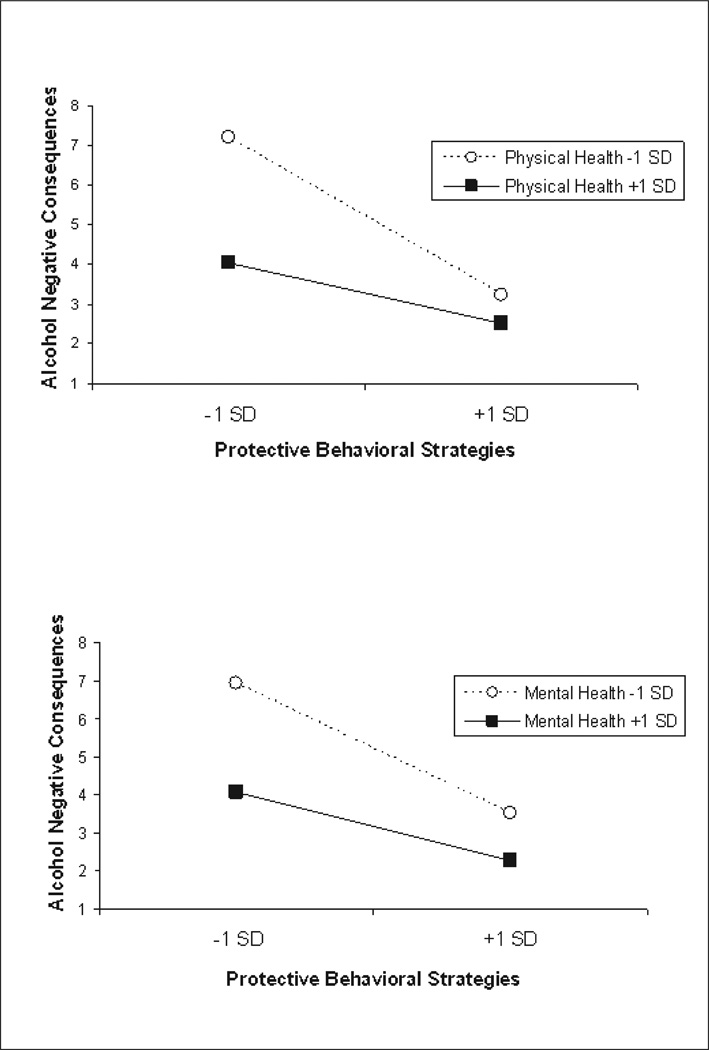
The present study examined the moderating role of health status (physical, mental, and social health) and the relationships between protective behavioral strategies utilized to reduce high-risk drinking (e.g., avoiding drinking games, setting consumption limits, or having a designated driver) and alcohol use and negative consequences in a sample of heavy drinking college students (N = 1,820). In this high risk sample, multiple regression analyses showed that stronger social health was related to increased drinking, while poorer physical, mental, and social health were related to increased alcohol negative consequences. Further, moderation effects revealed that increasing the use of protective behaviors was associated with significantly less drinking in those with stronger social health, as well as significantly lower numbers of negative consequences among participants with poorer physical and mental health. Implications for college counselors and medical personnel are discussed.
本研究考察了健康状况(身体、心理和社会健康)的调节作用,以及在大量饮酒的大学生样本(N = 1820)中,为减少高危饮酒所采用的保护行为策略(如避免饮酒游戏、设定饮酒限量或安排代驾)与酒精使用及负面后果之间的关系。在这个高危样本中,多元回归分析表明,更强的社会健康与饮酒增加有关,而较差的身体、心理和社会健康与酒精负面后果增加有关。此外,调节效应显示,增加保护行为的使用与社会健康较强者饮酒量显著减少有关,同时也与身体和心理健康较差的参与者负面后果数量显著降低有关。文中还讨论了对大学辅导员和医务人员的启示。