Department of Physiology and Biophysics, Howard Hughes Medical Institute, University of Washington, Seattle, Washington 98195-7290, USA.
J Biol Chem. 2011 Apr 29;286(17):15535-42. doi: 10.1074/jbc.M110.214650. Epub 2011 Mar 7.
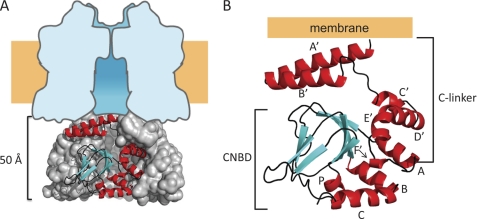
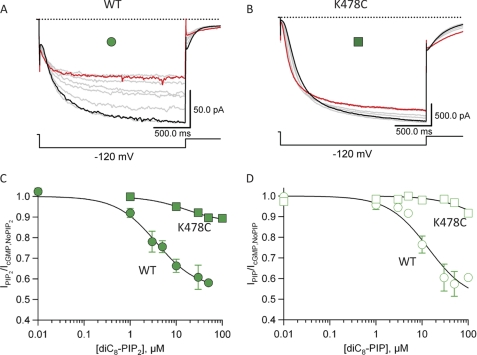
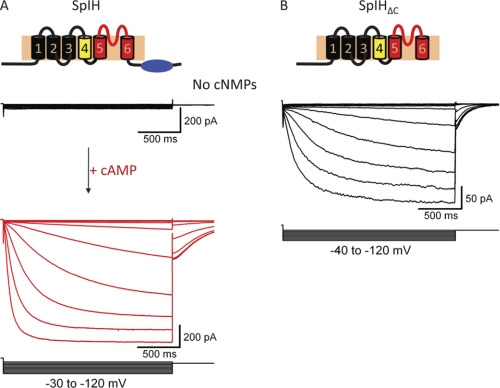
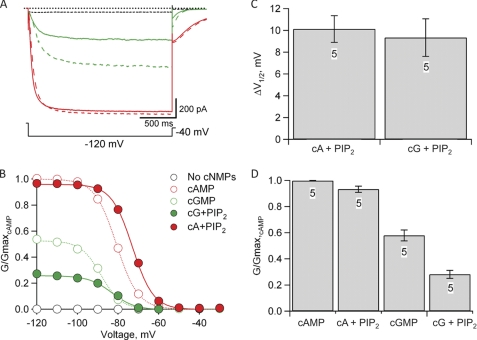
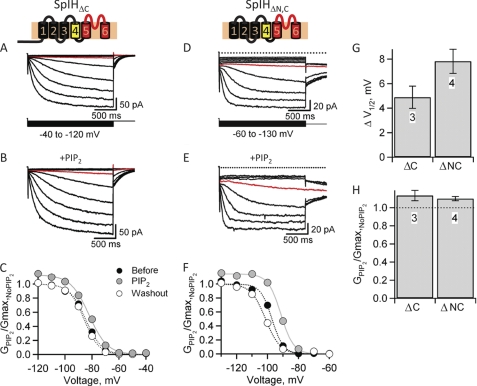
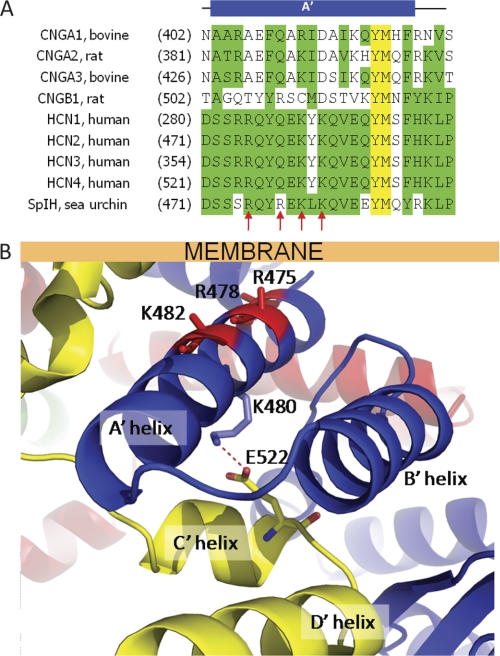
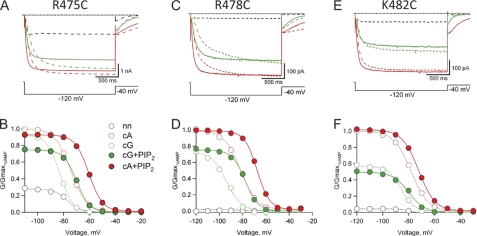
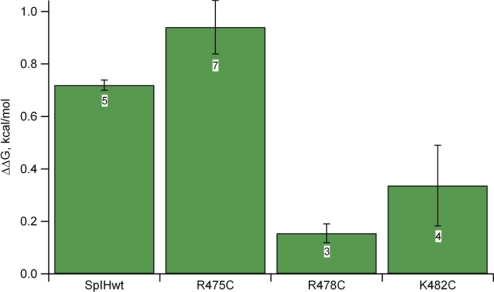
Many ion channels have been shown to be regulated by the membrane signaling phospholipid phosphatidylinositol 4,5-bisphosphate (PIP(2)). Here, we demonstrate that the binding of PIP(2) to SpIH, a sea urchin hyperpolarization-activated cyclic nucleotide-gated ion channel (HCN), has a dual effect: potentiation and inhibition. The potentiation is observed as a shift in the voltage dependence of activation to more depolarized voltages. The inhibition is observed as a reduction in the currents elicited by the partial agonist cGMP. These two effects were separable and arose from PIP(2) binding to two different regions. Deletion of the C-terminal region of SpIH removed PIP(2)-induced inhibition but not the PIP(2)-induced shift in voltage dependence. Mutating key positively charged amino acids in the C-terminal region adjacent to the membrane selectively disrupted PIP(2)-induced inhibition, suggesting a direct interaction between PIP(2) in the membrane and amino acids in the C-terminal region that stabilizes the closed state relative to the open state in HCN channels.
许多离子通道已被证明受到膜信号磷脂酰肌醇 4,5-二磷酸(PIP(2))的调节。在这里,我们证明 PIP(2)与 SpIH 的结合具有双重作用:增强和抑制。增强表现为激活的电压依赖性向更去极化的电压转移。抑制表现为部分激动剂 cGMP 引起的电流减少。这两种效应是可分离的,并且源自 PIP(2)与两个不同区域的结合。SpIH 的 C 末端区域的缺失消除了 PIP(2)诱导的抑制,但没有消除电压依赖性的 PIP(2)诱导的转移。在靠近膜的 C 末端区域中突变关键的正电荷氨基酸选择性地破坏了 PIP(2)诱导的抑制,这表明 PIP(2)在膜中和 C 末端区域中的氨基酸之间存在直接相互作用,该相互作用相对于 HCN 通道中的开放状态稳定了关闭状态。