CNRS UMR5203, Montpellier F-34094, France.
J Cell Biol. 2011 Mar 7;192(5):767-80. doi: 10.1083/jcb.201010127.
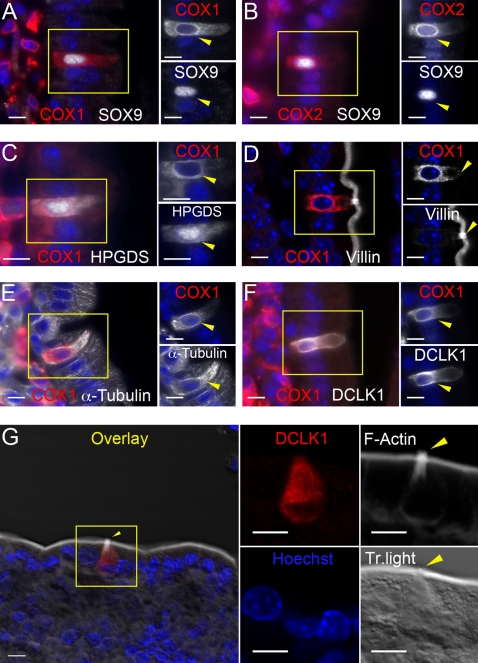
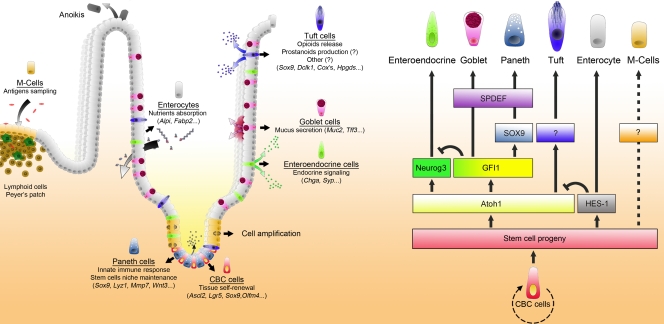
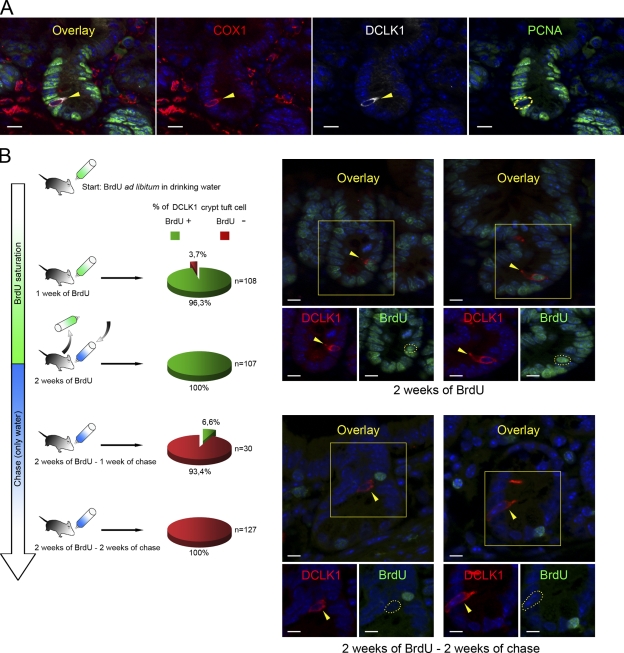
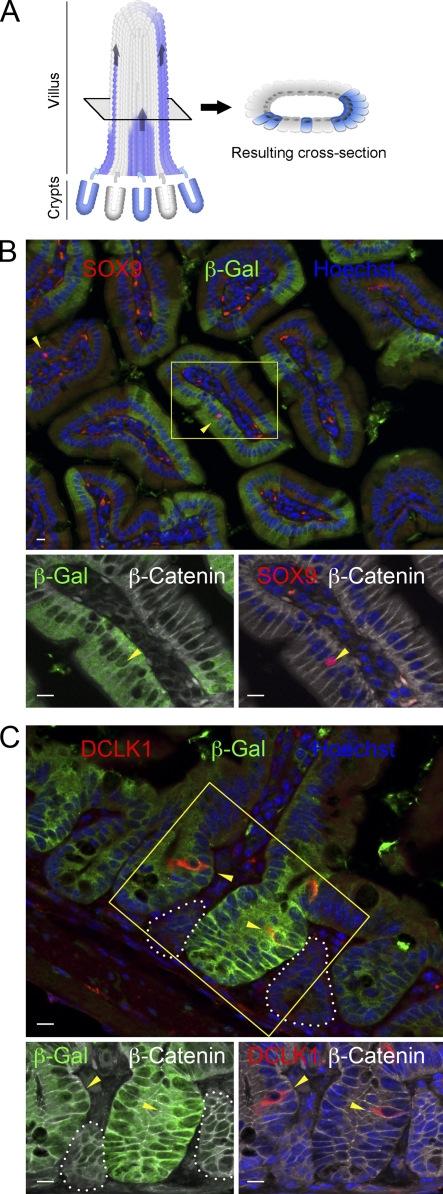
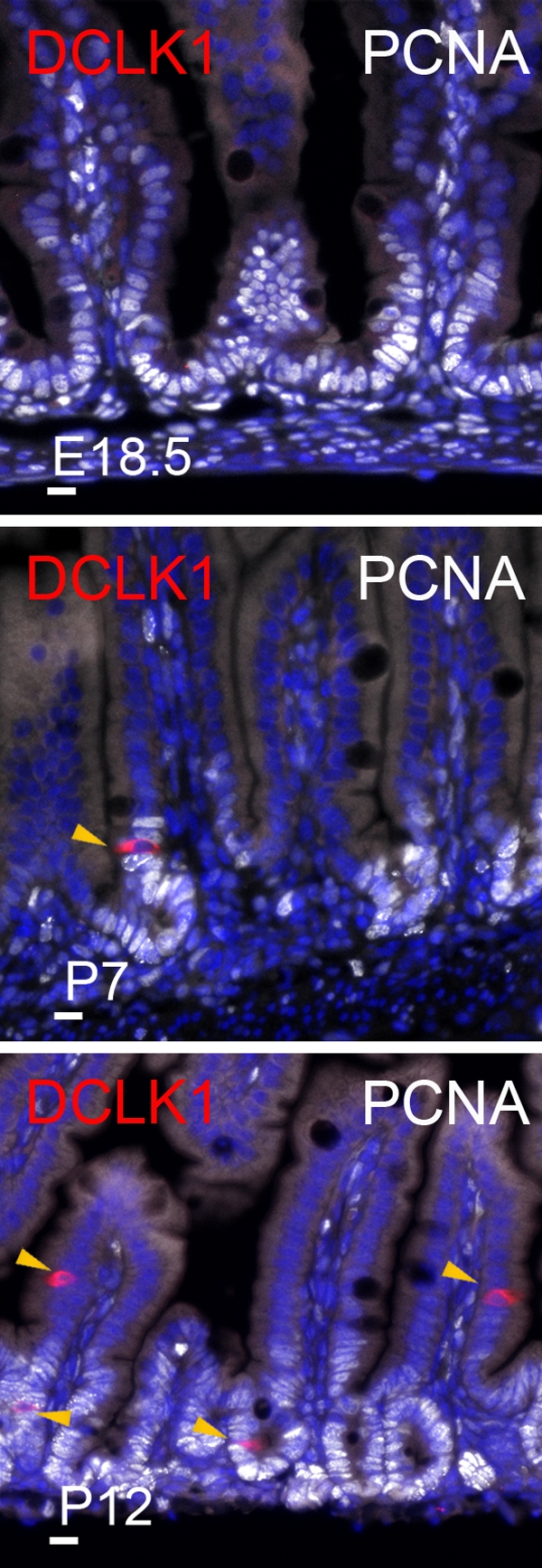
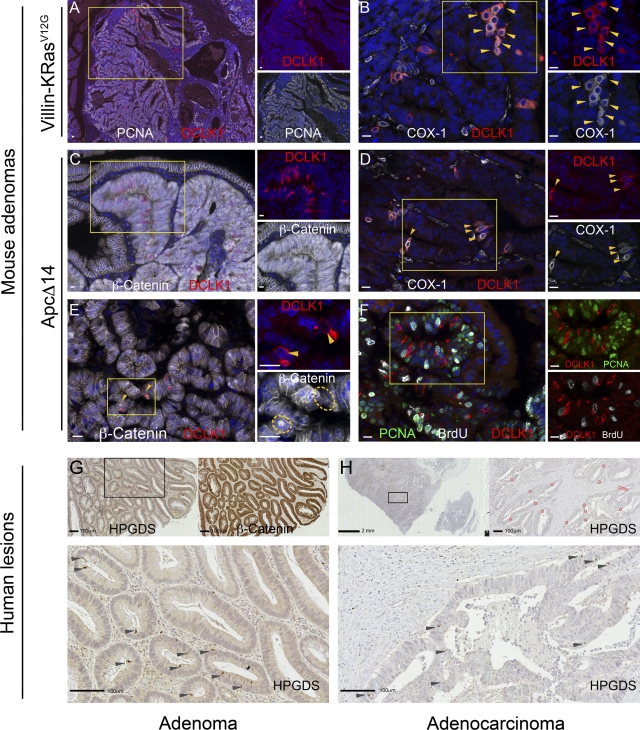
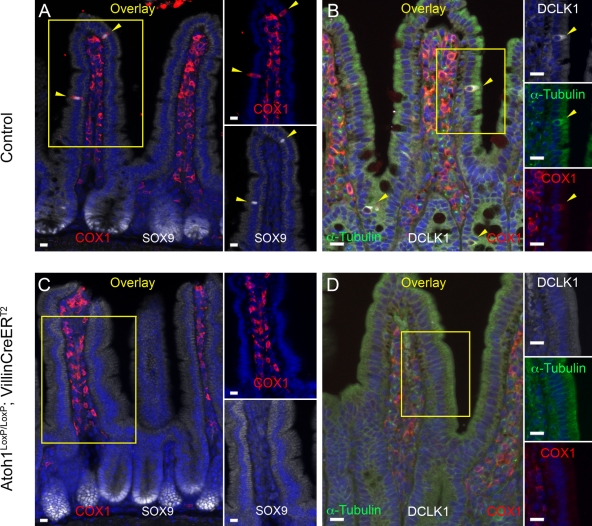
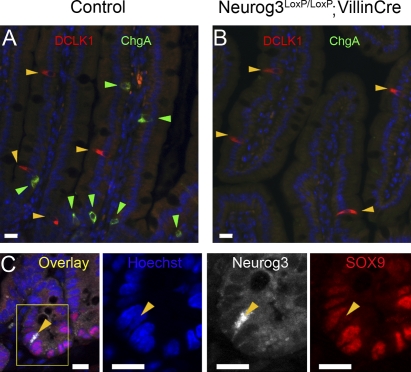
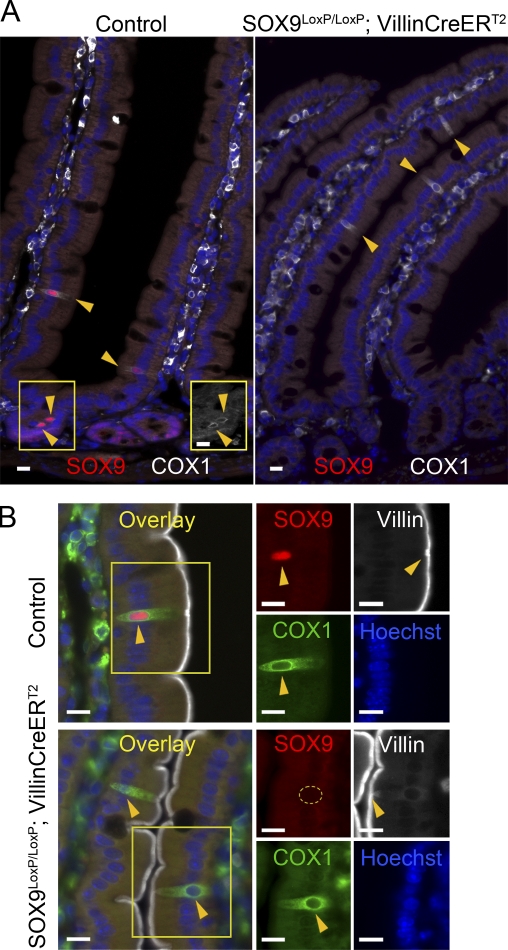
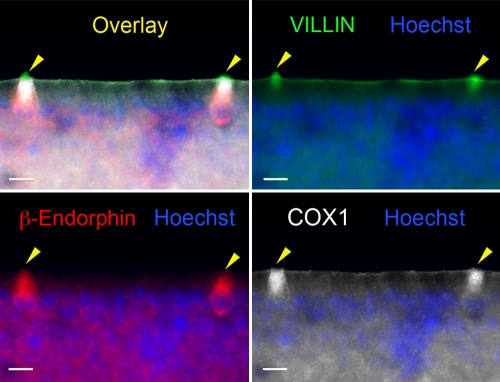
The unique morphology of tuft cells was first revealed by electron microscopy analyses in several endoderm-derived epithelia. Here, we explore the relationship of these cells with the other cell types of the intestinal epithelium and describe the first marker signature allowing their unambiguous identification. We demonstrate that although mature tuft cells express DCLK1, a putative marker of quiescent stem cells, they are post-mitotic, short lived, derive from Lgr5-expressing epithelial stem cells, and are found in mouse and human tumors. We show that whereas the ATOH1/MATH1 transcription factor is essential for their differentiation, Neurog3, SOX9, GFI1, and SPDEF are dispensable, which distinguishes these cells from enteroendocrine, Paneth, and goblet cells, and raises from three to four the number of secretory cell types in the intestinal epithelium. Moreover, we show that tuft cells are the main source of endogenous intestinal opioids and are the only epithelial cells that express cyclooxygenase enzymes, suggesting important roles for these cells in the intestinal epithelium physiopathology.
簇细胞的独特形态首先通过电子显微镜分析在几种内胚层衍生的上皮中揭示出来。在这里,我们探讨了这些细胞与肠上皮其他细胞类型的关系,并描述了允许其明确识别的第一个标记特征。我们证明,尽管成熟的簇细胞表达 DCLK1,一种静止干细胞的假定标志物,但它们是有丝分裂后细胞,寿命短,源自表达 Lgr5 的上皮干细胞,并且存在于小鼠和人类肿瘤中。我们表明,虽然 ATOH1/MATH1 转录因子对于它们的分化是必不可少的,但 Neurog3、SOX9、GFI1 和 SPDEF 是可有可无的,这将这些细胞与肠内分泌细胞、潘氏细胞和杯状细胞区分开来,并将肠上皮中的分泌细胞类型从三种增加到四种。此外,我们表明簇细胞是内源性肠道阿片类物质的主要来源,并且是唯一表达环氧化酶的上皮细胞,这表明这些细胞在肠道上皮的生理病理学中具有重要作用。