Department of Obstetrics and Gynecology, Xiangya Hospital, Central South University, Changsha, Hunan, People's Republic of China.
Int J Nanomedicine. 2011;6:285-94. doi: 10.2147/IJN.S13410. Epub 2011 Feb 2.
To evaluate the feasibility of using magnetic iron oxide (Fe(3)O(4))-dextran-anti-β-human chorionic gonadotropin (HCG) nanoparticles as a gene vector for cellular transfections.
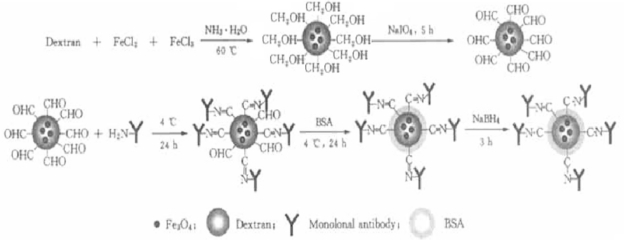
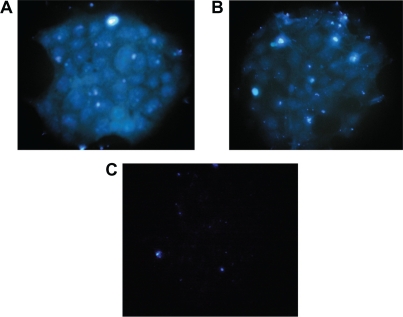
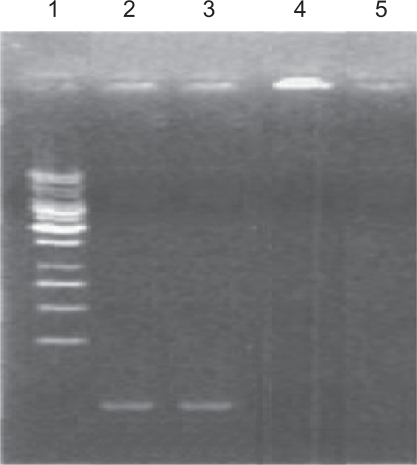
Fe(3)O(4)-dextran-anti-β-HCG nanoparticles were synthesized by chemical coprecipitation. The configuration, diameter, and iron content of the nanoparticles were detected by transmission electron microscopy (TEM), light scatter, and atomic absorption spectrophotometry. A3-(4,5)-dimethylthiahiazo(-z-y1)-3,5-di-phenytetrazoliumromide assay was used to evaluate the cytotoxicity of Fe(3)O(4)-dextran-anti-β-HCG nanoparticles. Enzyme-linked immunosorbent assay and indirect immunofluorescence were used to evaluate immunoreactivity. The efficiency of absorbing DNA and resisting deoxyribonuclease I (DNase I) digestion when bound to Fe(3)O(4)-dextran-anti-β-HCG nanoparticles was examined by agarose gel electrophoresis. The ability of Fe(3)O(4)-dextran-anti-β-HCG nanoparticles to absorb heparanase antisense oligodeoxynucleotides (AS-ODN) nanoparticles in different cell lines was evaluated by flow cytometry. The tissue distribution of heparanase AS-ODN magnetic nanoparticles in choriocarcinoma tumors transplanted in nude mice was detected by atomic absorption spectrophotometry.
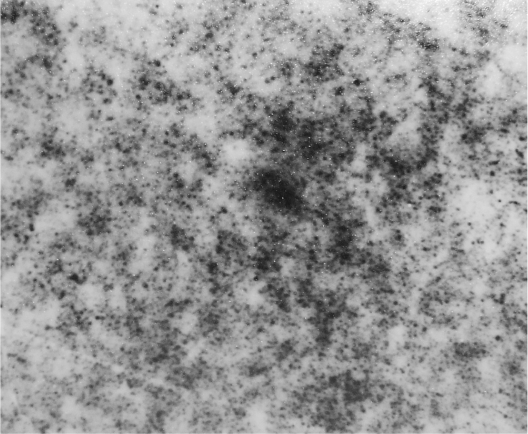
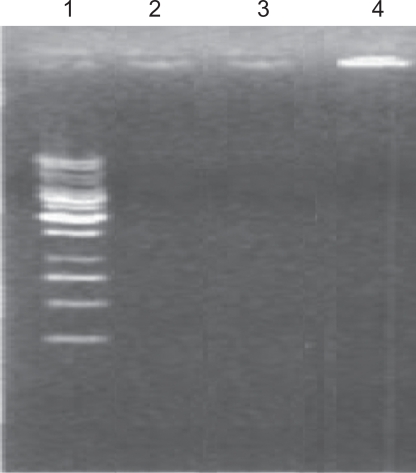
TEM demonstrated that the shape of nanoparticles is irregular. Light scatter revealed nanoparticles with a mean diameter of 75.5 nm and an iron content of 37.5 μg/mL. No cytotoxicity was observed when the concentration of Fe(3)O(4)-dextran-anti-β-HCG nanoparticles was <37.5 μg/mL. Fe(3)O(4)-dextran nanoparticles have a satisfactory potential to combine with β-HCG antibody. Agarose gel electrophoresis analysis of binding experiments showed that after treatment with sodium periodate, Fe(3)O(4)-dextran-anti-β-HCG nanoparticles have a satisfactory potential to absorb DNA, and the protection experiment showed that nanoparticles can effectively protect DNA from DNase I digestion. Aldehyde Fe(3)O(4)-dextran-anti-β-HCG nanoparticles can transfect reporter genes, and the transfection efficiency of these nanoparticles is greater than that of liposomes (P < 0.05). Fe(3)O(4)-dextran-anti-β-HCG nanoparticles can concentrate in choriocarcinoma cells and in transplanted choriocarcinoma tumors.
The results confirm that Fe(3)O(4)-dextran-anti-β-HCG nanoparticles have potential as a secure, effective, and choriocarcinoma-specific targeting gene vector.
评估磁性氧化铁(Fe(3)O(4))-葡聚糖-抗-β-人绒毛膜促性腺激素(HCG)纳米粒子作为细胞转染基因载体的可行性。
通过化学共沉淀法合成 Fe(3)O(4)-葡聚糖-抗-β-HCG 纳米粒子。透射电子显微镜(TEM)、光散射和原子吸收分光光度法检测纳米粒子的结构、直径和铁含量。3-(4,5)-二甲基噻唑(-z-y1)-3,5-二苯基四唑溴盐(MTT)法评估 Fe(3)O(4)-葡聚糖-抗-β-HCG 纳米粒子的细胞毒性。酶联免疫吸附试验(ELISA)和间接免疫荧光法评估免疫反应性。琼脂糖凝胶电泳检测 Fe(3)O(4)-葡聚糖-抗-β-HCG 纳米粒子结合 DNA 的吸收效率和抵抗脱氧核糖核酸酶 I(DNase I)消化的能力。通过流式细胞术评估 Fe(3)O(4)-葡聚糖-抗-β-HCG 纳米粒子在不同细胞系中吸收肝素酶反义寡核苷酸(AS-ODN)纳米粒子的能力。原子吸收分光光度法检测肝素酶 AS-ODN 磁性纳米粒子在裸鼠移植绒毛膜癌肿瘤中的组织分布。
TEM 表明纳米粒子的形状不规则。光散射显示纳米粒子的平均直径为 75.5nm,铁含量为 37.5μg/mL。当 Fe(3)O(4)-葡聚糖-抗-β-HCG 纳米粒子的浓度<37.5μg/mL 时,没有观察到细胞毒性。Fe(3)O(4)-葡聚糖纳米粒子与β-HCG 抗体结合具有良好的潜力。结合实验的琼脂糖凝胶电泳分析表明,经高碘酸钠处理后,Fe(3)O(4)-葡聚糖-抗-β-HCG 纳米粒子具有良好的吸收 DNA 的能力,保护实验表明纳米粒子能有效保护 DNA 免受 DNase I 消化。醛基 Fe(3)O(4)-葡聚糖-抗-β-HCG 纳米粒子可转染报告基因,且这些纳米粒子的转染效率大于脂质体(P<0.05)。Fe(3)O(4)-葡聚糖-抗-β-HCG 纳米粒子可在绒癌细胞和移植的绒癌细胞肿瘤中聚集。
结果证实,Fe(3)O(4)-葡聚糖-抗-β-HCG 纳米粒子具有作为安全、有效、绒癌特异性靶向基因载体的潜力。