Department of Molecular Pathology, Tokyo Medical University, Tokyo, Japan.
Department of Clinical Molecular Gene, Tokyo University of Pharmacy and Life Science, Tokyo, Japan.
Nutr Metab (Lond). 2011 Mar 8;8:14. doi: 10.1186/1743-7075-8-14.
Obesity and metabolic syndrome are important public concerns, and there is increasing demand for effective therapeutic strategies. Flavonoids are expected to improve the risk factors associated with metabolic syndrome. Anthocyanidins are a kind of flavonoids; well known for their anti-oxidative, anti-inflammatory and anti-tumor properties. However, their effects on adipocytes and molecular systems are not well defined. In this study, we examined the effects of anthocyanidins-enriched bilberry extracts on adipocyte differentiation.
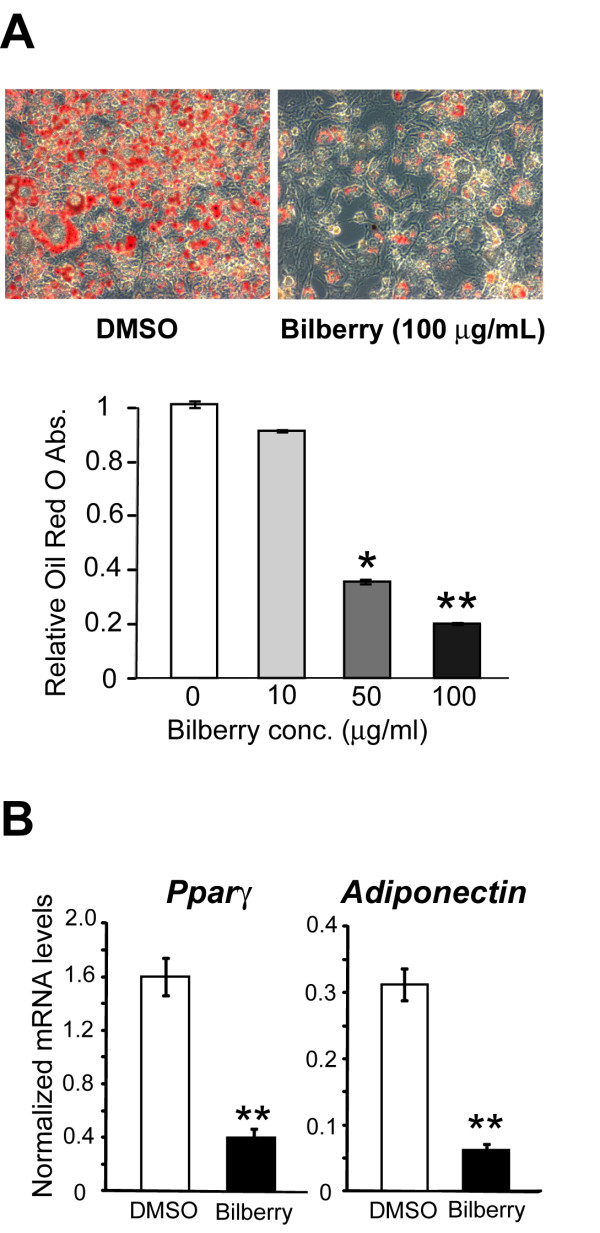
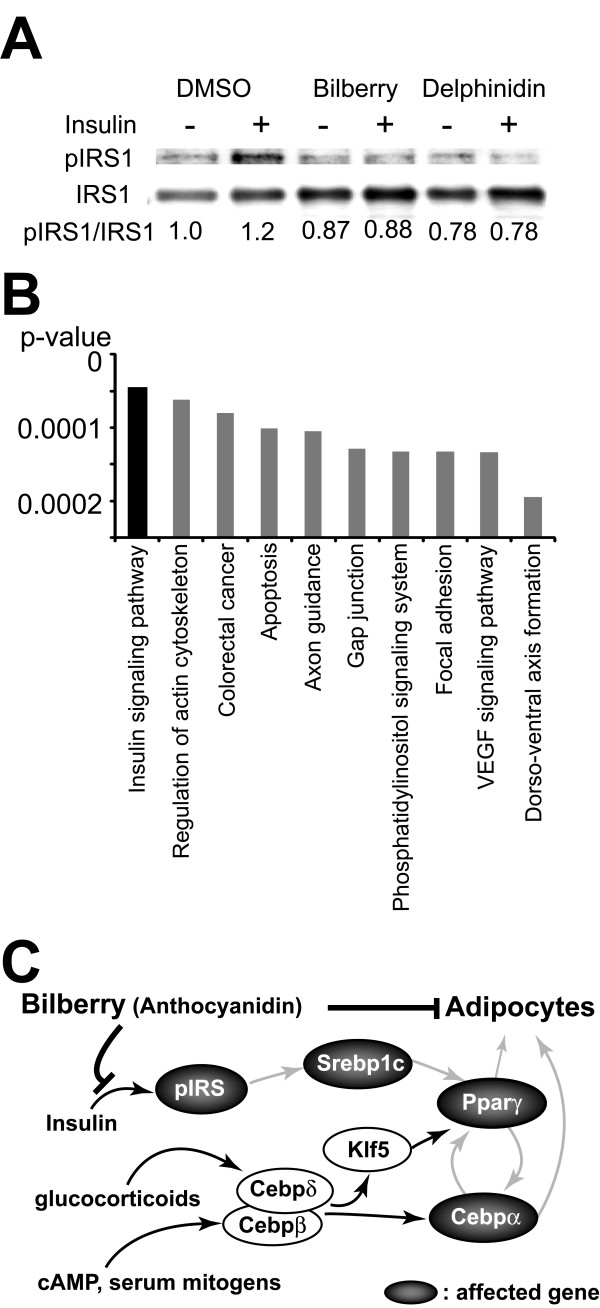
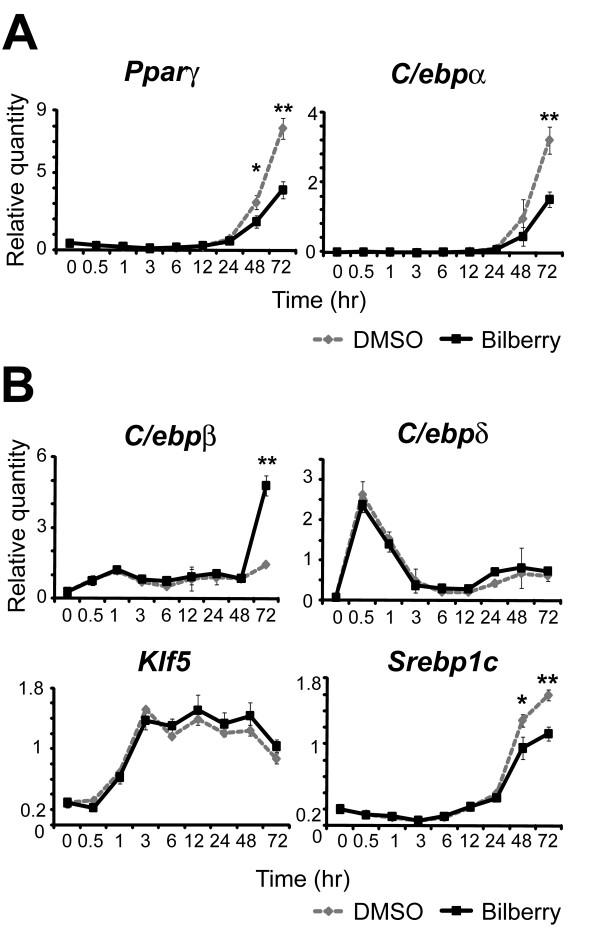
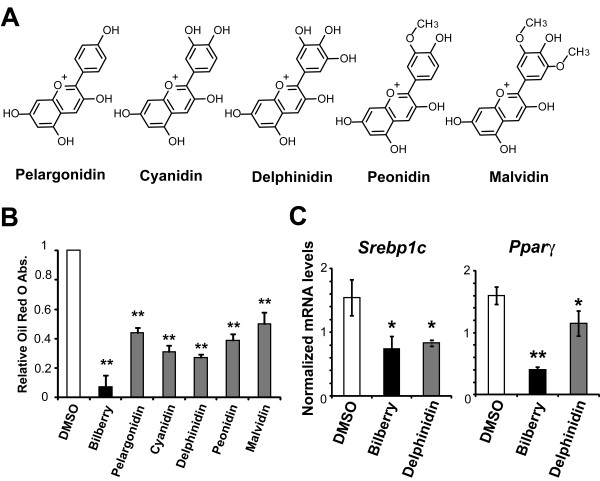
Utilizing 3T3-L1 cell line, we investigated that bilberry extracts and anthocyanidins induced inhibition of lipid accumulation during adipogenesis. To identify what is the most important bilberry mediated-effect, we analyzed the expressions of key transcriptional factors associated with adipocyte differentiation by Real Time (RT)-PCR. From the results of RT-PCR, we hypothesized that bilberry extracts and anthocyanidins blocks insulin signal, we determined the phosphorylation of tyrosine residues of insulin receptor substrate 1 (IRS1) protein by western blotting analysis. In addition, we compared the whole-genome expression profiles of early stage of adipocyte differentiation under four different growth conditions (DMSO, bilberry, two anthocyanidins) by microarray analyses and Gene Set Enrichment Analysis (GSEA).
Exposure to bilberry extracts and anthocyanidins during adipocyte differentiation inhibited 3T3-L1 differentiation. During this period, bilberry extracts and anthocyanidin significantly decreased a key adipocyte differentiation-associated marker, peroxisome proliferator-activated receptor- γ (Ppar γ ) and sterol regulatory element-binding protein 1c (Srebp1c). Western blotting analysis showed that bilberry extracts and anthocyanidin decreased the phosphorylation of tyrosine residues of IRS1. In addition, microarray experiments and GSEA data revealed significantly altered expression of the known genes of the insulin pathway in cells treated with bilberry extracts or anthocyanidins in the early differentiation stages.
Our data demonstrate that anthocyanidin enriched bilberry extracts strongly inhibit the adipocyte differentiation via the insulin pathway. Furthermore, bilberry extracts might be used as a potential complementary treatment for the obese patients with metabolic syndrome.
肥胖和代谢综合征是重要的公共卫生问题,人们对有效治疗策略的需求日益增加。类黄酮有望改善与代谢综合征相关的风险因素。花色苷是一种类黄酮,以其抗氧化、抗炎和抗肿瘤特性而闻名。然而,它们对脂肪细胞和分子系统的影响尚未得到明确界定。在这项研究中,我们研究了花色苷丰富的越橘提取物对脂肪细胞分化的影响。
我们利用 3T3-L1 细胞系研究了越橘提取物和花色苷在脂肪生成过程中诱导脂质积累抑制的作用。为了确定越橘介导的最重要的作用是什么,我们通过实时(RT)-PCR 分析了与脂肪细胞分化相关的关键转录因子的表达。根据 RT-PCR 的结果,我们假设越橘提取物和花色苷阻断胰岛素信号,我们通过 Western 印迹分析测定胰岛素受体底物 1(IRS1)蛋白的酪氨酸残基磷酸化。此外,我们通过微阵列分析和基因集富集分析(GSEA)比较了在四种不同生长条件(DMSO、越橘、两种花色苷)下早期脂肪细胞分化的全基因组表达谱。
在脂肪细胞分化过程中暴露于越橘提取物和花色苷会抑制 3T3-L1 分化。在此期间,越橘提取物和花色苷显著降低了关键的脂肪细胞分化相关标志物过氧化物酶体增殖物激活受体-γ(Pparγ)和固醇调节元件结合蛋白 1c(Srebp1c)。Western 印迹分析表明,越橘提取物和花色苷降低了 IRS1 酪氨酸残基的磷酸化。此外,微阵列实验和 GSEA 数据显示,在早期分化阶段用越橘提取物或花色苷处理的细胞中,胰岛素通路的已知基因表达明显改变。
我们的数据表明,花色苷丰富的越橘提取物通过胰岛素途径强烈抑制脂肪细胞分化。此外,越橘提取物可作为肥胖合并代谢综合征患者的潜在辅助治疗方法。