Interdisciplinary Centre for Mathematical and Computational Modeling, University of Warsaw, Warsaw, Poland.
Biopolymers. 2011 Sep;95(9):616-27. doi: 10.1002/bip.21619. Epub 2011 Mar 10.
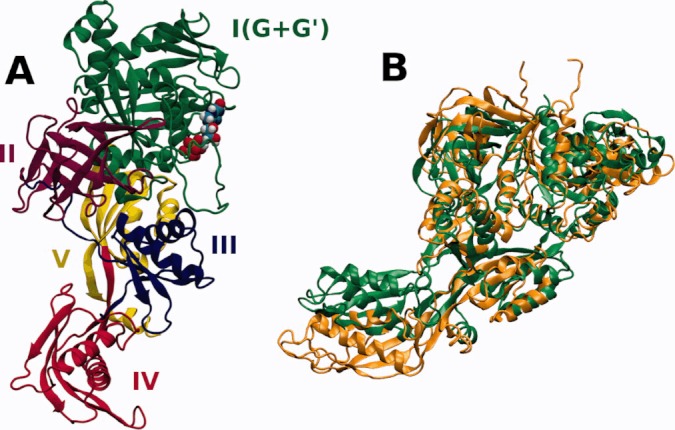
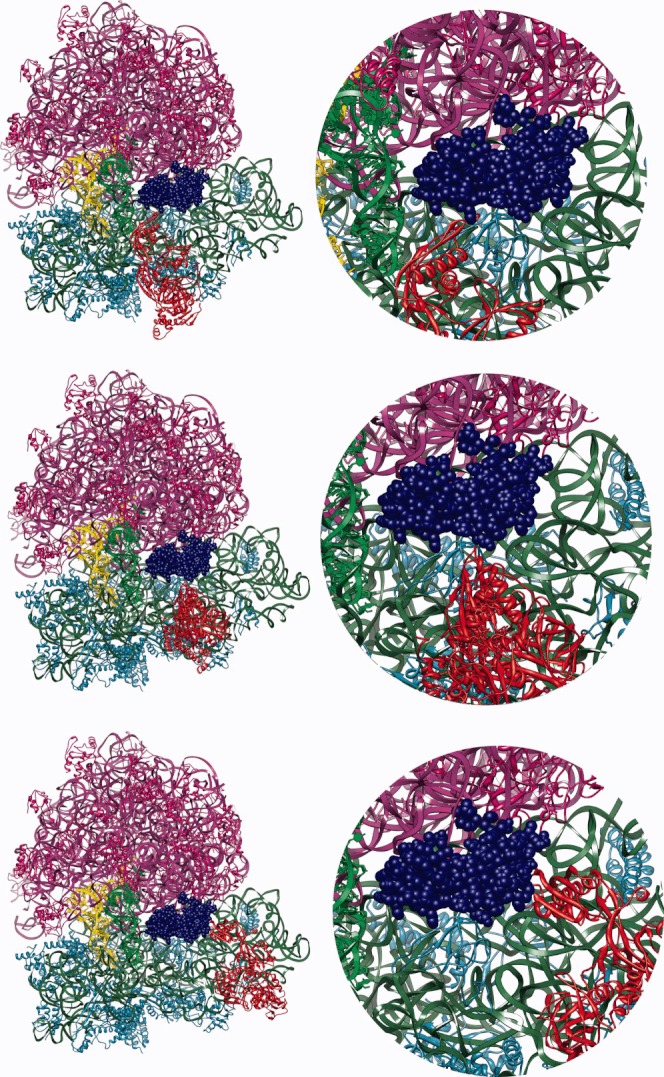
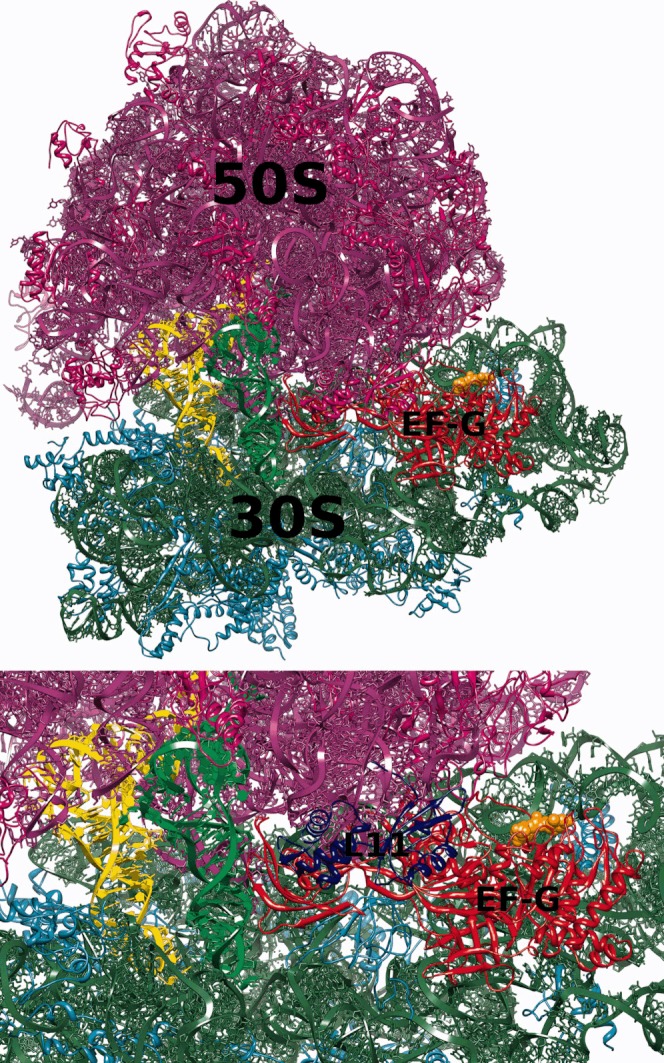
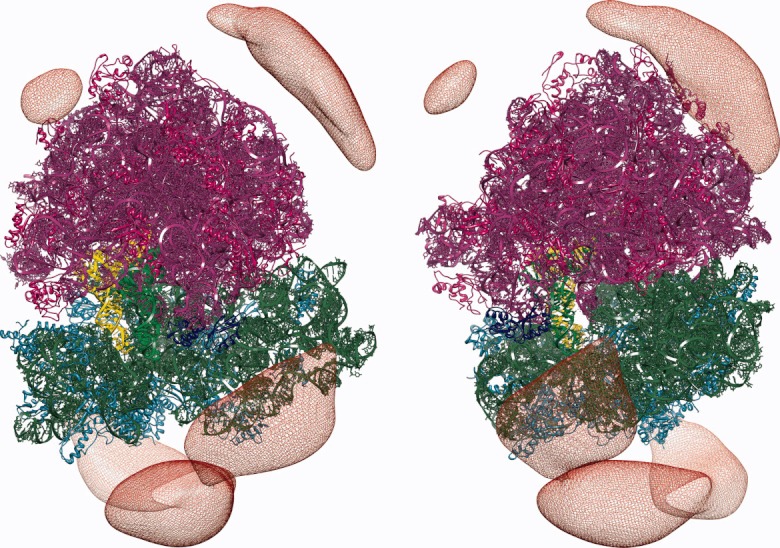
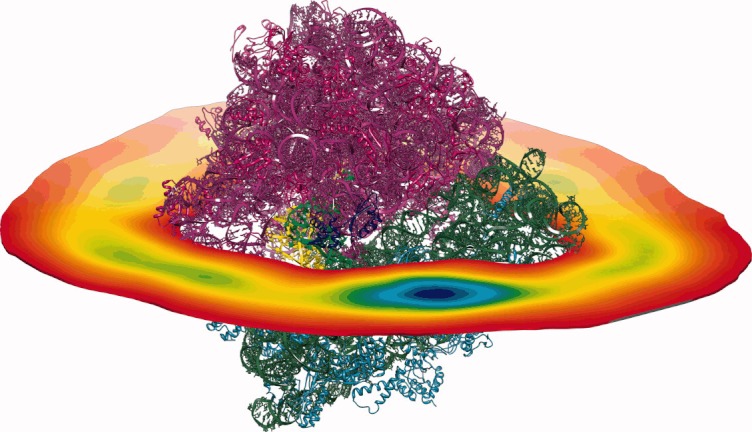
Protein synthesis on the ribosome involves a number of external protein factors that bind at its functional sites. One key factor is the elongation factor G (EF-G) that facilitates the translocation of transfer RNAs between their binding sites, as well as advancement of the messenger RNA by one codon. The details of the EF-G/ribosome diffusional encounter and EF-G association pathway still remain unanswered. Here, we applied Brownian dynamics methodology to study bimolecular association in the bacterial EF-G/70S ribosome system. We estimated the EF-G association rate constants at 150 and 300 mM monovalent ionic strengths and obtained reasonable agreement with kinetic experiments. We have also elucidated the details of EF-G/ribosome association paths and found that positioning of the L11 protein of the large ribosomal subunit is likely crucial for EF-G entry to its binding site.
核糖体上的蛋白质合成涉及许多结合在其功能位点上的外部蛋白质因子。一个关键的因素是延伸因子 G(EF-G),它促进 tRNA 在其结合位点之间的转移,以及信使 RNA 向前移动一个密码子。EF-G/核糖体扩散接触和 EF-G 结合途径的细节仍然没有得到解答。在这里,我们应用布朗动力学方法研究了细菌 EF-G/70S 核糖体系统中的双分子结合。我们在 150 和 300mM 单价离子强度下估计了 EF-G 结合的速率常数,并与动力学实验得到了很好的一致。我们还阐明了 EF-G/核糖体结合途径的细节,并发现大亚基 L11 蛋白的定位可能对 EF-G 进入其结合位点至关重要。