Department of Medicina Interna, Università di Tor Vergata, Viale Oxford 81, 00133 Rome, Italy.
Cardiol Res Pract. 2011 Mar 7;2011:653182. doi: 10.4061/2011/653182.
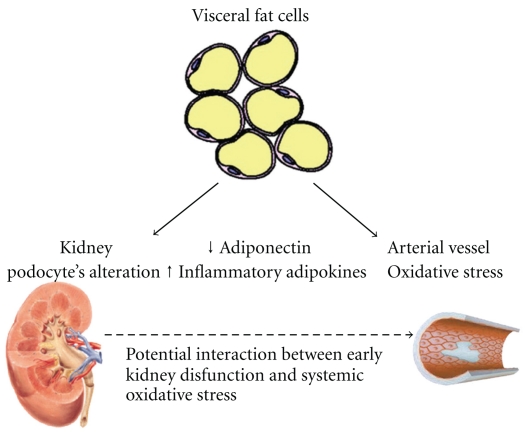
Obesity is a chronic disease, whose incidence is alarmingly growing. It is associated with metabolic abnormalities and cardiovascular complications. These complications are clustered in the metabolic syndrome (MetS) leading to high cardiovascular morbidity and mortality. Obesity predisposes to diabetic nephropathy, hypertensive nephrosclerosis, and focal and segmental glomerular sclerosis and represents an independent risk factor for the development and progression of chronic kidney disease (CKD). Albuminuria is a major risk factor for cardiovascular diseases (CVDs). Microalbuminuria has been described as early manifestation of MetS-associated kidney damage and diabetic nephropathy. Obesity and MetS affect renal physiology and metabolism through mechanisms which include altered levels of adipokines such as leptin and adiponectin, oxidative stress, and inflammation. Secretory products of adipose tissue also deeply and negatively influence endothelial function. A better understanding of these interactions will help in designing more effective treatments aimed to protect both renal and cardiovascular systems.
肥胖是一种慢性疾病,其发病率正在惊人地增长。它与代谢异常和心血管并发症有关。这些并发症聚集在代谢综合征(MetS)中,导致心血管发病率和死亡率升高。肥胖易患糖尿病肾病、高血压性肾硬化症和局灶节段性肾小球硬化症,并成为慢性肾脏病(CKD)发生和进展的独立危险因素。白蛋白尿是心血管疾病(CVDs)的主要危险因素。微量白蛋白尿被描述为 MetS 相关肾损伤和糖尿病肾病的早期表现。肥胖和 MetS 通过改变脂肪因子(如瘦素和脂联素)水平、氧化应激和炎症等机制影响肾脏的生理和代谢。脂肪组织的分泌产物也会深度和负面地影响内皮功能。更好地了解这些相互作用将有助于设计更有效的治疗方法,以保护肾脏和心血管系统。