Plant Physiology Unit, Department of Plant Biology, University of Turin, Innovation Centre, Turin, Italy.
PLoS One. 2011 Mar 9;6(3):e17195. doi: 10.1371/journal.pone.0017195.
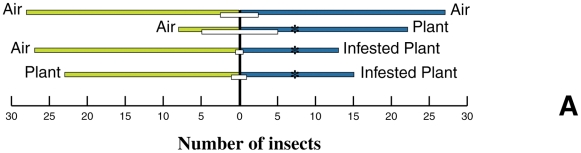
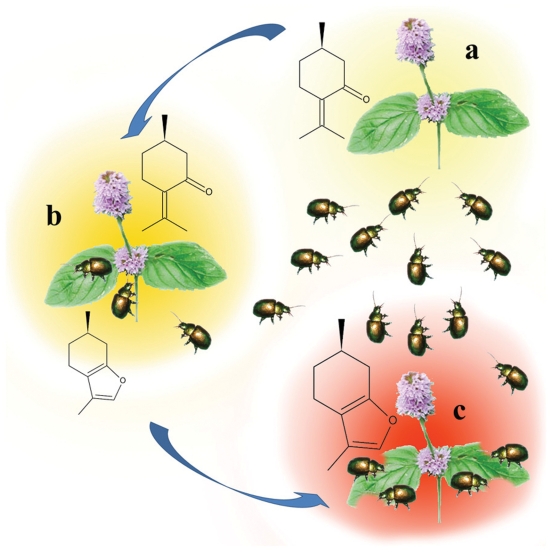
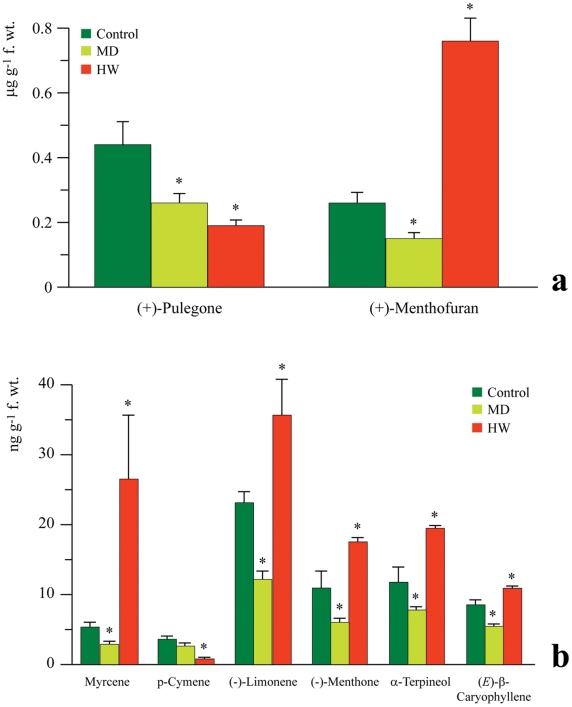
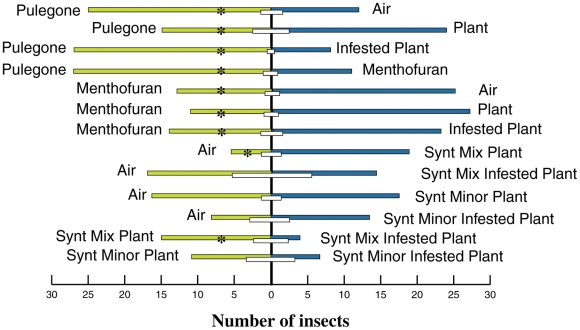
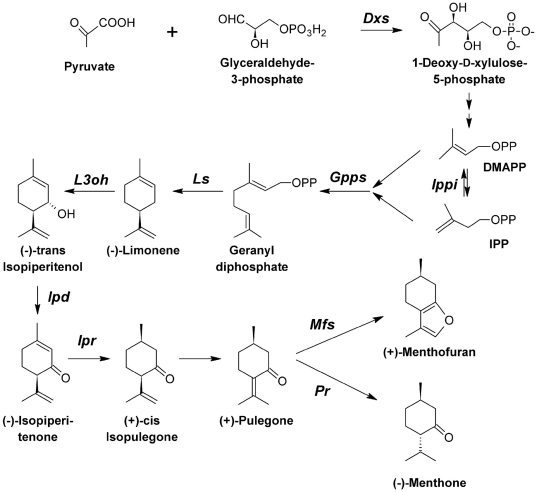
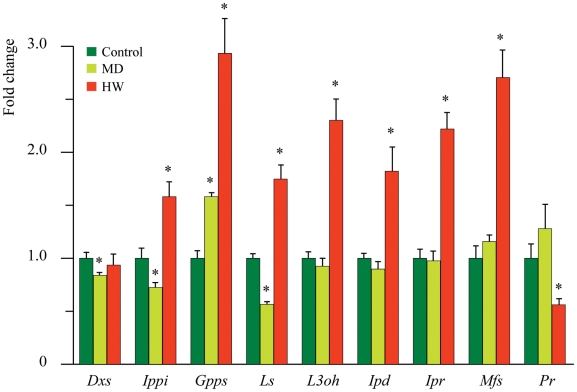
Interactions between herbivorous insects and plants storing terpenoids are poorly understood. This study describes the ability of Chrysolina herbacea to use volatiles emitted by undamaged Mentha aquatica plants as attractants and the plant's response to herbivory, which involves the production of deterrent molecules. Emitted plant volatiles were analyzed by GC-MS. The insect's response to plant volatiles was tested by Y-tube olfactometer bioassays. Total RNA was extracted from control plants, mechanically damaged leaves, and leaves damaged by herbivores. The terpenoid quantitative gene expressions (qPCR) were then assayed. Upon herbivory, M. aquatica synthesizes and emits (+)-menthofuran, which acts as a deterrent to C. herbacea. Herbivory was found to up-regulate the expression of genes involved in terpenoid biosynthesis. The increased emission of (+)-menthofuran was correlated with the upregulation of (+)-menthofuran synthase.
植食性昆虫与萜类化合物储存植物之间的相互作用还知之甚少。本研究描述了 Chrysomela herbacea 利用未受损的 Mentha aquatica 植物挥发物作为引诱剂的能力,以及植物对取食的反应,包括产生驱避分子。通过 GC-MS 分析挥发植物的挥发性化合物。通过 Y 型管嗅觉计生物测定测试昆虫对植物挥发物的反应。从对照植物、机械损伤叶片和被取食叶片中提取总 RNA。然后进行萜类定量基因表达 (qPCR) 分析。在取食后,M. aquatica 合成并释放 (+)-薄荷呋喃,它对 C. herbacea 起驱避作用。取食被发现上调了萜类生物合成相关基因的表达。(+)-薄荷呋喃合酶的上调与 (+)-薄荷呋喃的增加释放有关。