Institutes of Evolution, Immunology and Infection Research, University of Edinburgh, Edinburgh, United Kingdom.
PLoS Pathog. 2011 Mar;7(3):e1001309. doi: 10.1371/journal.ppat.1001309. Epub 2011 Mar 3.
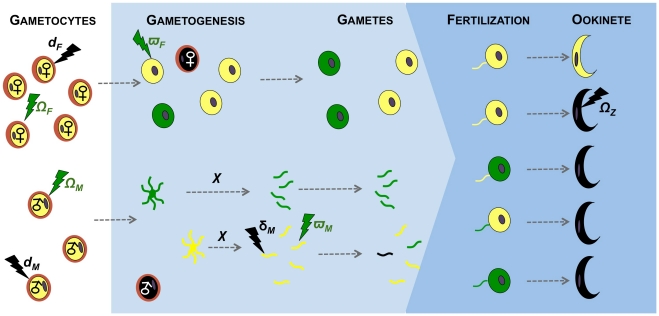
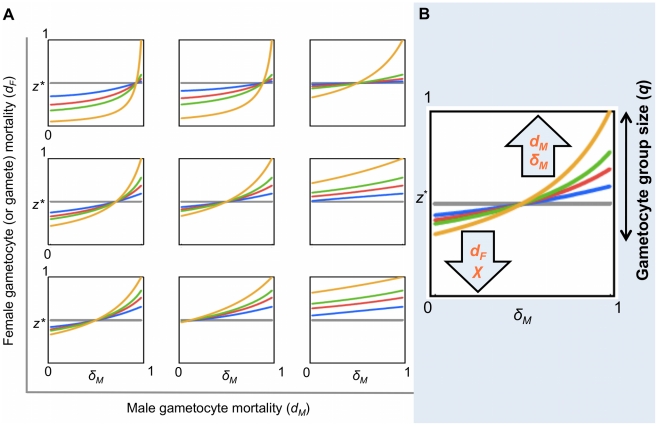
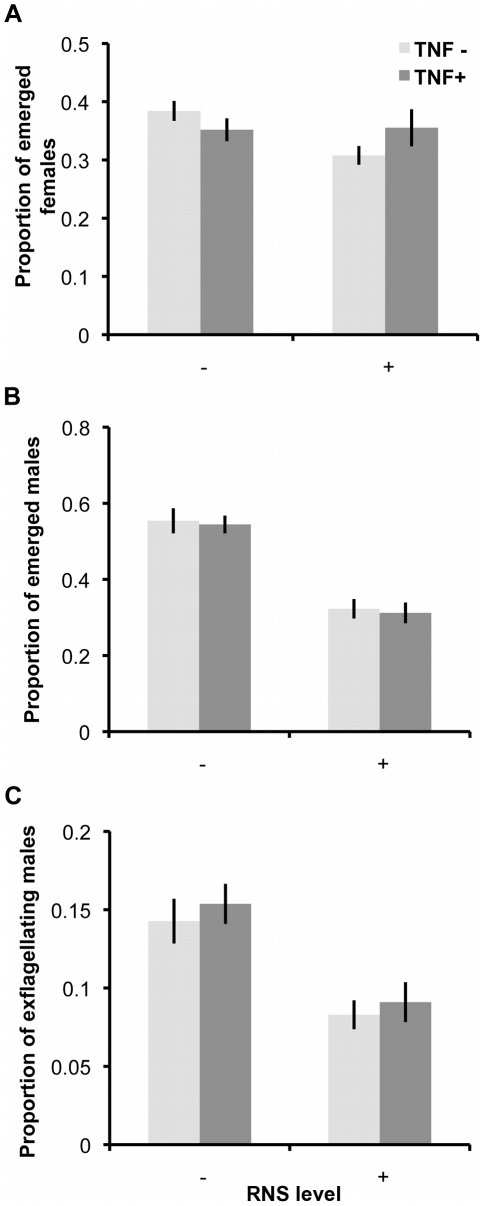
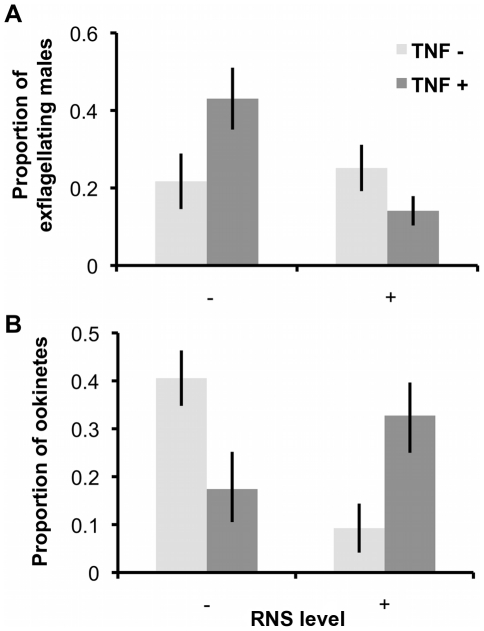
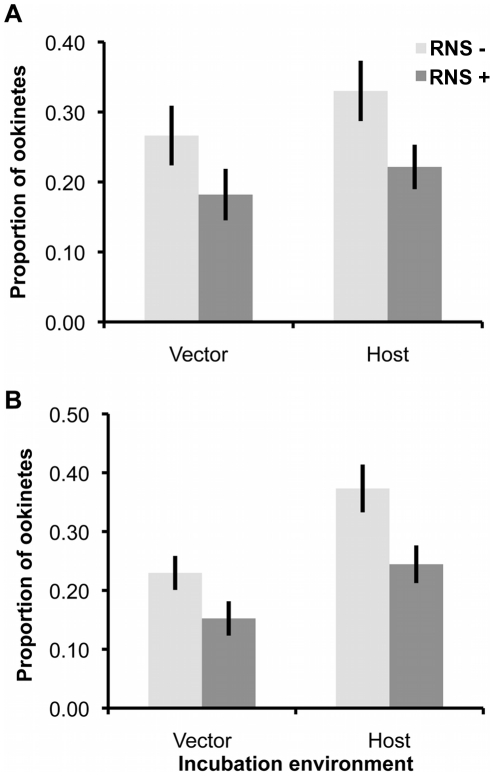
Malaria parasites must undergo a round of sexual reproduction in the blood meal of a mosquito vector to be transmitted between hosts. Developing a transmission-blocking intervention to prevent parasites from mating is a major goal of biomedicine, but its effectiveness could be compromised if parasites can compensate by simply adjusting their sex allocation strategies. Recently, the application of evolutionary theory for sex allocation has been supported by experiments demonstrating that malaria parasites adjust their sex ratios in response to infection genetic diversity, precisely as predicted. Theory also predicts that parasites should adjust sex allocation in response to host immunity. Whilst data are supportive, the assumptions underlying this prediction - that host immune responses have differential effects on the mating ability of males and females - have not yet been tested. Here, we combine experimental work with theoretical models in order to investigate whether the development and fertility of male and female parasites is affected by innate immune factors and develop new theory to predict how parasites' sex allocation strategies should evolve in response to the observed effects. Specifically, we demonstrate that reactive nitrogen species impair gametogenesis of males only, but reduce the fertility of both male and female gametes. In contrast, tumour necrosis factor-α does not influence gametogenesis in either sex but impairs zygote development. Therefore, our experiments demonstrate that immune factors have complex effects on each sex, ranging from reducing the ability of gametocytes to develop into gametes, to affecting the viability of offspring. We incorporate these results into theory to predict how the evolutionary trajectories of parasite sex ratio strategies are shaped by sex differences in gamete production, fertility and offspring development. We show that medical interventions targeting offspring development are more likely to be 'evolution-proof' than interventions directed at killing males or females. Given the drive to develop medical interventions that interfere with parasite mating, our data and theoretical models have important implications.
疟原虫必须在蚊子媒介的血液餐中经历一轮有性繁殖,才能在宿主之间传播。开发一种阻断传播的干预措施来阻止寄生虫交配是生物医学的主要目标,但如果寄生虫可以通过简单地调整其性别分配策略来弥补,那么其有效性可能会受到影响。最近,应用进化理论进行性别分配得到了实验的支持,这些实验表明,疟原虫会根据感染的遗传多样性调整其性别比例,这与预测的完全一致。理论还预测,寄生虫应该根据宿主免疫来调整性别分配。虽然数据是支持的,但这一预测的假设——宿主免疫反应对雄性和雌性的交配能力有不同的影响——尚未得到检验。在这里,我们将实验工作与理论模型结合起来,以研究寄生虫的性别分配策略是否会受到先天免疫因素的影响,并开发新的理论来预测寄生虫的性别分配策略应该如何进化以适应观察到的影响。具体来说,我们证明活性氮物种仅损害雄性配子体的生殖,但降低了雄性和雌性配子的生育能力。相比之下,肿瘤坏死因子-α对两性配子体的生殖都没有影响,但会损害合子的发育。因此,我们的实验表明,免疫因素对每一种性别都有复杂的影响,从降低配子体发育成配子的能力到影响后代的活力。我们将这些结果纳入理论,以预测寄生虫性别比例策略的进化轨迹如何受到配子体产生、生育力和后代发育的性别差异的影响。我们表明,针对后代发育的医学干预措施比针对杀死雄性或雌性的干预措施更有可能“免受进化影响”。鉴于开发干扰寄生虫交配的医学干预措施的动力,我们的数据和理论模型具有重要意义。