Department of Neuroscience, Norwegian University of Science and Technology, Trondheim, Norway.
J Headache Pain. 2011 Aug;12(4):443-51. doi: 10.1007/s10194-011-0329-1. Epub 2011 Mar 26.
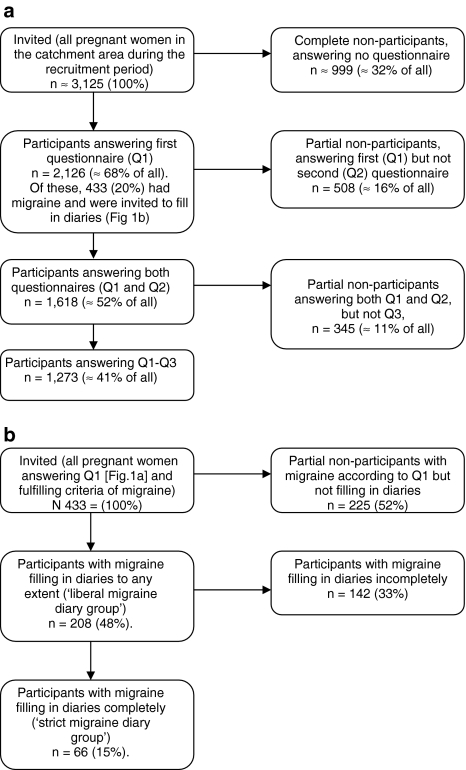
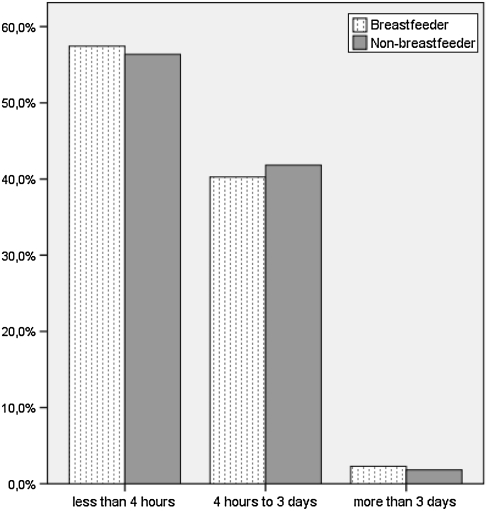
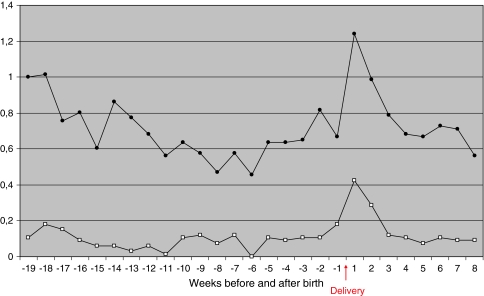
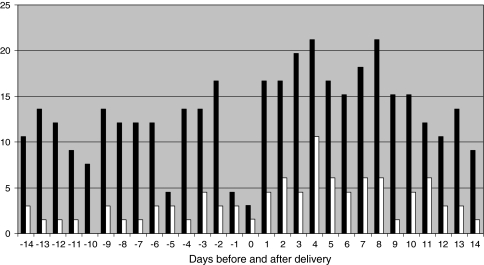
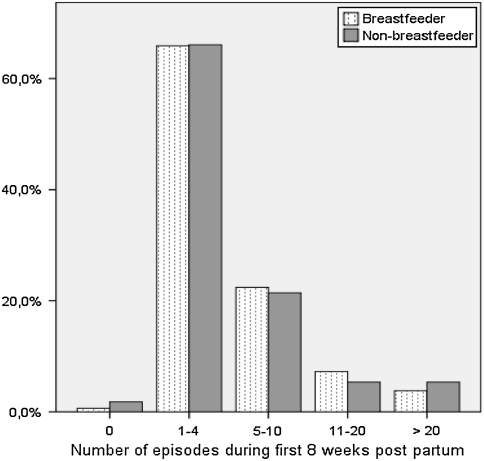
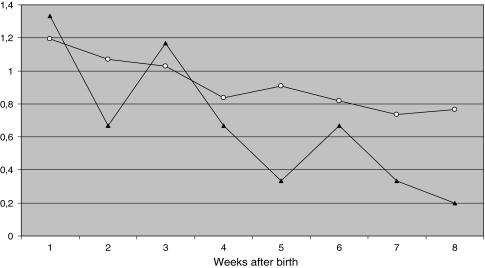
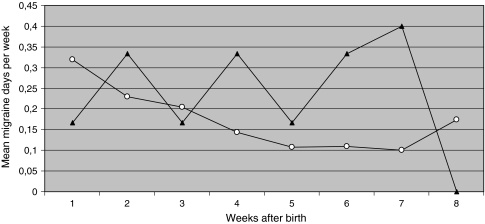
There is little prospectively gathered data on the course of headaches during pregnancy and postpartum, and the influence of breastfeeding is unclear. This is a large, prospective study, which invited all pregnant women in the catchment area during a defined period. All participants (n = 2,126) filled in questionnaires concerning headache. Among these, a total of 208 women with migraine according to the International Headache Society criteria also filled in detailed headache diaries during pregnancy and the puerperal period. Freedom from earlier headaches during pregnancy was significantly more common than new onset of headache during pregnancy (p < 0.001). This was not influenced by prior use of oral contraceptives. According to the diaries, there was a gradual decrease during pregnancy in the frequency of all headaches and of self-considered migraine. There was also a significant decrease in the duration of headaches (p < 0.001) during pregnancy compared to before. Earlier parity did not influence the course. Apart from a significant increase during the first week postpartum (p < 0.01), the overall occurrence of headaches during puerperium did not differ from the pregnancy period. Compared to pregnancy, there was a postpartum increase in the mean intensity (p < 0.01) and duration (p = 0.050) of headaches, as well as in the mean number of analgesics used (p < 0.001). Breastfeeding did not influence the occurrence of headaches postpartum. These data are of practical value for informing pregnant migraineurs about the typical clinical prospects and for giving advice on breastfeeding.
关于怀孕期间和产后头痛的过程,前瞻性收集的数据很少,母乳喂养的影响也不清楚。这是一项大型的前瞻性研究,邀请了在特定时间段内该地区的所有孕妇参与。所有参与者(n=2126)都填写了有关头痛的问卷。其中,共有 208 名根据国际头痛协会标准诊断为偏头痛的女性还在怀孕期间和产褥期填写了详细的头痛日记。与怀孕期间新发头痛相比,怀孕期间无头痛的比例明显更高(p<0.001)。这不受先前使用口服避孕药的影响。根据日记,所有头痛和自认为的偏头痛的频率在怀孕期间逐渐下降。头痛的持续时间也显著缩短(p<0.001)与怀孕前相比。先前的产次并不影响病程。除了产后第一周明显增加(p<0.01)外,产褥期头痛的总体发生率与怀孕期间没有差异。与怀孕期间相比,产后头痛的平均强度(p<0.01)和持续时间(p=0.050)以及使用的镇痛药平均数量(p<0.001)都增加了。母乳喂养并不影响产后头痛的发生。这些数据对于告知孕妇偏头痛患者典型的临床前景以及提供母乳喂养建议具有实际价值。