Takeda J, Cheng A, Mauxion F, Nelson C A, Newberry R D, Sha W C, Sen R, Loh D Y
Howard Hughes Medical Institute, Washington University School of Medicine, St. Louis, Missouri 63110.
Mol Cell Biol. 1990 Oct;10(10):5027-35. doi: 10.1128/mcb.10.10.5027-5035.1990.
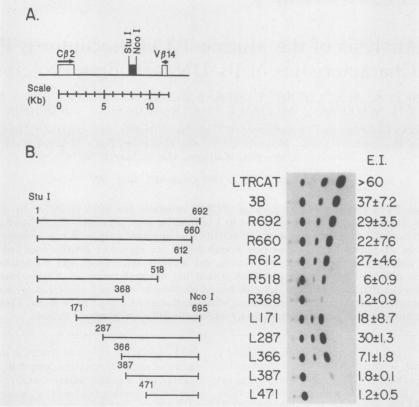
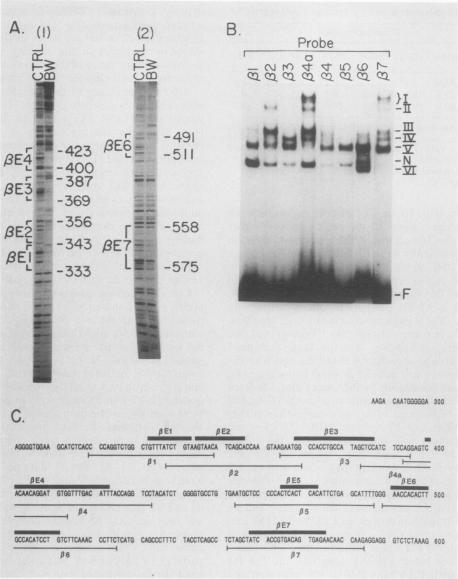
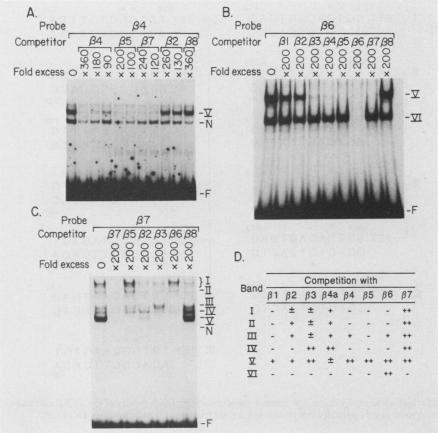
The minimal T-cell receptor (TCR) beta-chain (TCR beta) enhancer has been identified by transfection into lymphoid cells. The minimal enhancer was active in T cells and in some B-lineage cells. When a larger fragment containing the minimal enhancer was used, its activity was apparent only in T cells. Studies with phytohemagglutinin and 4 beta-phorbol-12,13-dibutyrate revealed that the enhancer activity was increased by these agents. By a combination of DNase I footprinting, gel mobility shift assay, and methylation interference analysis, seven different motifs were identified within the minimal enhancer. Furthermore, competition experiments showed that some of these elements bound identical or similar factors that are known to bind to the TCR V beta promoter decamer or to the immunoglobulin enhancer kappa E2 or muEBP-E motif. These shared motifs may be important in the differential gene activity among the different lymphoid subsets.
通过转染至淋巴细胞已鉴定出最小的T细胞受体(TCR)β链(TCRβ)增强子。该最小增强子在T细胞和一些B谱系细胞中具有活性。当使用包含最小增强子的更大片段时,其活性仅在T细胞中明显。用植物血凝素和4β-佛波醇-12,13-二丁酸酯进行的研究表明,这些试剂可增强增强子活性。通过DNA酶I足迹法、凝胶迁移率变动分析和甲基化干扰分析相结合,在最小增强子内鉴定出七个不同的基序。此外,竞争实验表明,这些元件中的一些结合了已知与TCR Vβ启动子十聚体或免疫球蛋白增强子κE2或μEBP-E基序结合的相同或相似因子。这些共享基序可能在不同淋巴亚群之间的差异基因活性中起重要作用。