Branton Peter J, McAdam Kevin G, Winter Dinah B, Liu Chuan, Duke Martin G, Proctor Christopher J
Group Research & Development, British American Tobacco, Regents Park Road, Millbrook, Southampton SO15 8TL, UK.
Chem Cent J. 2011 Apr 4;5(1):15. doi: 10.1186/1752-153X-5-15.
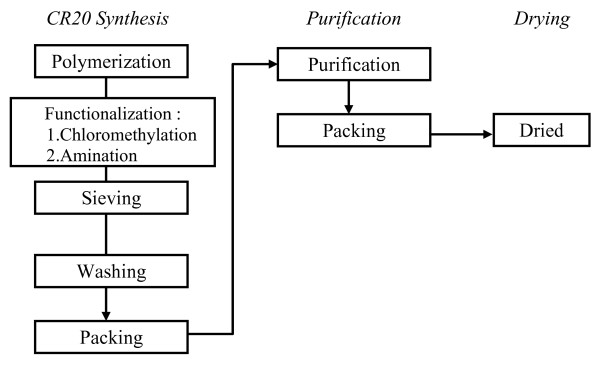
Cigarette smoking is a well recognized cause of diseases such as lung cancer, chronic obstructive pulmonary disease and cardiovascular disease. Of the more than 5000 identified species in cigarette smoke, at least 150 have toxicological activity. For example, formaldehyde and acetaldehyde have been assigned as Group 1 and Group 2B carcinogens by IARC, and hydrogen cyanide has been identified as a respiratory and cardiovascular toxicant. Active carbon has been shown to be an effective material for the physical adsorption of many of the smoke volatile species. However, physical adsorption of acetaldehyde, formaldehyde and also hydrogen cyanide from smoke is less effective using carbon. Alternative methods for the removal of these species from cigarette smoke are therefore of interest. A macroporous, polystyrene based ion-exchange resin (Diaion®CR20) with surface amine group functionality has been investigated for its ability to react with aldehydes and HCN in an aerosol stream, and thus selectively reduce the yields of these compounds (in particular formaldehyde) in mainstream cigarette smoke.
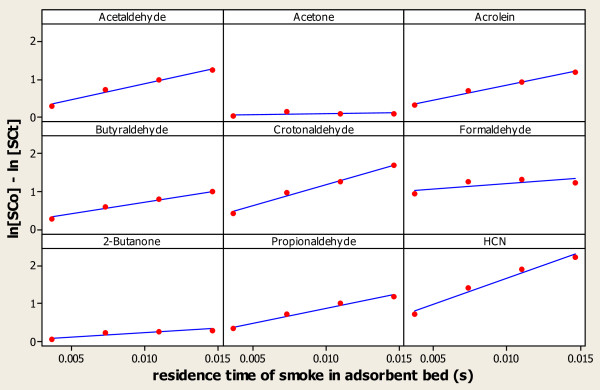
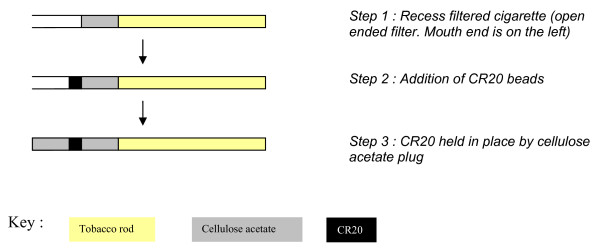
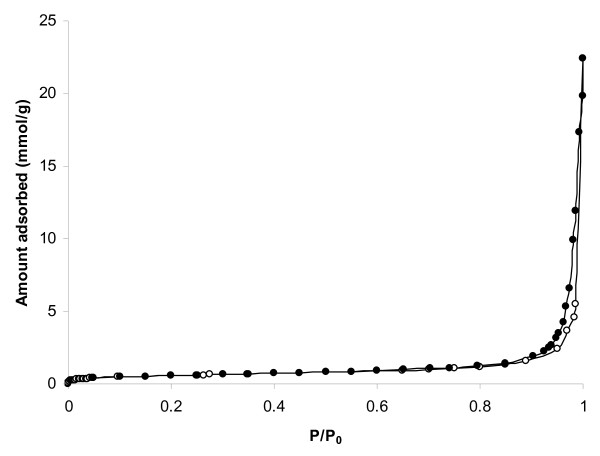
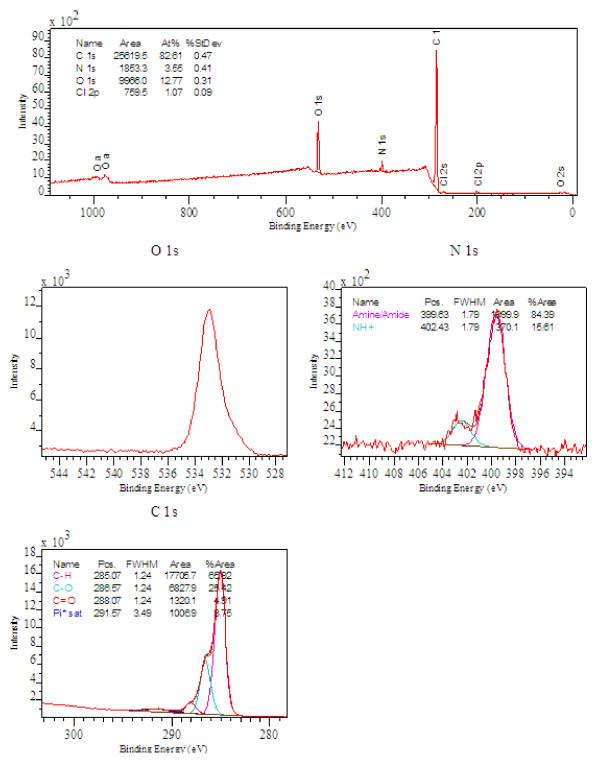
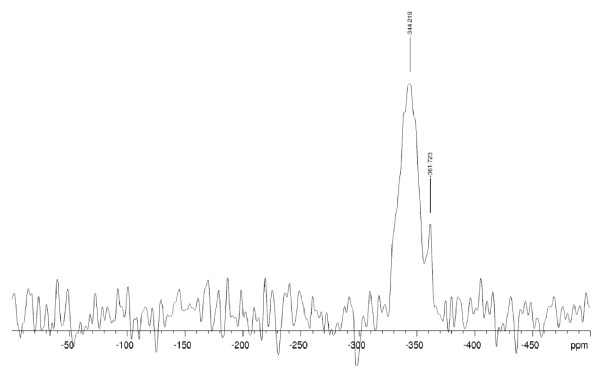
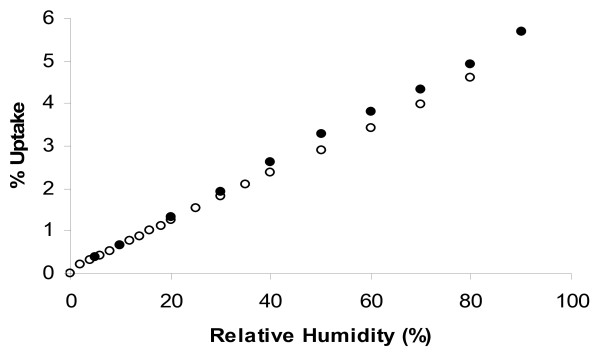
Resin surface chemistry was characterized using vapour sorption, XPS, TOF-SIMS and 15N NMR. Diaion®CR20 was found to have structural characteristics indicating weak physisorption properties, but sufficient surface functionalities to selectively remove aldehydes and HCN from cigarette smoke. Using 60 mg of Diaion®CR20 in a cigarette cavity filter gave reductions in smoke formaldehyde greater than 50% (estimated to be equivalent to >80% of the formaldehyde present in the smoke vapour phase) independent of a range of flow rates. Substantial removal of HCN (>80%) and acetaldehyde (>60%) was also observed. The performance of Diaion®CR20 was found to be consistent over a test period of 6 months. The overall adsorption for the majority of smoke compounds measured appeared to follow a pseudo-first order approximation to second order kinetics.
This study has shown that Diaion®CR20 is a highly selective and efficient adsorbent for formaldehyde, acetaldehyde and HCN in cigarette smoke. The reductions for these compounds were greater than those achieved using an active carbon. The results also demonstrate that chemisorption can be an effective mechanism for the removal of certain vapour phase toxicants from cigarette smoke.
吸烟是肺癌、慢性阻塞性肺疾病和心血管疾病等公认的病因。在香烟烟雾中已鉴定出的5000多种物质中,至少有150种具有毒理学活性。例如,甲醛和乙醛已被国际癌症研究机构列为1类和2B类致癌物,氰化氢已被确定为呼吸道和心血管毒物。活性炭已被证明是一种有效吸附许多烟雾挥发性物质的材料。然而,使用碳对烟雾中的乙醛、甲醛以及氰化氢进行物理吸附的效果较差。因此,从香烟烟雾中去除这些物质的替代方法备受关注。一种具有表面胺基官能团的大孔聚苯乙烯基离子交换树脂(Diaion®CR20)已被研究其在气溶胶流中与醛类和HCN反应的能力,从而选择性降低主流香烟烟雾中这些化合物(特别是甲醛)的产率。
使用蒸汽吸附、X射线光电子能谱、飞行时间二次离子质谱和15N核磁共振对树脂表面化学进行了表征。发现Diaion®CR20具有表明弱物理吸附性质的结构特征,但具有足够的表面官能团以选择性地从香烟烟雾中去除醛类和HCN。在香烟滤嘴腔中使用60毫克Diaion®CR20,无论流速范围如何,烟雾中甲醛的减少量均大于50%(估计相当于烟雾气相中存在的甲醛的>80%)。还观察到HCN(>80%)和乙醛(>60%)的大量去除。在6个月的测试期内,发现Diaion®CR20的性能是一致的。所测量的大多数烟雾化合物的总体吸附似乎遵循伪一级近似到二级动力学。
本研究表明,Diaion®CR20是香烟烟雾中甲醛、乙醛和HCN的高度选择性和高效吸附剂。这些化合物的减少量大于使用活性炭所达到的减少量。结果还表明,化学吸附可以是从香烟烟雾中去除某些气相毒物的有效机制。