Laboratory of Liver Diseases, National Institute on Alcohol Abuse and Alcoholism, National Institutes of Health, Bethesda, MD 20892, USA.
Hepatology. 2011 Jul;54(1):252-61. doi: 10.1002/hep.24339.
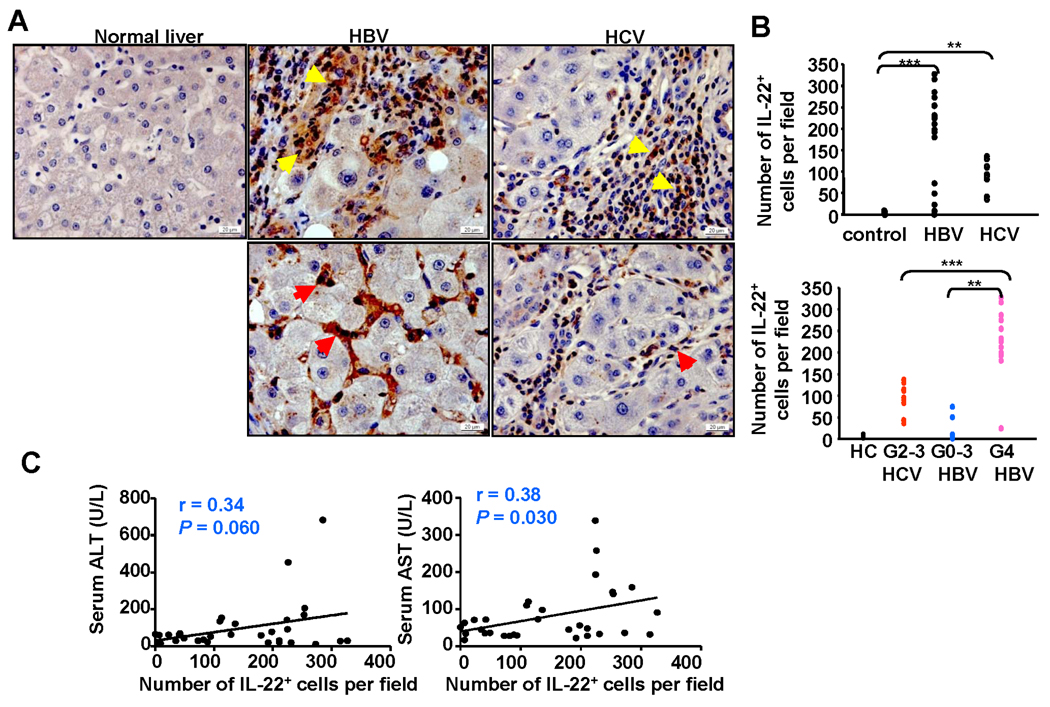
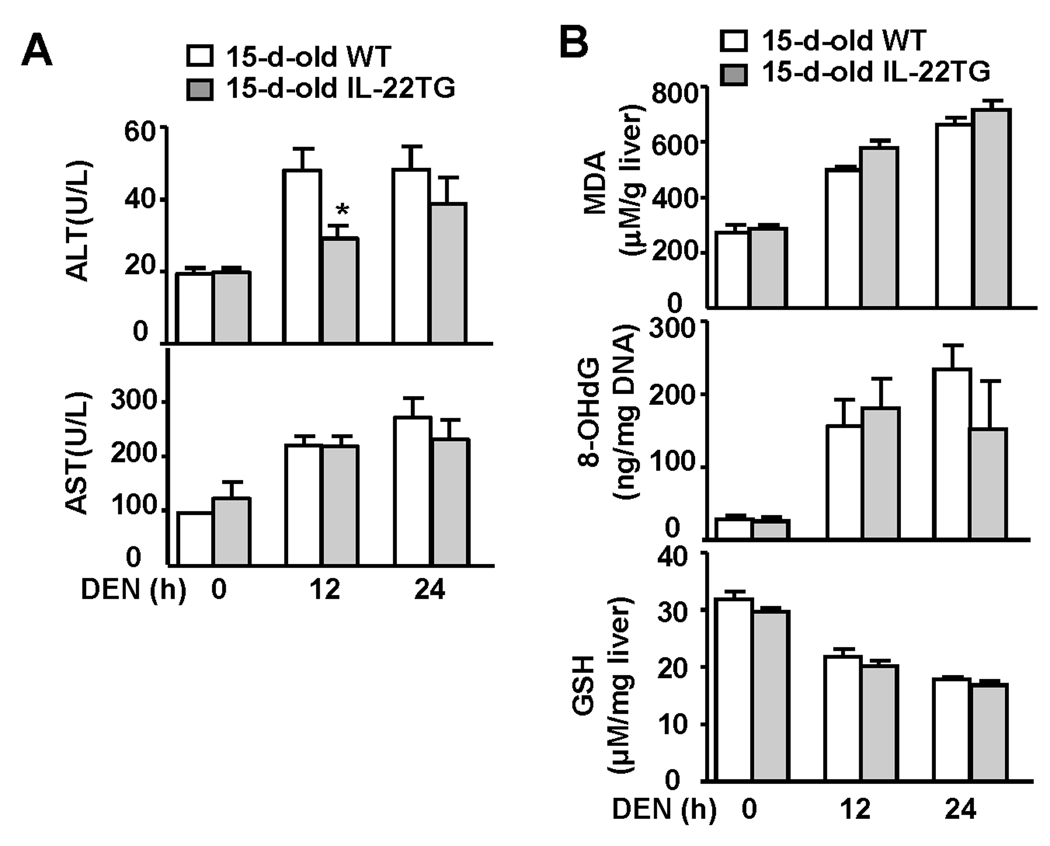
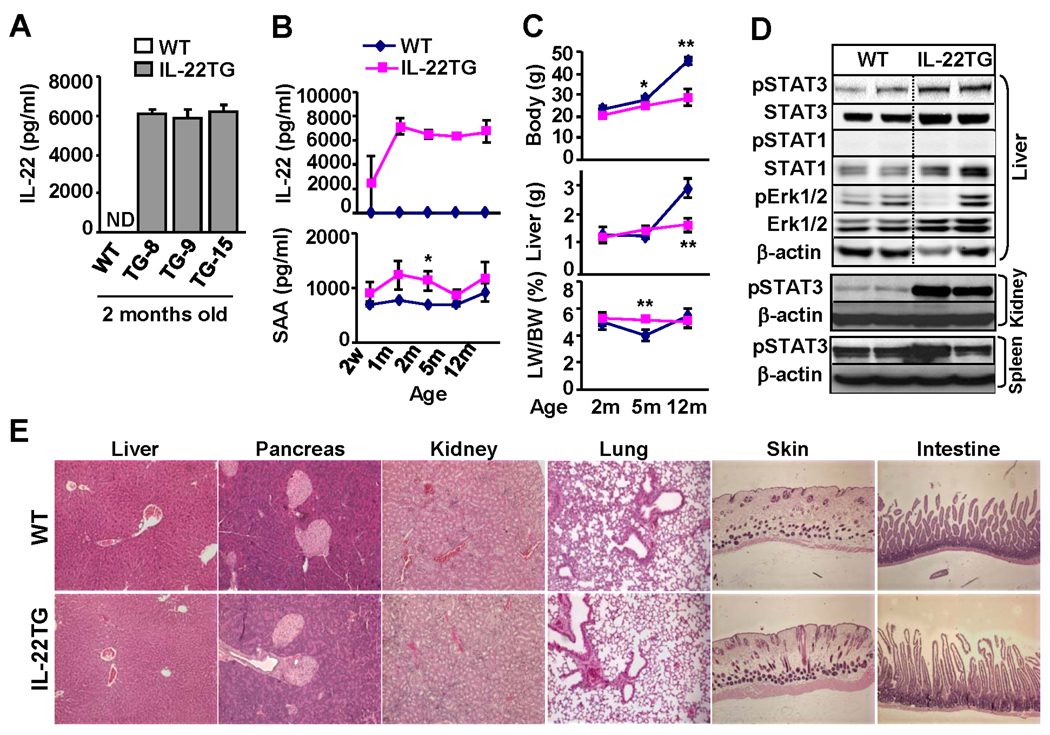
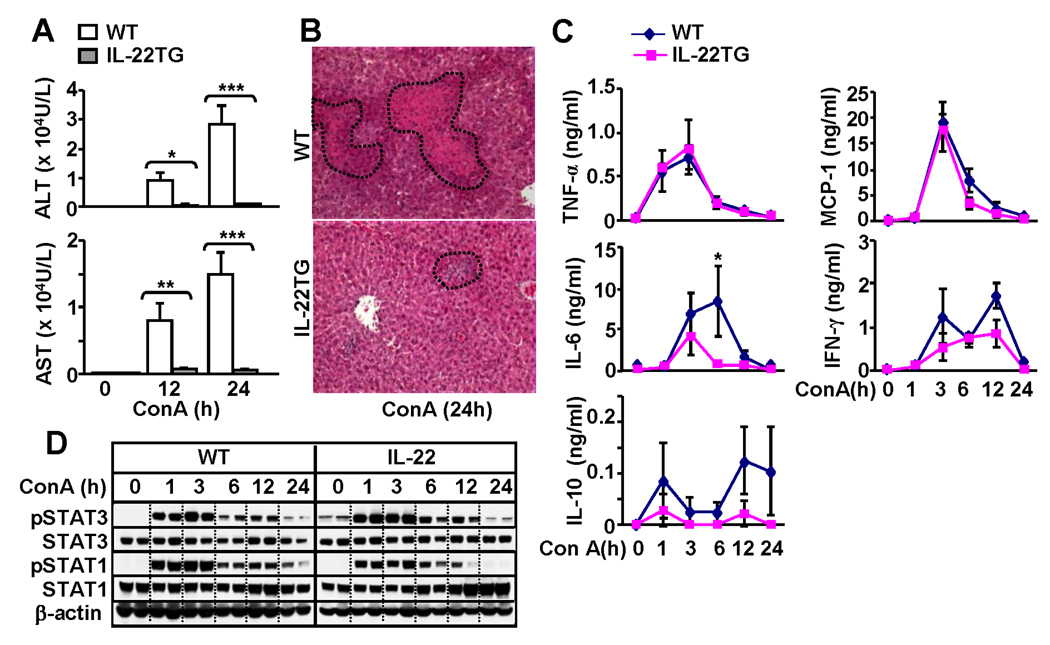
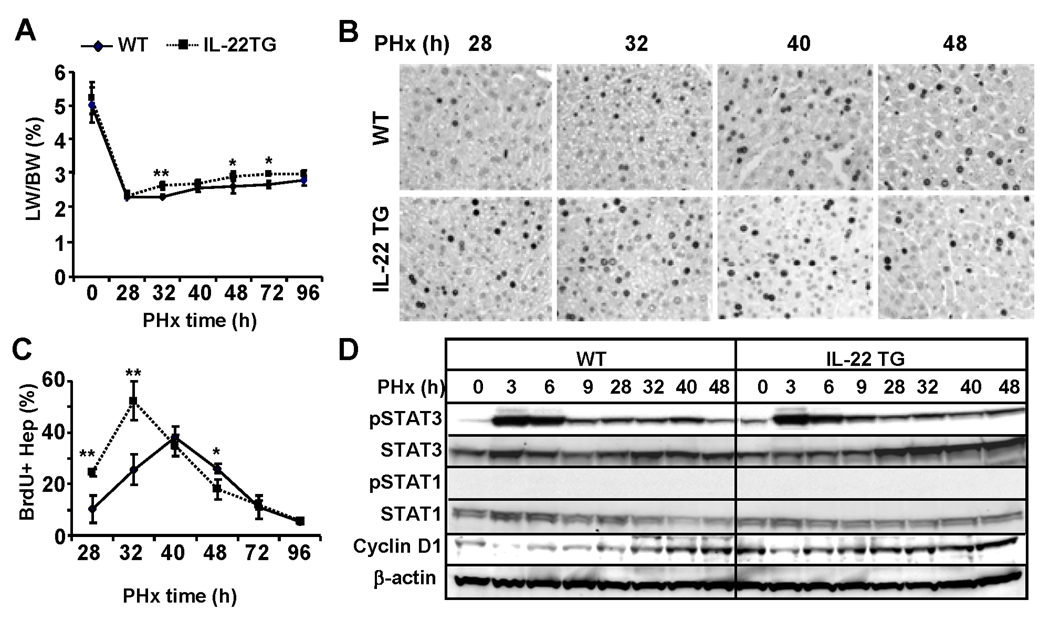
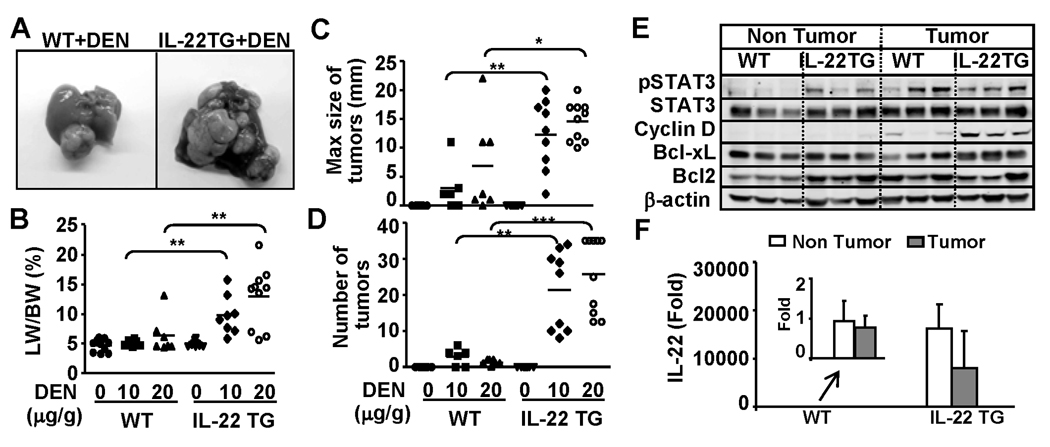
Interleukin-22 (IL-22), which acts as either a proinflammatory or anti-inflammatory cytokine in various disease models, is markedly up-regulated in chronic liver diseases, including hepatitis B and C. In this report, we demonstrate a strong correlation between IL-22 expression in the liver with active, inflammatory human liver disease. To clarify the role of IL-22 up-regulation in the pathogenesis of liver diseases, liver-specific IL-22 transgenic (IL-22TG) mice, under the control of albumin promoter, were developed. Despite elevated IL-22 serum levels ranging from 4,000 to 7,000 pg/mL, IL-22TG mice developed normally without obvious adverse phenotypes or evidence of chronic inflammation (except for slightly thicker epidermis and minor inflammation of the skin) compared with wild-type mice. Interestingly, IL-22TG mice were completely resistant to concanavalin A-induced T cell hepatitis with minimal effect on liver inflammation and had accelerated liver regeneration after partial hepatectomy. Although they did not spontaneously develop liver tumors, IL-22TG mice were more susceptible to diethylnitrosamine-induced liver cancer. Microarray analyses revealed that a variety of antioxidant, mitogenic, acute phase genes were up-regulated in the livers of IL-22TG mice compared with those from wild-type mice.
These findings indicate that localized production of IL-22 in the liver promotes hepatocyte survival and proliferation but primes the liver to be more susceptible to tumor development without significantly affecting liver inflammation.
白细胞介素-22(IL-22)在各种疾病模型中既可以作为促炎细胞因子,也可以作为抗炎细胞因子,在慢性肝病(包括乙型肝炎和丙型肝炎)中明显上调。在本报告中,我们证明了肝脏中 IL-22 的表达与人类活动性、炎症性肝病之间存在强烈相关性。为了阐明 IL-22 上调在肝病发病机制中的作用,我们开发了由白蛋白启动子控制的肝脏特异性 IL-22 转基因(IL-22TG)小鼠。尽管血清 IL-22 水平升高至 4000 至 7000 pg/mL,但与野生型小鼠相比,IL-22TG 小鼠发育正常,没有明显的不良表型或慢性炎症证据(除了表皮稍厚和皮肤有轻微炎症)。有趣的是,与野生型小鼠相比,IL-22TG 小鼠对伴刀豆球蛋白 A 诱导的 T 细胞肝炎完全具有抗性,对肝炎症的影响最小,并且在部分肝切除后具有加速的肝再生。尽管它们不会自发地发生肝癌,但 IL-22TG 小鼠更容易发生二乙基亚硝胺诱导的肝癌。微阵列分析显示,与野生型小鼠相比,IL-22TG 小鼠肝脏中多种抗氧化、有丝分裂原、急性期基因上调。
这些发现表明,肝脏中局部产生的 IL-22 促进肝细胞的存活和增殖,但使肝脏更容易发生肿瘤发展,而对肝炎症没有明显影响。