Blackshaw L Ashley, Page Amanda J, Young Richard L
Nerve Gut Research Laboratory, Department of Gastroenterology and Hepatology, Hanson Institute, Royal Adelaide Hospital Adelaide, SA, Australia.
Front Neurosci. 2011 Mar 24;5:40. doi: 10.3389/fnins.2011.00040. eCollection 2011.
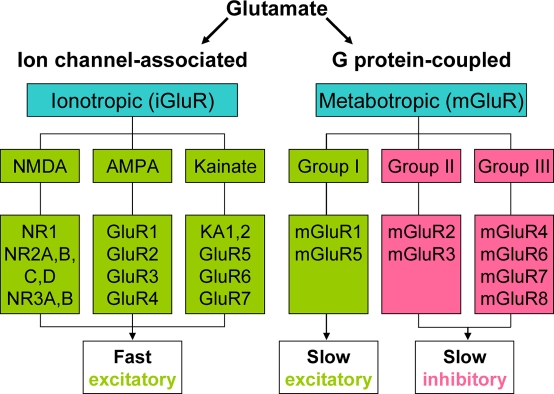
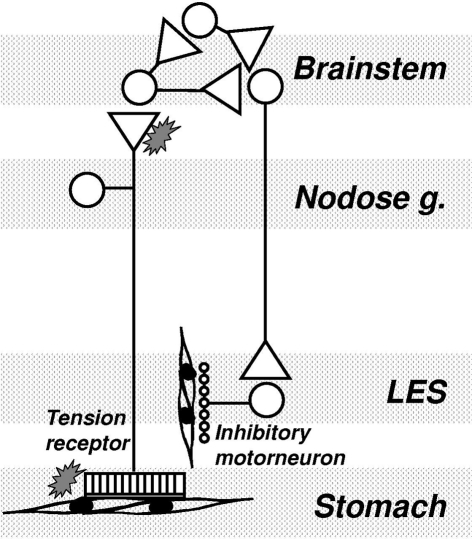
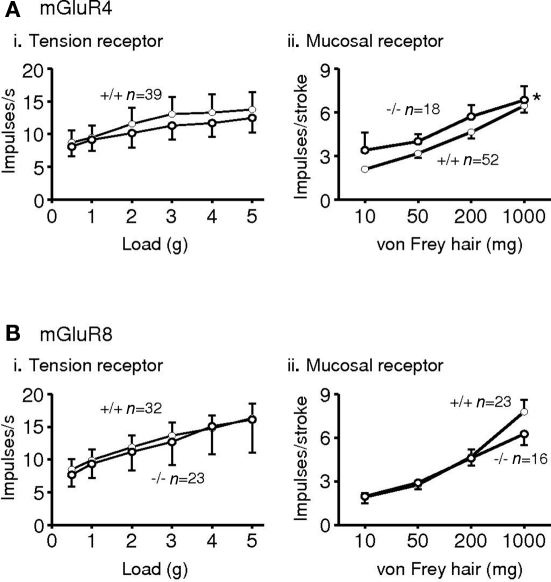
Metabotropic glutamate receptors (mGluR) have a diverse range of structures and molecular coupling mechanisms. There are eight mGluR subtypes divided into three major groups. Group I (mGluR1 and 5) is excitatory; groups II (mGluR2 and 3) and III (mGluR 4, 6, and 7) are inhibitory. All mGluR are found in the mammalian nervous system but some are absent from sensory neurons. The focus here is on mGluR in sensory pathways from the viscera, where they have been explored as therapeutic targets. Group I mGluR are activated by endogenous glutamate or constitutively active without agonist. Constitutive activity can be exploited by inverse agonists to reduce neuronal excitability without synaptic input. This is promising for reducing activation of nociceptive afferents and pain using mGluR5 negative allosteric modulators. Many inhibitory mGluR are also expressed in visceral afferents, many of which markedly reduce excitability. Their role in visceral pain remains to be determined, but they have shown promise in inhibition of the triggering of gastro-esophageal reflux, via an action on mechanosensory gastric afferents. The extent of reflux inhibition is limited, however, and may not reach a clinically useful level. On the other hand, negative modulation of mGluR5 has very potent actions on reflux inhibition, which has produced the most likely candidates so far as therapeutic drugs. These act probably outside the central nervous system, and may therefore provide a generous therapeutic window. There are many unanswered questions about mGluR along visceral afferent pathways, the answers to which may reveal many more therapeutic candidates.
代谢型谷氨酸受体(mGluR)具有多种结构和分子偶联机制。mGluR有八个亚型,分为三大类。第一组(mGluR1和5)具有兴奋性;第二组(mGluR2和3)和第三组(mGluR 4、6和7)具有抑制性。所有mGluR都存在于哺乳动物神经系统中,但感觉神经元中缺少某些亚型。这里的重点是内脏感觉通路中的mGluR,它们已被作为治疗靶点进行研究。第一组mGluR可被内源性谷氨酸激活,或在无激动剂的情况下组成性激活。反向激动剂可利用其组成性活性来降低神经元兴奋性,而无需突触输入。这对于使用mGluR5负变构调节剂降低伤害性传入纤维的激活和疼痛很有前景。许多抑制性mGluR也在内脏传入纤维中表达,其中许多可显著降低兴奋性。它们在内脏疼痛中的作用尚待确定,但已显示出通过作用于机械感觉性胃传入纤维来抑制胃食管反流触发的潜力。然而,反流抑制的程度有限,可能未达到临床有用水平。另一方面,mGluR5的负性调节对反流抑制具有非常有效的作用,这产生了迄今为止最有可能成为治疗药物的候选物。这些作用可能发生在中枢神经系统之外,因此可能提供一个广阔的治疗窗口。关于内脏传入通路中的mGluR,仍有许多未解决的问题,其答案可能会揭示更多的治疗候选物。