National Research Laboratory of Vascular Biology and Graduate School of Medical Science and Engineering, Korea Advanced Institute of Science and Technology, Daejeon, 305-701, Republic of Korea.
Mol Cancer. 2011 Apr 11;10:36. doi: 10.1186/1476-4598-10-36.
Most bladder cancer patients experience lymphatic metastasis in the course of disease progression, yet the relationship between lymphangiogenesis and lymphatic metastasis is not well known. The aim of this study is to elucidate underlying mechanisms of how expanded lymphatic vessels and tumor microenvironment interacts each other and to find effective therapeutic options to inhibit lymphatic metastasis.
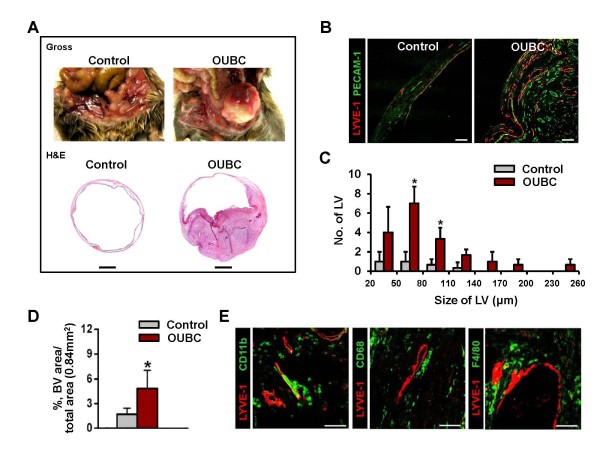
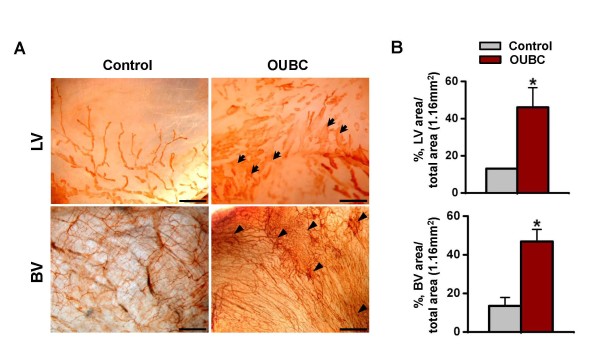
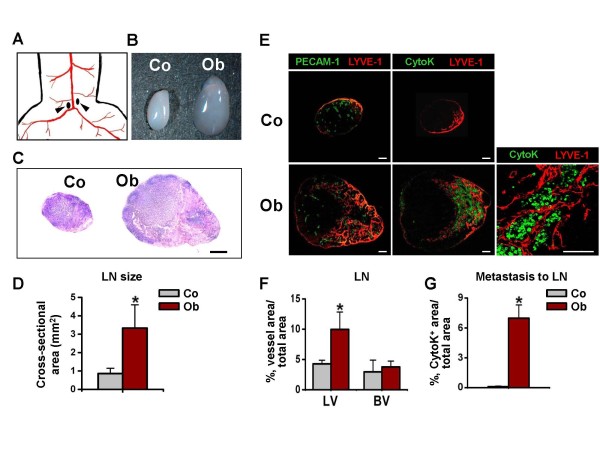
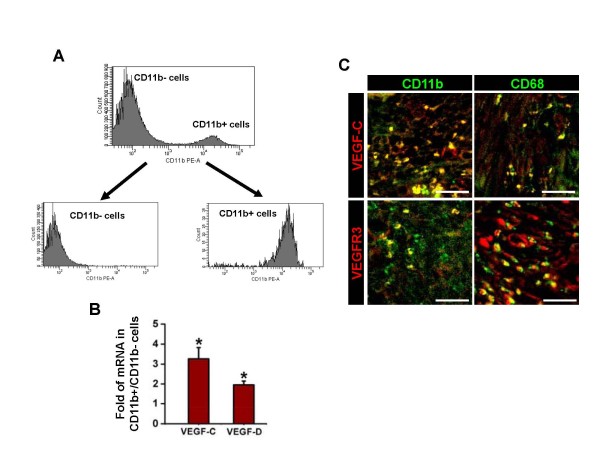
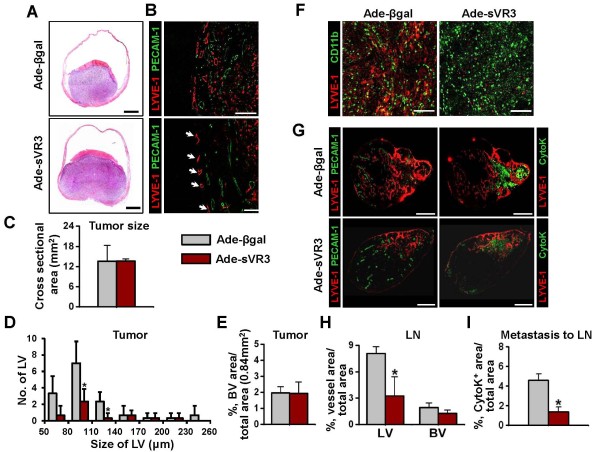
The orthotopic urinary bladder cancer (OUBC) model was generated by intravesical injection of MBT-2 cell lines. We investigated the angiogenesis, lymphangiogenesis, and CD11b+/CD68+ tumor-associated macrophages (TAM) by using immunofluorescence staining. OUBC displayed a profound lymphangiogenesis and massive infiltration of TAM in primary tumor and lymphatic metastasis in lymph nodes. TAM flocked near lymphatic vessels and express higher levels of VEGF-C/D than CD11b- cells. Because VEGFR-3 was highly expressed in lymphatic vascular endothelial cells, TAM could assist lymphangiogenesis by paracrine manner in bladder tumor. VEGFR-3 expressing adenovirus was administered to block VEGF-C/D signaling pathway and clodronate liposome was used to deplete TAM. The blockade of VEGF-C/D with soluble VEGF receptor-3 markedly inhibited lymphangiogenesis and lymphatic metastasis in OUBC. In addition, the depletion of TAM with clodronate liposome exerted similar effects on OUBC.
VEGF-C/D are the main factors of lymphangiogenesis and lymphatic metastasis in bladder cancer. Moreover, TAM plays an important role in these processes by producing VEGF-C/D. The inhibition of lymphangiogenesis could provide another therapeutic target to inhibit lymphatic metastasis and recurrence in patients with invasive bladder cancer.
大多数膀胱癌患者在疾病进展过程中会经历淋巴转移,但淋巴管生成与淋巴转移之间的关系尚不清楚。本研究旨在阐明淋巴管扩张与肿瘤微环境相互作用的潜在机制,并寻找有效抑制淋巴转移的治疗方法。
通过膀胱内注射 MBT-2 细胞系生成原位膀胱癌(OUBC)模型。我们通过免疫荧光染色研究了血管生成、淋巴管生成和 CD11b+/CD68+肿瘤相关巨噬细胞(TAM)。OUBC 在原发性肿瘤和淋巴结淋巴转移中显示出明显的淋巴管生成和大量 TAM 浸润。TAM 聚集在淋巴管附近,表达的 VEGF-C/D 比 CD11b-细胞更高。由于 VEGFR-3 在淋巴管内皮细胞中高度表达,TAM 可以通过旁分泌方式协助膀胱癌中的淋巴管生成。给予表达 VEGFR-3 的腺病毒以阻断 VEGF-C/D 信号通路,并用氯膦酸盐脂质体耗尽 TAM。用可溶性 VEGFR-3 阻断 VEGF-C/D 显著抑制了 OUBC 的淋巴管生成和淋巴转移。此外,氯膦酸盐脂质体耗尽 TAM 对 OUBC 也有类似作用。
VEGF-C/D 是膀胱癌淋巴管生成和淋巴转移的主要因素。此外,TAM 通过产生 VEGF-C/D 在这些过程中发挥重要作用。抑制淋巴管生成可为抑制浸润性膀胱癌的淋巴转移和复发提供另一个治疗靶点。