Elahi Sakib F, Miller Sharon J, Joshi Bishnu, Wang Thomas D
Biomed Opt Express. 2011 Mar 28;2(4):981-6. doi: 10.1364/BOE.2.000981.
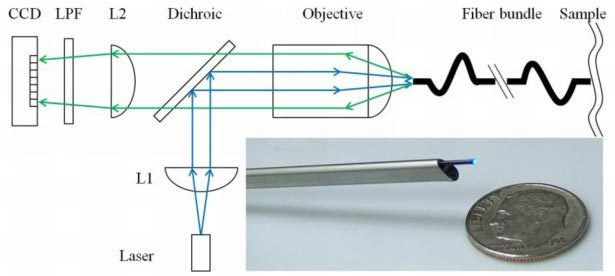
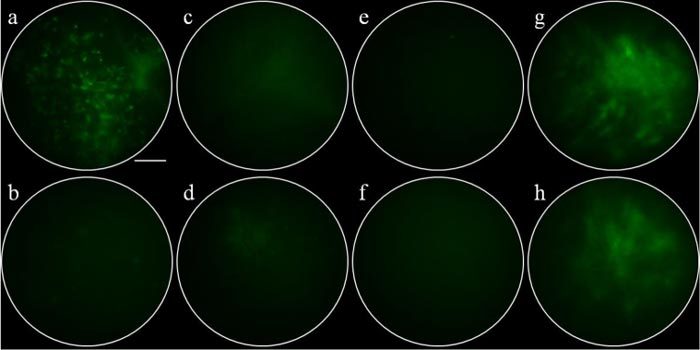
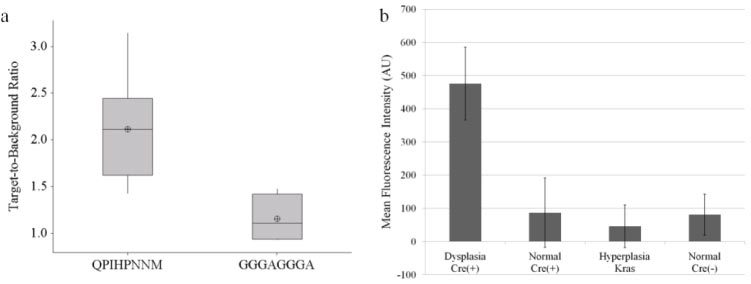
We validate specific binding activity of a fluorescence-labeled peptide to colorectal dysplasia in living mice using a miniature, flexible, fiber microendoscope that passes through the instrument channel of an endoscope. The microendoscope delivers excitation light at 473 nm through a fiber-optic bundle with outer diameter of 680 µm to collect en face images at 10 Hz with 4 µm lateral resolution. We applied the FITC-labeled peptide QPIHPNNM topically to colonic mucosa in genetically engineered mice that spontaneously develop adenomas. More than two-fold greater fluorescence intensity was measured from adenomas compared to adjacent normal-appearing mucosa. Images of adenomas showed irregular morphology characteristic of dysplasia.
我们使用一种可穿过内窥镜器械通道的微型、柔性纤维微型内窥镜,验证了荧光标记肽与活体小鼠大肠发育异常的特异性结合活性。该微型内窥镜通过外径为680 µm的光纤束传输473 nm的激发光,以10 Hz的频率采集横向分辨率为4 µm的正面图像。我们将异硫氰酸荧光素(FITC)标记的肽QPIHPNNM局部应用于自发发生腺瘤的基因工程小鼠的结肠黏膜。与相邻外观正常的黏膜相比,腺瘤的荧光强度测量值高出两倍多。腺瘤图像显示出发育异常的不规则形态特征。