Coastal and Marine Research Centre, Environmental Research Institute, University College Cork, Cork, Ireland.
PLoS One. 2011 Apr 7;6(4):e18529. doi: 10.1371/journal.pone.0018529.
Over recent decades jellyfish have caused fish kill events and recurrent gill problems in marine-farmed salmonids. Common jellyfish (Aurelia spp.) are among the most cosmopolitan jellyfish species in the oceans, with populations increasing in many coastal areas. The negative interaction between jellyfish and fish in aquaculture remains a poorly studied area of science. Thus, a recent fish mortality event in Ireland, involving Aurelia aurita, spurred an investigation into the effects of this jellyfish on marine-farmed salmon.
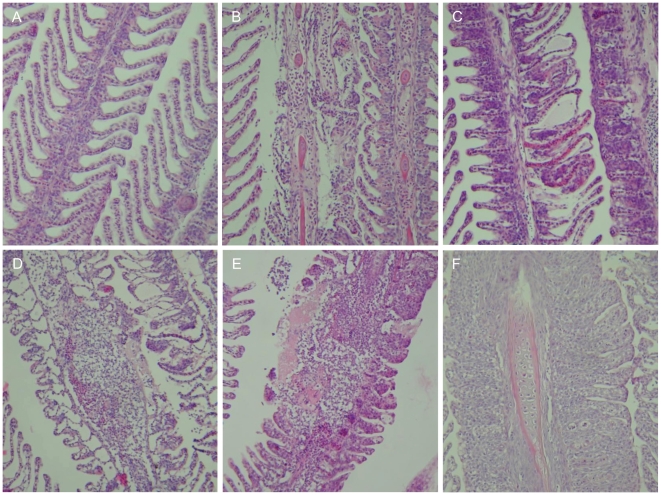
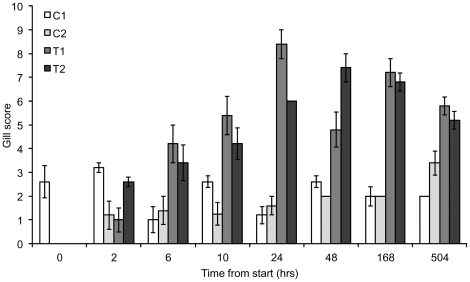
METHODOLOGY/PRINCIPAL FINDINGS: To address the in vivo impact of the common jellyfish (A. aurita) on salmonids, we exposed Atlantic salmon (Salmo salar) smolts to macerated A. aurita for 10 hrs under experimental challenge. Gill tissues of control and experimental treatment groups were scored with a system that rated the damage between 0 and 21 using a range of primary and secondary parameters. Our results revealed that A. aurita rapidly and extensively damaged the gills of S. salar, with the pathogenesis of the disorder progressing even after the jellyfish were removed. After only 2 hrs of exposure, significant multi-focal damage to gill tissues was apparent. The nature and extent of the damage increased up to 48 hrs from the start of the challenge. Although the gills remained extensively damaged at 3 wks from the start of the challenge trial, shortening of the gill lamellae and organisation of the cells indicated an attempt to repair the damage suffered.
Our findings clearly demonstrate that A. aurita can cause severe gill problems in marine-farmed fish. With aquaculture predicted to expand worldwide and evidence suggesting that jellyfish populations are increasing in some areas, this threat to aquaculture is of rising concern as significant losses due to jellyfish could be expected to increase in the future.
近年来,水母已导致海洋养殖鲑鱼发生鱼类死亡事件和反复出现的鳃部问题。普通水母(Aurelia 属)是海洋中最具世界性的水母物种之一,其在许多沿海地区的种群数量都在增加。水母与水产养殖鱼类之间的这种负面相互作用仍然是一个科学研究相对较少的领域。因此,爱尔兰最近发生的一起涉及 Aurelia aurita 的鱼类死亡事件促使人们对这种水母对海洋养殖鲑鱼的影响进行了调查。
方法/主要发现:为了研究普通水母(A. aurita)对鲑鱼的体内影响,我们将大西洋鲑鱼(Salmo salar)幼鱼在实验性挑战下暴露于已捣碎的 A. aurita 中 10 小时。使用一系列主要和次要参数,我们使用 0 到 21 分的评分系统对对照组和实验组的鳃组织进行评分,以评估损伤程度。我们的研究结果表明,A. aurita 可迅速广泛地损伤 S. salar 的鳃,即使在水母被移除后,疾病的发病机制仍在继续发展。暴露仅 2 小时后,鳃组织就出现了明显的多灶性损伤。从挑战开始到 48 小时,损伤的性质和程度都在增加。尽管在挑战试验开始后 3 周,鳃仍严重受损,但鳃片的缩短和细胞的排列表明正在尝试修复受损组织。
我们的研究结果清楚地表明,A. aurita 可导致海洋养殖鱼类出现严重的鳃部问题。随着水产养殖预计在全球范围内扩张,并且有证据表明某些地区的水母种群正在增加,这种对水产养殖的威胁越来越令人担忧,因为未来由于水母而导致的损失预计会增加。