Laboratory of Human Molecular Genetics, Sfax Faculty of Medicine, Avenue Magida Boulila 3028 Sfax, Tunisia.
Reprod Biol Endocrinol. 2011 Apr 14;9:47. doi: 10.1186/1477-7827-9-47.
There is clinical evidence to show that sperm DNA damage could be a marker of sperm quality and extensive data exist on the relationship between DNA damage and male fertility status. Detecting such damage in sperm could provide new elements besides semen parameters in diagnosing male infertility. We aimed to assess sperm DNA fragmentation and oxidation and to study the association between these two markers, routine semen parameters and malondialdehyde formation.
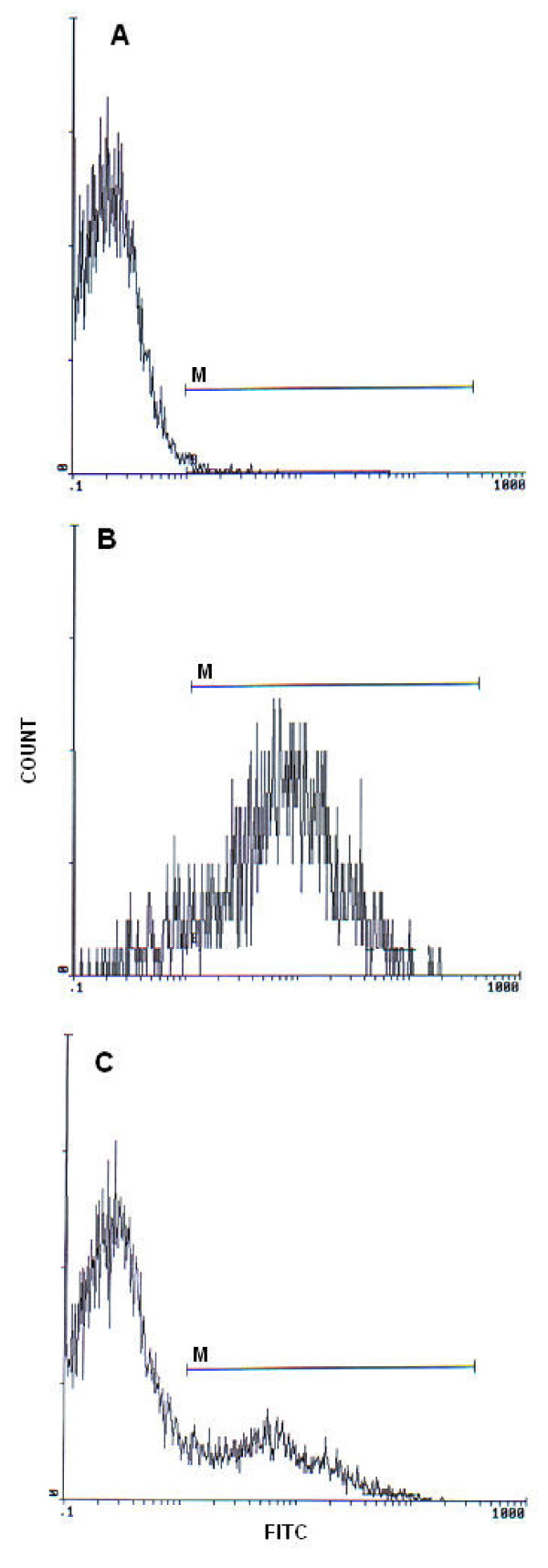
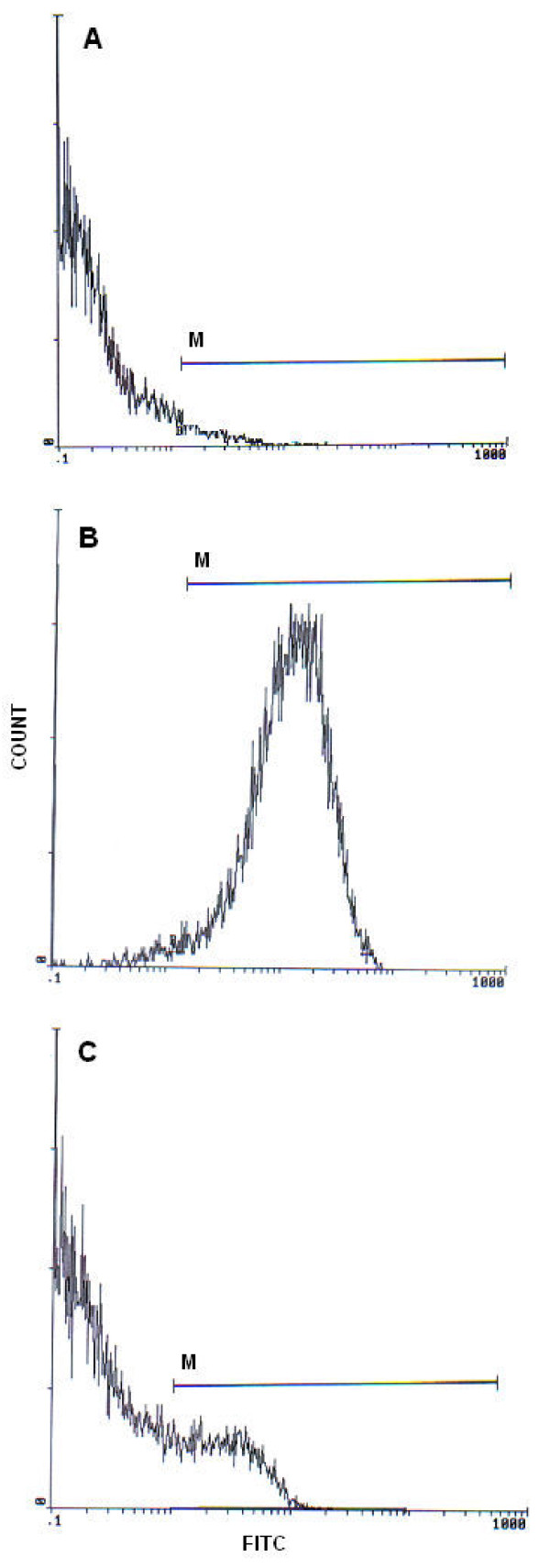
Semen samples from 55 men attending the Histology-Embryology Laboratory of Sfax Faculty of Medicine, Tunisia, for semen investigations were analysed for sperm DNA fragmentation and oxidation using flow cytometry. The Sperm was also assessed spectrophotometrically for malondialdehyde formation.
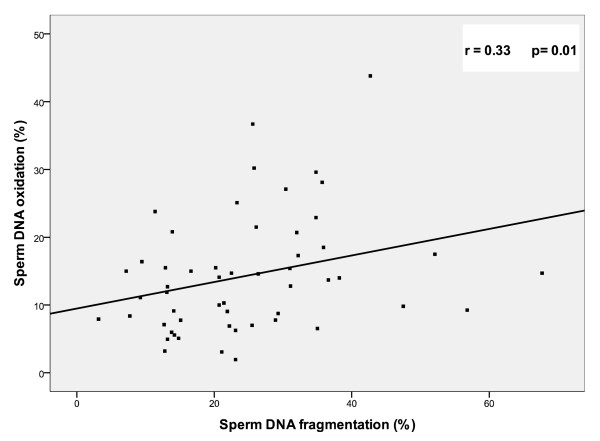
Within the studied group, 21 patients were nonasthenozoospermic (sperm motility ≥ 50%) and 34 patients were considered asthenozoospermic (sperm motility < 50%). A positive correlation was found between sperm DNA fragmentation and oxidation (p = 0.01; r = 0.33). We also found a negative correlation between sperm DNA fragmentation and some sperm parameters: total motility (p = 0.001; r = -0.43), rapid progressive motility (type a motility) (p = 0.04; r = -0.27), slow progressive motility (type b motility) (p = 0.03; r = -0.28), and vitality (p < 0.001; r = -0.65). Sperm DNA fragmentation was positively correlated with coiled tail (p = 0.01; r = 0.34). The two parameters that were found to be correlated with oxidative DNA damage were leucocytes concentrations (p = 0.01; r = 0.38) and broken neck (p = 0.02; r = 0.29). Sperm MDA levels were negatively correlated with sperm concentration (p < 0.001; r = -0.57), total motility (p = 0.01; r = -0.35) and type a motility (p = 0.03; r = -0.32); but not correlated with DNA fragmentation and DNA oxidation.
Our results support the evidence that oxidative stress plays a key role in inducing DNA damage; but nuclear alterations and malondialdehyde don't seem to be synchronous.
临床证据表明,精子 DNA 损伤可能是精子质量的一个标志物,并且存在大量关于 DNA 损伤与男性生育状态之间关系的数据。在精子中检测到这种损伤可能为男性不育症的诊断提供除精液参数以外的新元素。我们旨在评估精子 DNA 碎片化和氧化,并研究这两个标志物与常规精液参数和丙二醛形成之间的关系。
对来自突尼斯斯法克斯医学院组织胚胎学实验室的 55 名男性进行精液检查的精液样本进行精子 DNA 碎片化和氧化的流式细胞术分析。还通过分光光度法评估精子的丙二醛形成。
在所研究的组中,21 名患者是非弱精子症(精子活力≥50%),34 名患者被认为是弱精子症(精子活力<50%)。精子 DNA 碎片化和氧化之间存在正相关(p=0.01;r=0.33)。我们还发现精子 DNA 碎片化与一些精子参数之间存在负相关:总活力(p=0.001;r=-0.43)、快速前向运动(a 型运动)(p=0.04;r=-0.27)、慢速前向运动(b 型运动)(p=0.03;r=-0.28)和活力(p<0.001;r=-0.65)。精子 DNA 碎片化与卷曲尾巴呈正相关(p=0.01;r=0.34)。与氧化 DNA 损伤相关的两个参数是白细胞浓度(p=0.01;r=0.38)和颈部断裂(p=0.02;r=0.29)。精子 MDA 水平与精子浓度(p<0.001;r=-0.57)、总活力(p=0.01;r=-0.35)和 a 型运动(p=0.03;r=-0.32)呈负相关;但与 DNA 碎片化和 DNA 氧化无关。
我们的结果支持氧化应激在诱导 DNA 损伤中起关键作用的证据;但是核改变和丙二醛似乎不同步。