Environmental Autoimmunity Group, National Institute of Environmental Health Sciences, National Institutes of Health, 9000 Rockville Pike, Bethesda, MD 20892, USA.
Arthritis Res Ther. 2011 Apr 26;13(2):R69. doi: 10.1186/ar3330.
The objective of this study is to determine if multiple systemic autoimmune diseases (SAID) share gene expression pathways that could provide insights into pathogenic mechanisms common to these disorders.
RNA microarray analyses (Agilent Human 1A(V2) 20K oligo arrays) were used to quantify gene expression in peripheral blood cells from 20 monozygotic (MZ) twin pairs discordant for SAID. Six affected probands with systemic lupus erythematosus (SLE), six with rheumatoid arthritis (RA), eight with idiopathic inflammatory myopathies (IIM), and their same-gendered unaffected twins, were enrolled. Comparisons were made between discordant twin pairs and these were also each compared to 40 unrelated control subjects (matched 2:1 to each twin by age, gender and ethnicity) using statistical and molecular pathway analyses. Relative quantitative PCR was used to verify independently measures of differential gene expression assessed by microarray analysis.
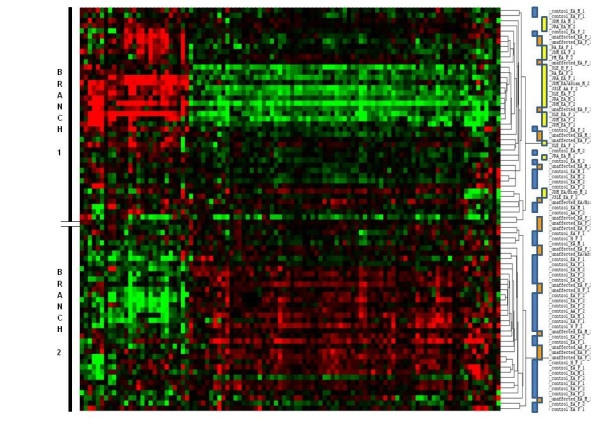
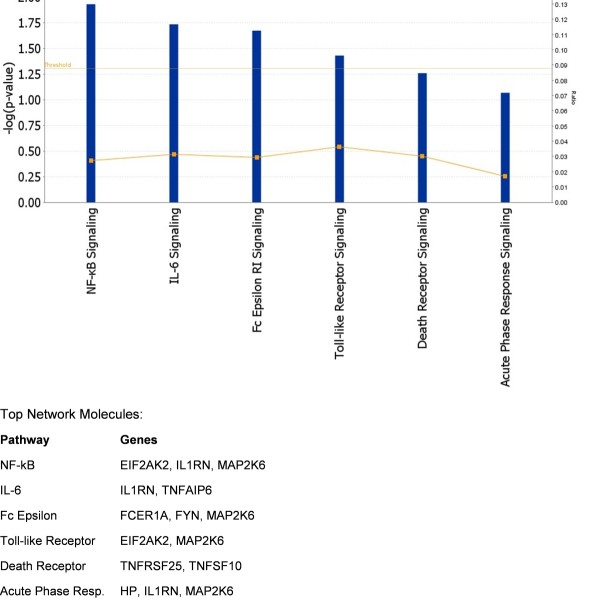
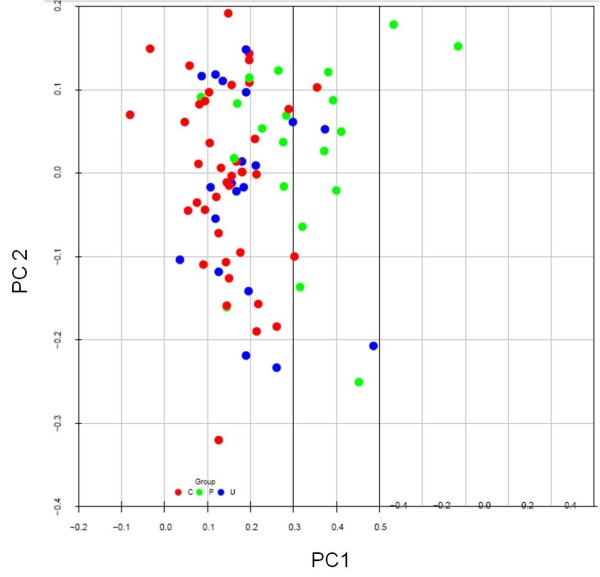
Probands and unrelated, matched controls differed significantly in gene expression for 104 probes corresponding to 92 identifiable genes (multiple-comparison adjusted P values < 0.1). Differentially expressed genes involved several overlapping pathways including immune responses (16%), signaling pathways (24%), transcription/translation regulators (26%), and metabolic functions (15%). Interferon (IFN)-response genes (IFI27, OASF, PLSCR1, EIF2AK2, TNFAIP6, and TNFSF10) were up-regulated in probands compared to unrelated controls. Many of the abnormally expressed genes played regulatory roles in multiple cellular pathways. We did not detect any probes expressed differentially in comparisons among the three SAID phenotypes. Similarly, we found no significant differences in gene expression when comparing probands to unaffected twins or unaffected twins to unrelated controls. Gene expression levels for unaffected twins appeared intermediate between that of probands and unrelated controls for 6535 probes (32% of the total probes) as would be expected by chance. By contrast, in unaffected twins intermediate ordering was observed for 84 of the 104 probes (81%) whose expression differed significantly between probands and unrelated controls.
Alterations in expression of a limited number of genes may influence the dysregulation of numerous, integrated immune response, cell signaling and regulatory pathways that are common to a number of SAID. Gene expression profiles in peripheral blood suggest that for genes in these critical pathways, unaffected twins may be in a transitional or intermediate state of immune dysregulation between twins with SAID and unrelated controls, perhaps predisposing them to the development of SAID given the necessary and sufficient environmental exposures.
本研究的目的是确定是否存在多种系统性自身免疫性疾病(SAID)共享基因表达途径,从而深入了解这些疾病的共同发病机制。
使用 RNA 微阵列分析(Agilent Human 1A(V2) 20K oligo 阵列)定量分析 20 对表型不一致的同卵双胞胎外周血细胞中的基因表达。纳入了 6 名系统性红斑狼疮(SLE)、6 名类风湿关节炎(RA)、8 名特发性炎性肌病(IIM)的患病先证者及其同性别未患病双胞胎。通过统计和分子途径分析,将不一致的双胞胎对与 40 名无亲缘关系的对照(按年龄、性别和种族与每对双胞胎 2:1 匹配)进行比较。使用相对定量 PCR 独立验证微阵列分析评估的差异基因表达的测量结果。
先证者和无亲缘关系的匹配对照在对应 92 个可识别基因的 104 个探针的基因表达上存在显著差异(多重比较调整 P 值<0.1)。差异表达的基因涉及几个重叠的途径,包括免疫反应(16%)、信号通路(24%)、转录/翻译调节剂(26%)和代谢功能(15%)。与无亲缘关系的对照相比,先证者的干扰素(IFN)反应基因(IFI27、OASF、PLSCR1、EIF2AK2、TNFAIP6 和 TNFSF10)上调。许多异常表达的基因在多个细胞途径中发挥调节作用。我们在三种 SAID 表型之间的比较中没有检测到任何表达差异的探针。同样,我们在比较先证者与未受影响的双胞胎或未受影响的双胞胎与无亲缘关系的对照时,未发现基因表达存在差异。未受影响的双胞胎的基因表达水平对于 6535 个探针(总探针的 32%)处于先证者和无亲缘关系的对照之间的中间位置,这是偶然的预期。相比之下,在 104 个探针中,有 84 个(81%)表达显著不同的探针(84 个)在未受影响的双胞胎中观察到中间排序,这些探针在先证者和无亲缘关系的对照之间存在显著差异。
少数基因表达的改变可能会影响许多整合的免疫反应、细胞信号和调节途径的失调,这些途径在许多 SAID 中是共同的。外周血中的基因表达谱表明,对于这些关键途径中的基因,未受影响的双胞胎可能处于与 SAID 双胞胎和无亲缘关系的对照之间的免疫失调过渡或中间状态,这可能使他们在受到必要和充分的环境暴露后易患 SAID。