Panjehpour Mojtaba, Taher Masih-Allah, Bayesteh Mortaza
Department of Clinical Biochemistry, School of Pharmacy, Isfahan Pharmaceutical Sciences Research Center, Isfahan University of Medical Sciences, Isfahan, Iran.
J Res Med Sci. 2010 Sep;15(5):279-86.
Cadmium chloride is an important occupational and environmental pollutant. However, it can also be anti-carcinogenic under certain conditions. Copper, an essential trace element, has the ability to generate reactive oxygen species and induce cell apoptosis. This study was aimed to determine the growth inhibitory effects of cadmium and copper on the MDA-MB468 human breast cancer cells.
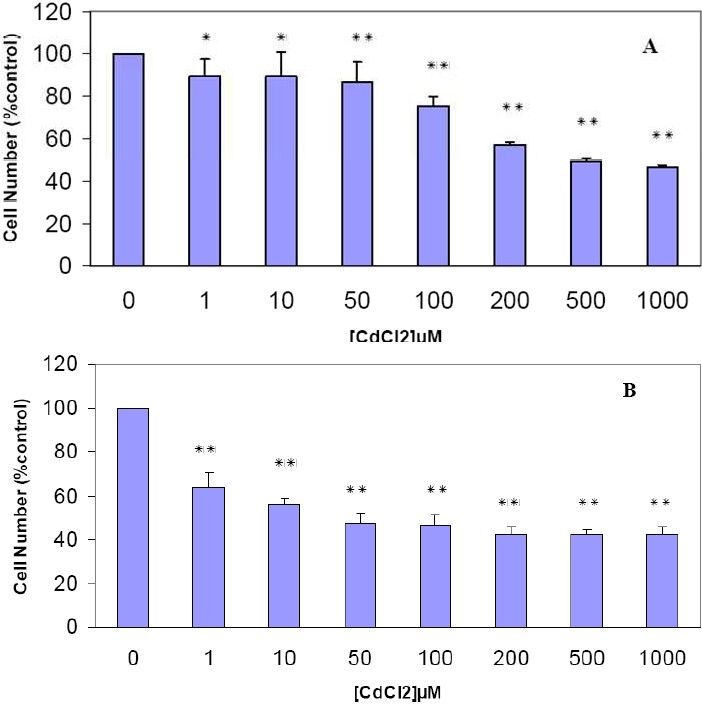
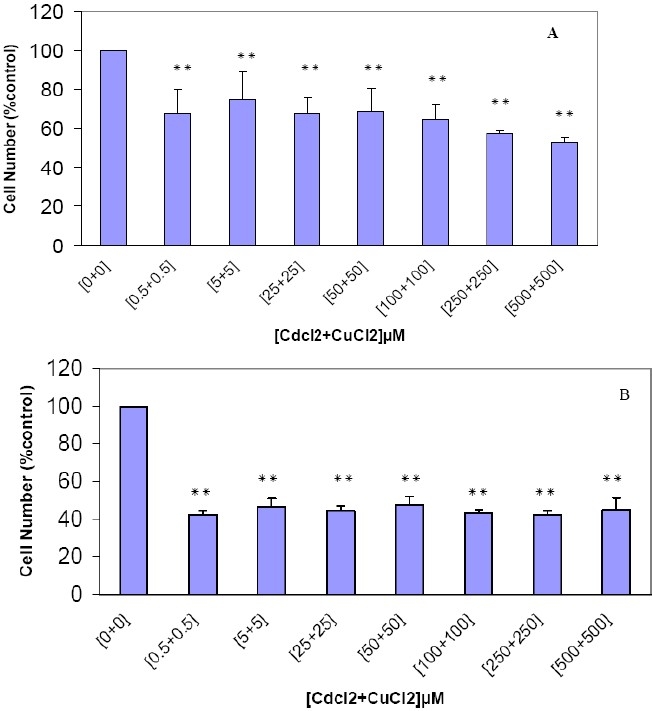
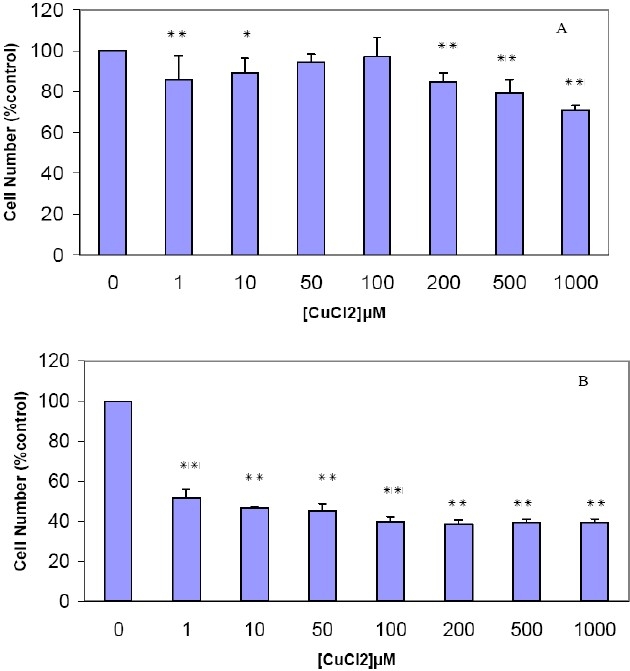
By using MTT cell viability test, treatment of monolayer cell cultures with different metal concentrations (1-1000 µM) showed a significant dose dependent decrease (p < 0.05) of viable cells in different times.
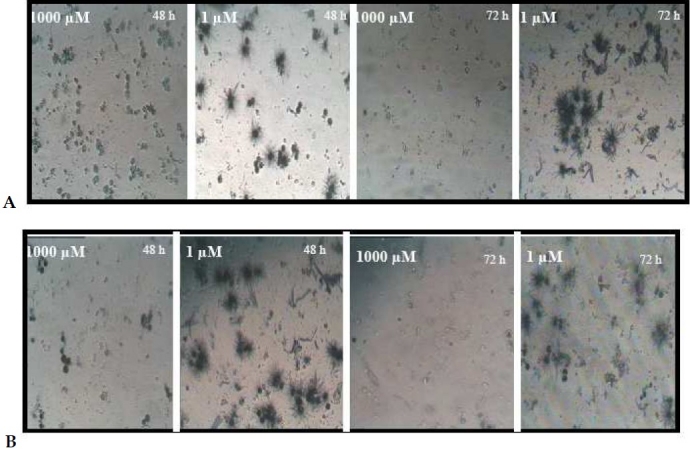
A considerable cytotoxicity was observed for CdCl2 at 200 µM and 1 µM after 48 and 72 hours incubations, respectively. The highest concentration of CuCl2 (1000 µM) had little cytotoxic effects after 48 hours incubation period, but 1 µM of CuCl2 revealed a considerable cytotoxicity after 72 hours. The maximum synergic cytotoxic effect was observed at 0.5 µM of both metals.
The results of the present study indicate that cytotoxic effect of CuCl2 is somehow lesser than that of CdCl2. This may be due to vital role of copper which is not known for cadmium so far.
氯化镉是一种重要的职业和环境污染物。然而,在某些条件下它也可能具有抗癌作用。铜作为一种必需的微量元素,有能力产生活性氧并诱导细胞凋亡。本研究旨在确定镉和铜对MDA - MB468人乳腺癌细胞的生长抑制作用。
通过MTT细胞活力测试,用不同金属浓度(1 - 1000 μM)处理单层细胞培养物,结果显示在不同时间活细胞数量有显著的剂量依赖性减少(p < 0.05)。
分别在孵育48小时和72小时后,观察到200 μM的CdCl₂和1 μM的CdCl₂具有相当大的细胞毒性。在孵育48小时后,最高浓度的CuCl₂(1000 μM)几乎没有细胞毒性,但在孵育72小时后,1 μM的CuCl₂显示出相当大的细胞毒性。两种金属在0.5 μM时观察到最大的协同细胞毒性作用。
本研究结果表明,CuCl₂的细胞毒性在某种程度上小于CdCl₂。这可能是由于铜的重要作用,而镉目前尚不明确有此作用。