Department of Microbiology, Shanghai Key Laboratory of Medical Biodefense, Second Military Medical University, Shanghai, China.
PLoS One. 2011 Apr 19;6(4):e18933. doi: 10.1371/journal.pone.0018933.
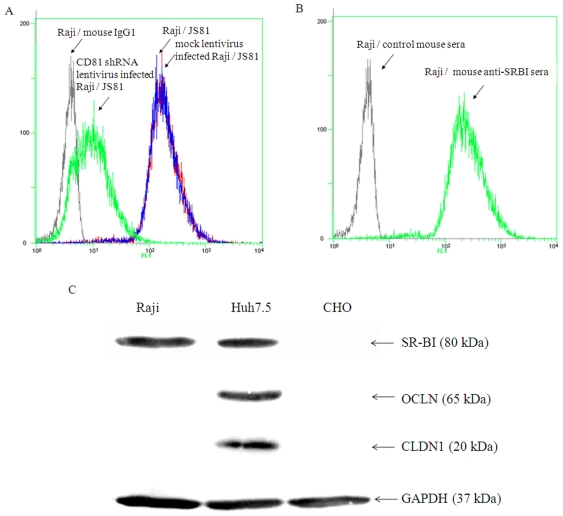
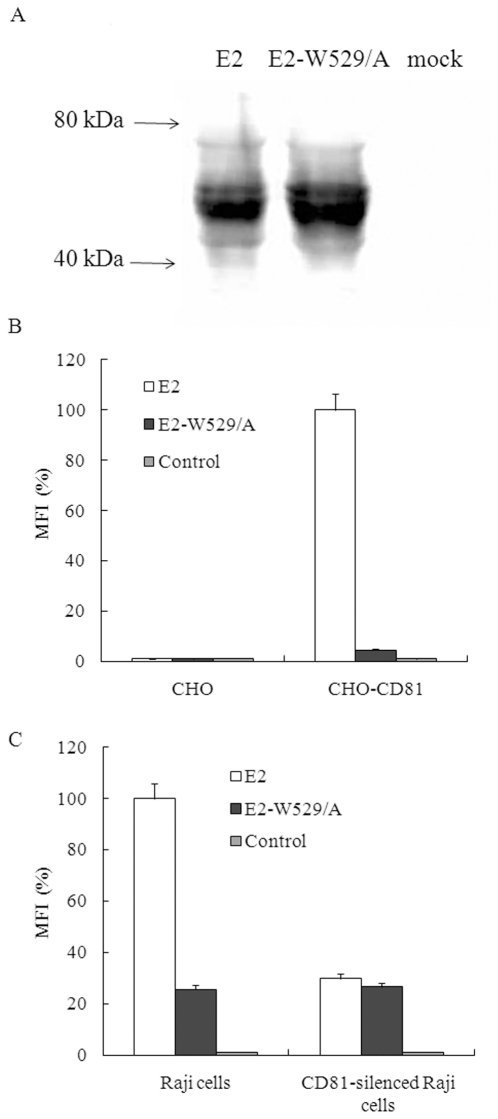
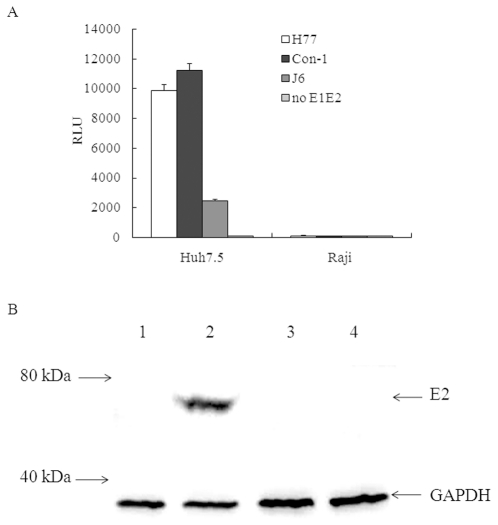
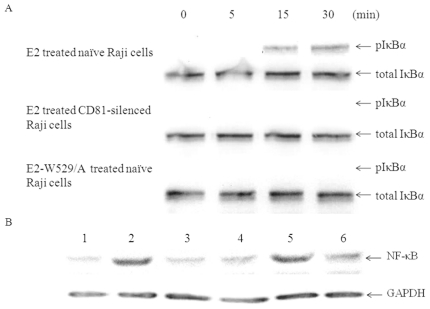
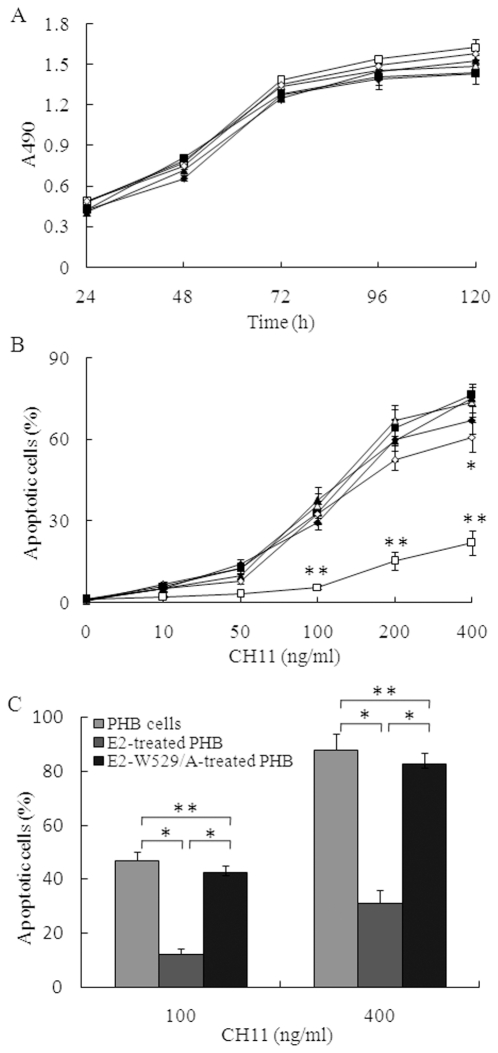
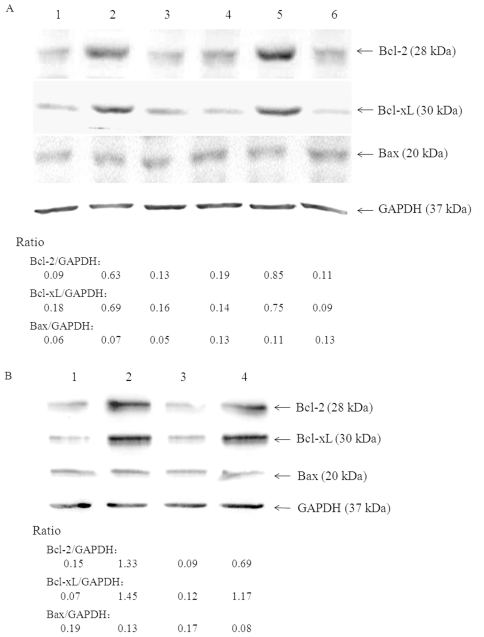
HCV infection is often associated with B-cell regulatory control disturbance and delayed appearance of neutralizing antibodies. CD81 is a cellular receptor for HCV and can bind to HCV envelope protein 2 (E2). CD81 also participates to form a B cell costimulatory complex. To investigate whether HCV influences B cell activation and immune function through E2 -CD81 engagement, here, human Burkitt's lymphoma cell line Raji cells and primary human B lymphocytes (PHB) were treated with HCV E2 protein and cell culture produced HCV particles (HCVcc), and then the related cell phenotypes were assayed. The results showed that both E2 and HCVcc triggered phosphorylation of IκBα, enhanced the expression of anti-apoptosis Bcl-2 family proteins, and protected Raji cells and PHB cells from Fas-mediated death. In addition, both E2 protein and HCVcc increased the expression of costimulatory molecules CD80, CD86 and CD81 itself, and decreased the expression of complement receptor CD21. The effects were dependent on E2-CD81 interaction on the cell surface, since CD81-silenced Raji cells did not respond to both treatments; and an E2 mutant that lose the CD81 binding activity, could not trigger the responses of both Raji cells and PHB cells. The effects were not associated with HCV replication in cells, for HCV pseudoparticle (HCVpp) and HCVcc failed to infect Raji cells. Hence, E2-CD81 engagement may contribute to HCV-associated B cell lymphoproliferative disorders and insufficient neutralizing antibody production.
HCV 感染通常与 B 细胞调节控制紊乱和中和抗体的延迟出现有关。CD81 是 HCV 的细胞受体,可与 HCV 包膜蛋白 2(E2)结合。CD81 还参与形成 B 细胞共刺激复合物。为了研究 HCV 是否通过 E2-CD81 结合影响 B 细胞的激活和免疫功能,本文用 HCV E2 蛋白和细胞培养产生的 HCV 颗粒(HCVcc)处理人 Burkitt 淋巴瘤细胞系 Raji 细胞和原代人 B 淋巴细胞(PHB),然后检测相关细胞表型。结果表明,E2 和 HCVcc 均可触发 IκBα 的磷酸化,增强抗凋亡 Bcl-2 家族蛋白的表达,并保护 Raji 细胞和 PHB 细胞免受 Fas 介导的死亡。此外,E2 蛋白和 HCVcc 均可增加共刺激分子 CD80、CD86 和 CD81 本身的表达,并降低补体受体 CD21 的表达。这些作用依赖于细胞表面的 E2-CD81 相互作用,因为沉默 CD81 的 Raji 细胞对这两种处理均无反应;而且失去 CD81 结合活性的 E2 突变体不能触发 Raji 细胞和 PHB 细胞的反应。这些作用与细胞内 HCV 的复制无关,因为 HCV 假病毒(HCVpp)和 HCVcc 不能感染 Raji 细胞。因此,E2-CD81 的结合可能导致 HCV 相关的 B 细胞淋巴增殖性疾病和中和抗体产生不足。