Department of Pharmaceutical Sciences, School of Pharmacy, Texas Tech University Health Sciences Center, 1300 Coulter Drive, Amarillo, TX 79106, United States.
Int J Pharm. 2011 Jul 15;413(1-2):51-62. doi: 10.1016/j.ijpharm.2011.04.017. Epub 2011 Apr 16.
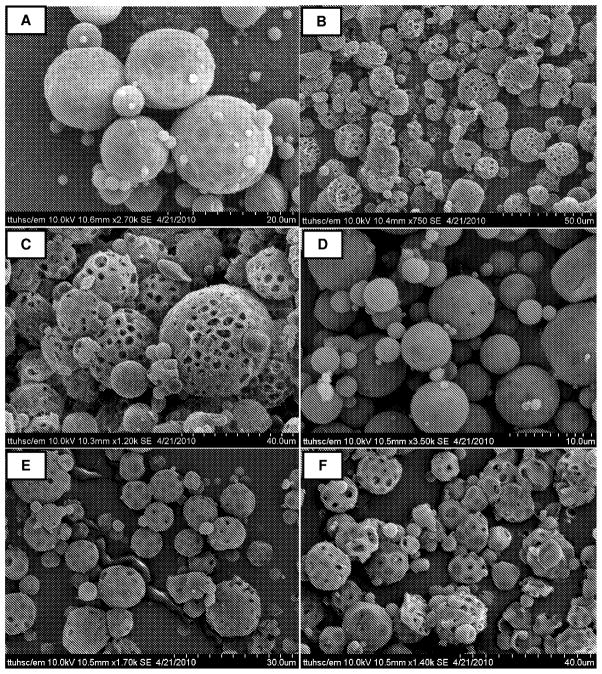
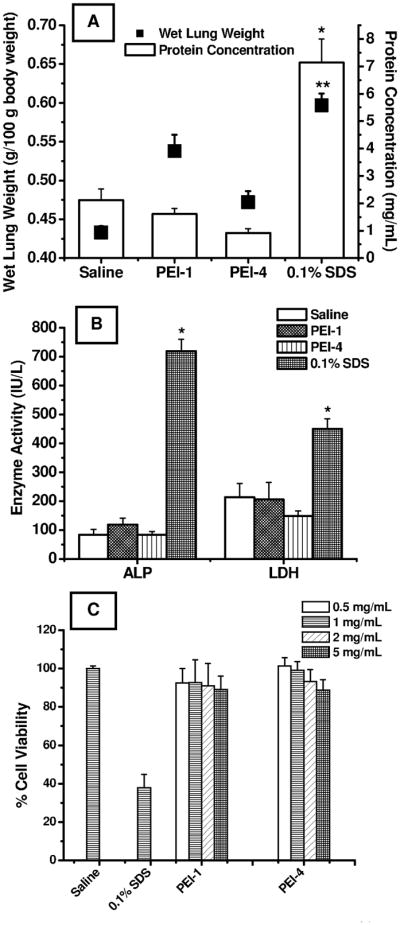
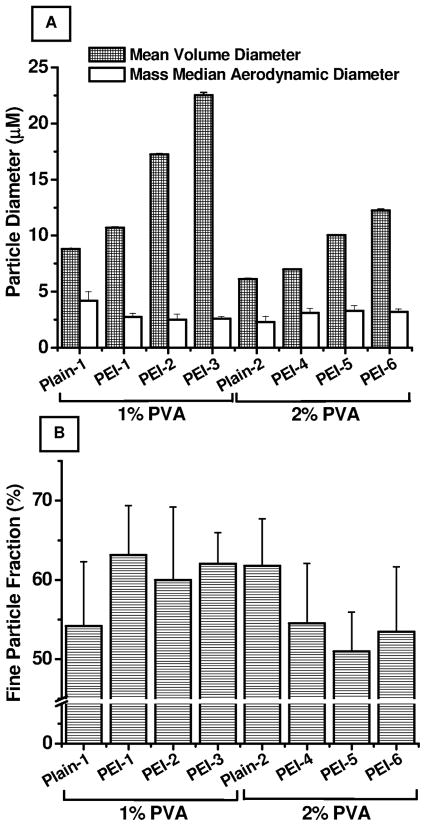
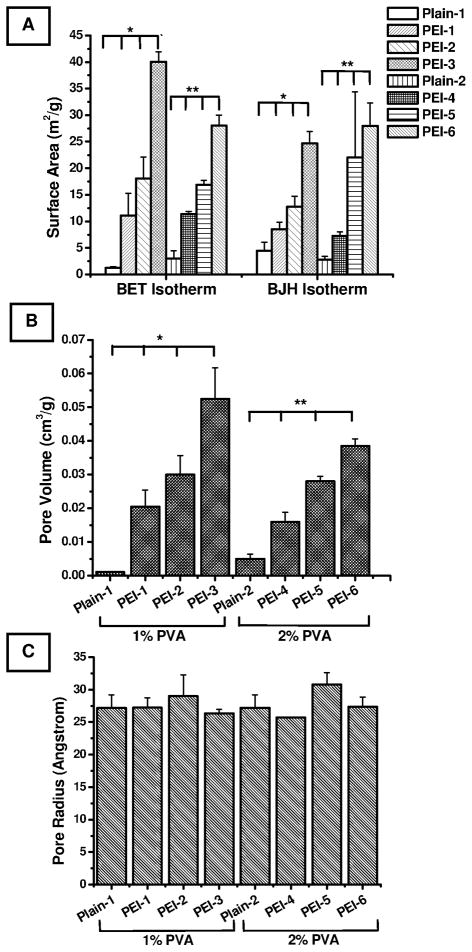
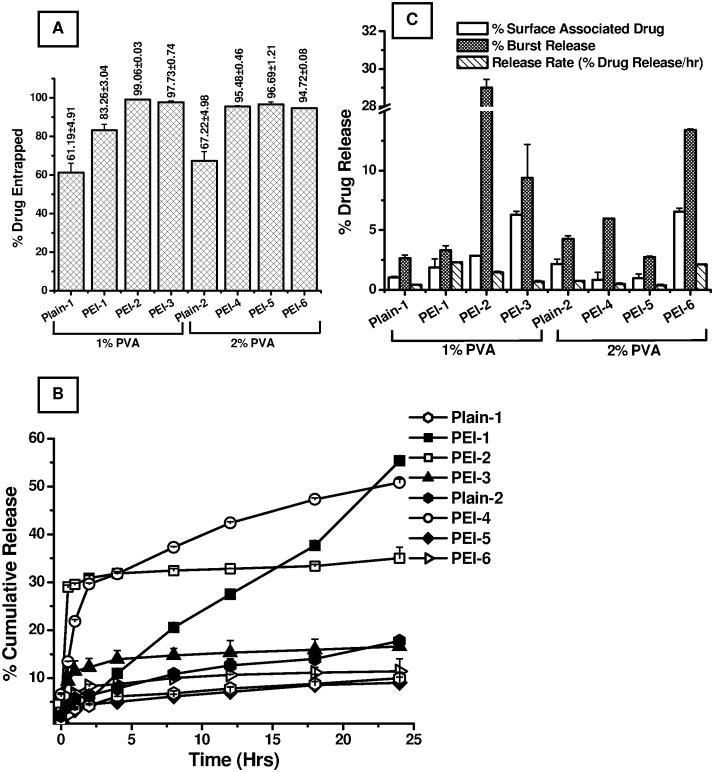
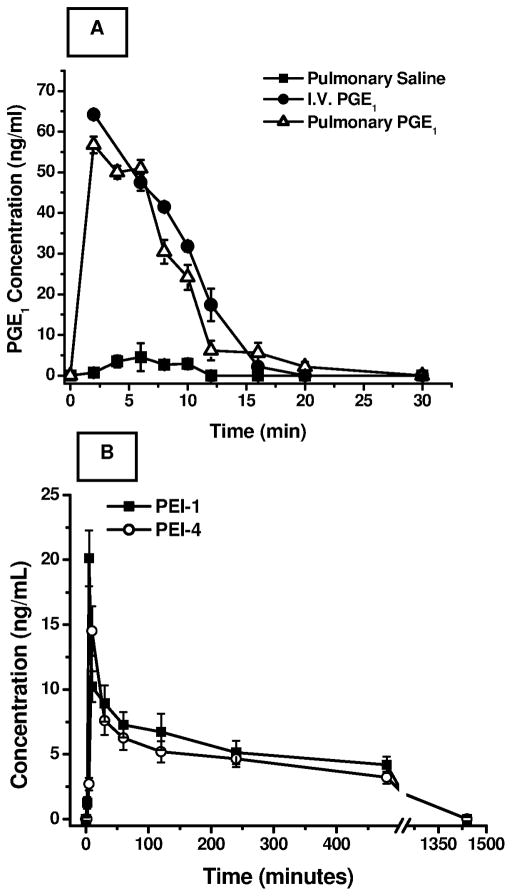
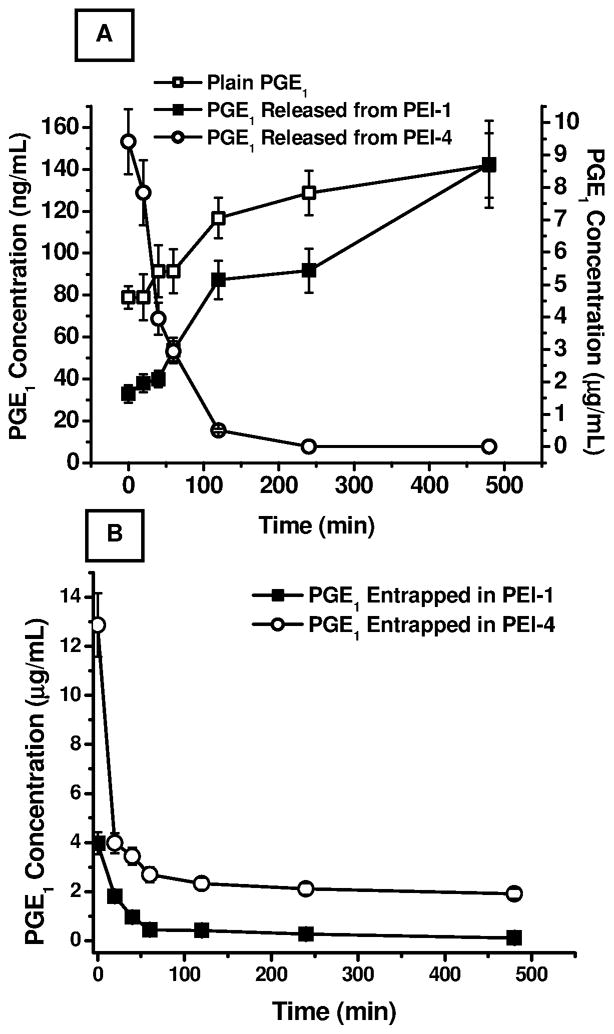
This study tests the hypothesis that large porous poly (lactic-co-glycolic acid) (PLGA) microparticles modified with polyethyleneimine (PEI) are viable carriers for pulmonary delivery of prostaglandin E(1) (PGE(1)) used in the treatment of pulmonary arterial hypertension (PAH), a pulmonary vascular disorder. The particles were prepared by a double-emulsion solvent evaporation method with PEI-25 kDa in the internal aqueous phase to produce an osmotic pressure gradient. Polyvinyl alcohol (PVA) was used for external coating of the particles. The particles were examined for morphology, size, aerodynamic diameter, surface area, pore volume and in-vitro release profiles. Particles with optimal properties for inhalation were tested for in-vivo pulmonary absorption, metabolic stability in rat lung homogenates, and acute toxicity in rat bronchoalveolar lavage fluid and respiratory epithelial cells, Calu-3. The micromeritic data indicated that the PEI-modified particles of PGE(1) are optimal for inhalation. Incorporation of PEI in the formulations resulted in an increased entrapment efficiency - 83.26 ± 3.04% for particles with 1% PVA and 95.48 ± 0.46% for particles with 2% PVA. The amount of cumulative drug released into the simulated interstitial lung fluid was between 50.8 ± 0.76% and 55.36 ± 0.06%. A remarkable extension of the circulation half-life up to 6.0-6.5h was observed when the formulations were administered via the lungs. The metabolic stability and toxicity studies showed that the optimized formulations were stable at physiological conditions and relatively safe to the lungs and respiratory epithelium. Overall, this study demonstrates that large porous inhalable polymeric microparticles can be a feasible option for non-invasive and controlled release of PGE(1) for treatment of PAH.
这项研究检验了这样一个假设,即经过聚乙烯亚胺(PEI)修饰的大孔聚(丙交酯-乙交酯)(PLGA)微孔颗粒可用作治疗肺动脉高压(PAH)的前列环素 E1(PGE1)的肺部给药的可行载体,PAH 是一种肺部血管疾病。通过双乳液溶剂蒸发法,在内部水相中使用 25kDa 的 PEI 制备颗粒,以产生渗透压梯度。使用聚乙烯醇(PVA)作为颗粒的外部涂层。对颗粒的形态、大小、空气动力学直径、表面积、孔体积和体外释放曲线进行了检查。对具有最佳吸入特性的颗粒进行了体内肺部吸收、大鼠肺匀浆中的代谢稳定性以及大鼠支气管肺泡灌洗液和呼吸上皮细胞(Calu-3)中的急性毒性测试。微粉学数据表明,PEI 修饰的 PGE1 颗粒最适合吸入。在制剂中加入 PEI 可提高包封效率-对于含有 1%PVA 的颗粒为 83.26±3.04%,对于含有 2%PVA 的颗粒为 95.48±0.46%。模拟间质肺液中累积药物释放量为 50.8±0.76%至 55.36±0.06%。当通过肺部给药时,观察到循环半衰期显著延长至 6.0-6.5 小时。代谢稳定性和毒性研究表明,优化的制剂在生理条件下稳定,对肺部和呼吸上皮相对安全。总的来说,这项研究表明,大孔可吸入聚合物微球可以作为非侵入性和控制 PGE1 释放的可行选择,用于治疗 PAH。