Beijing Key Laboratory of Cardiometabolic Molecular Medicine, Institute of Molecular Medicine, College of Future Technology, and State Key Laboratory of Natural and Biomimetic Drugs, Peking University, Beijing 100871, China.
Peking University-Nanjing Institute of Translational Medicine, Nanjing 211800, China.
Dis Model Mech. 2023 May 1;16(5). doi: 10.1242/dmm.049662. Epub 2022 Dec 7.
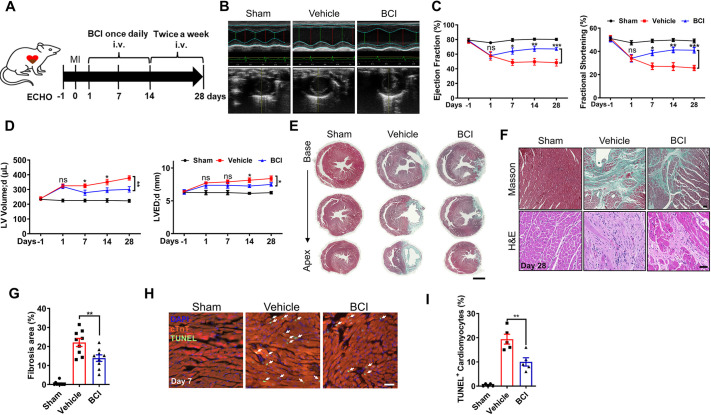
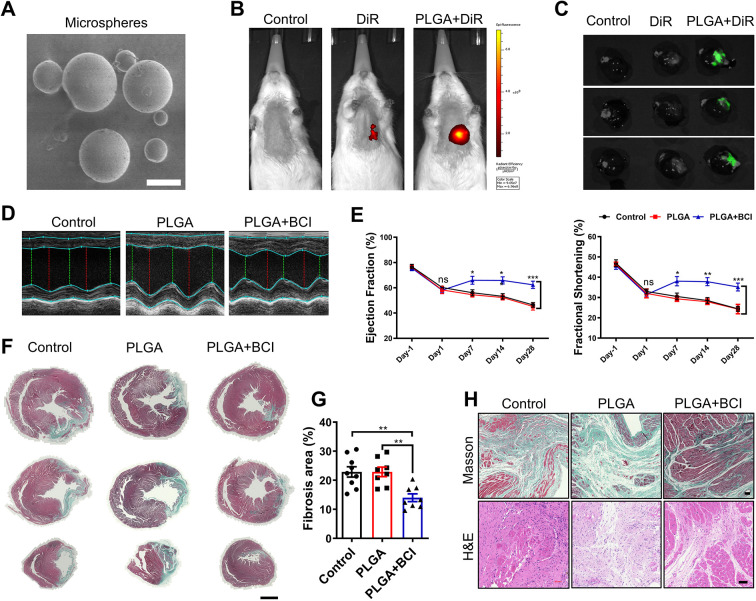
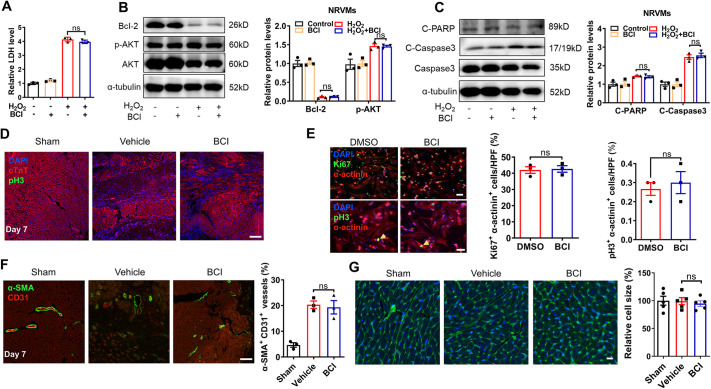
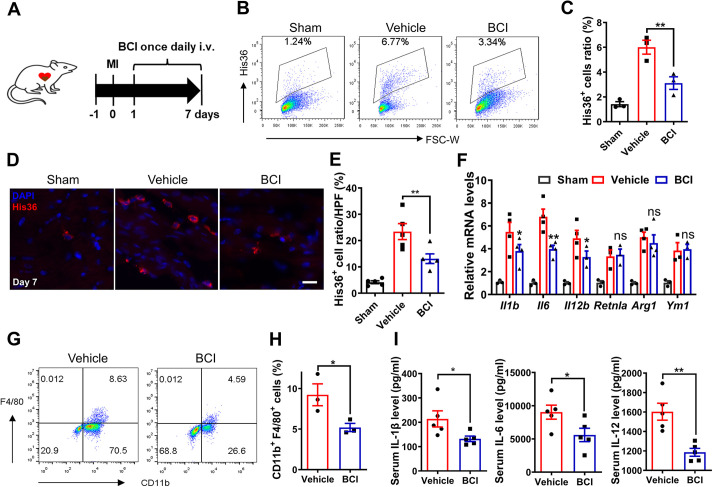
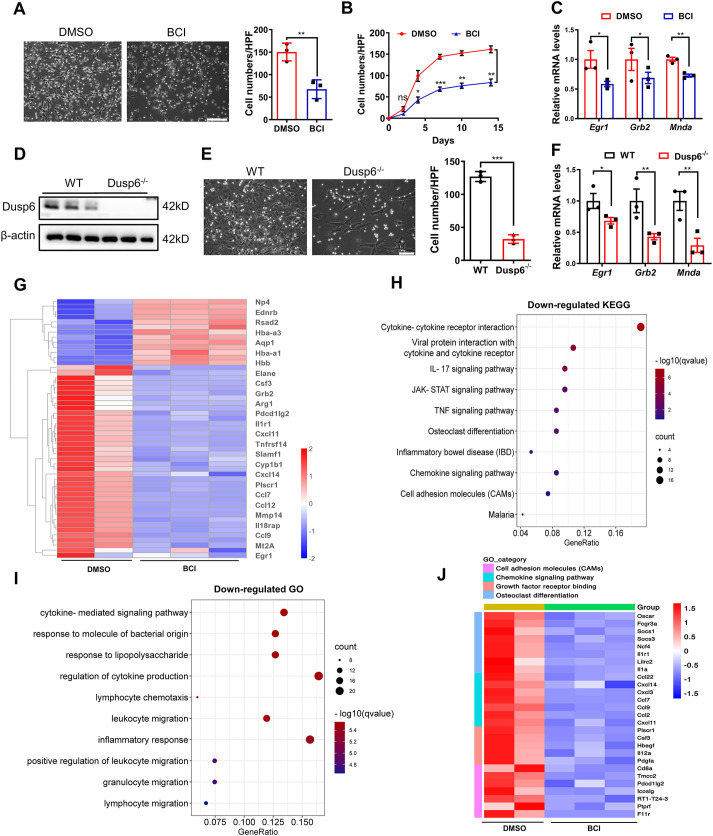
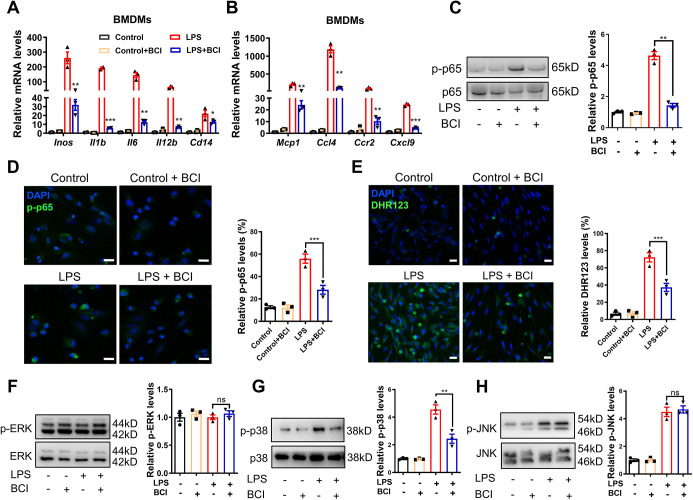
Acute myocardial infarction (MI) results in loss of cardiomyocytes and abnormal cardiac remodeling with severe inflammation and fibrosis. However, how cardiac repair can be achieved by timely resolution of inflammation and cardiac fibrosis remains incompletely understood. Our previous findings have shown that dual-specificity phosphatase 6 (DUSP6) is a regeneration repressor from zebrafish to rats. In this study, we found that intravenous administration of the DUSP6 inhibitor (E)-2-benzylidene-3-(cyclohexylamino)-2,3-dihydro-1H-inden-1-one (BCI) improved heart function and reduced cardiac fibrosis in MI rats. Mechanistic analysis revealed that BCI attenuated macrophage inflammation through NF-κB and p38 signaling, independent of DUSP6 inhibition, leading to the downregulation of various cytokines and chemokines. In addition, BCI suppressed differentiation-related signaling pathways and decreased bone-marrow cell differentiation into macrophages through inhibiting DUSP6. Furthermore, intramyocardial injection of poly (D, L-lactic-co-glycolic acid)-loaded BCI after MI had a notable effect on cardiac repair. In summary, BCI improves heart function and reduces abnormal cardiac remodeling by inhibiting macrophage formation and inflammation post-MI, thus providing a promising pro-drug candidate for the treatment of MI and related heart diseases. This article has an associated First Person interview with the first author of the paper.
急性心肌梗死 (MI) 导致心肌细胞丧失和异常心脏重构,伴有严重炎症和纤维化。然而,如何通过及时缓解炎症和心脏纤维化来实现心脏修复,目前仍不完全清楚。我们之前的研究结果表明,双特异性磷酸酶 6 (DUSP6) 是从斑马鱼到大鼠的一种再生抑制因子。在这项研究中,我们发现静脉注射 DUSP6 抑制剂 (E)-2-苄叉基-3-(环己氨基)-2,3-二氢-1H-茚-1-酮 (BCI) 可改善 MI 大鼠的心脏功能并减少心脏纤维化。机制分析表明,BCI 通过 NF-κB 和 p38 信号通路减轻巨噬细胞炎症,而不依赖于 DUSP6 抑制,从而下调各种细胞因子和趋化因子。此外,BCI 通过抑制 DUSP6 抑制分化相关信号通路并减少骨髓细胞向巨噬细胞分化。此外,MI 后心肌内注射载有聚 (D, L-乳酸-共-乙醇酸) 的 BCI 对心脏修复有显著效果。总之,BCI 通过抑制 MI 后巨噬细胞的形成和炎症来改善心脏功能和减少异常心脏重构,从而为 MI 及相关心脏病的治疗提供了一种有前途的前药候选物。本文有该论文第一作者的相关第一人称采访。