Spectrum Research, Inc, Tacoma, WA, USA.
J Vasc Surg. 2011 Aug;54(2):412-9. doi: 10.1016/j.jvs.2011.01.046. Epub 2011 Apr 30.
Information about longer-term functional outcomes following lower extremity amputation for peripheral vascular disease and diabetes remains limited. This study examined factors associated with mobility success during the first year following amputation.
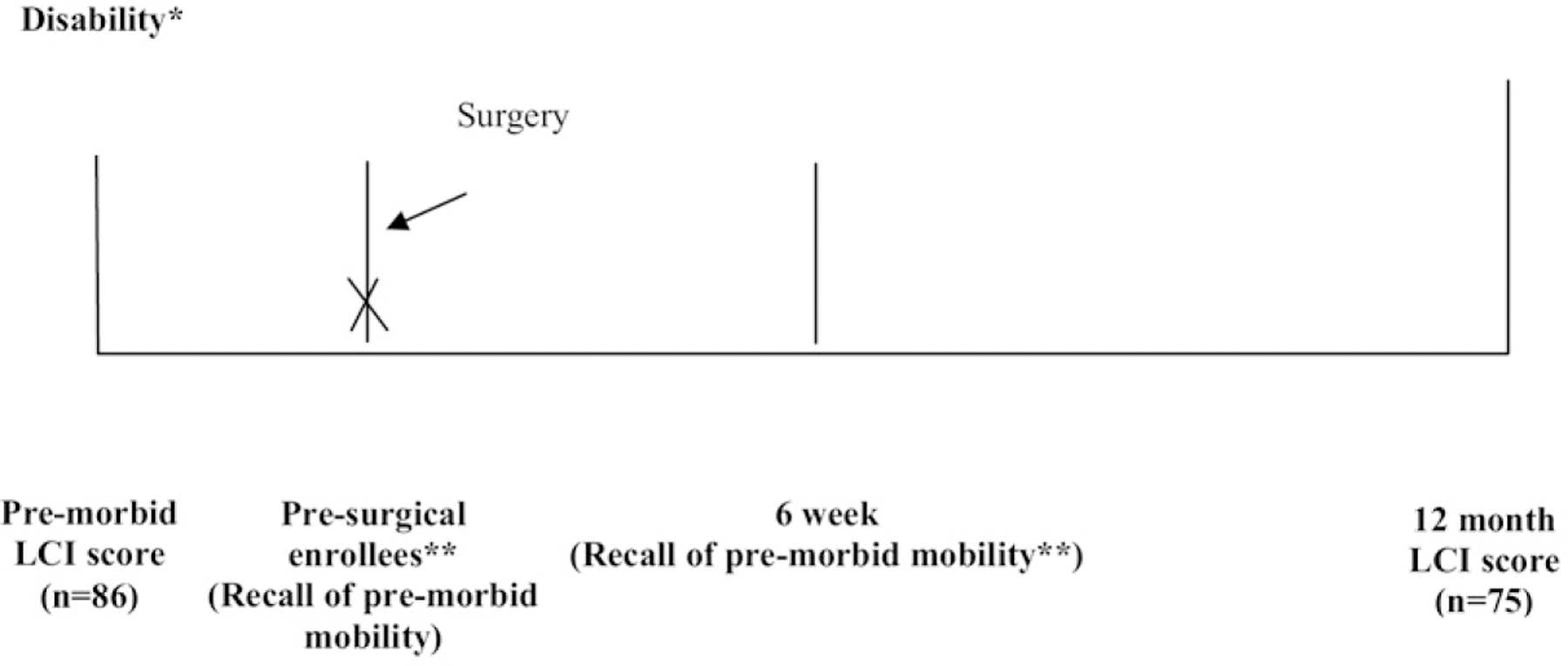
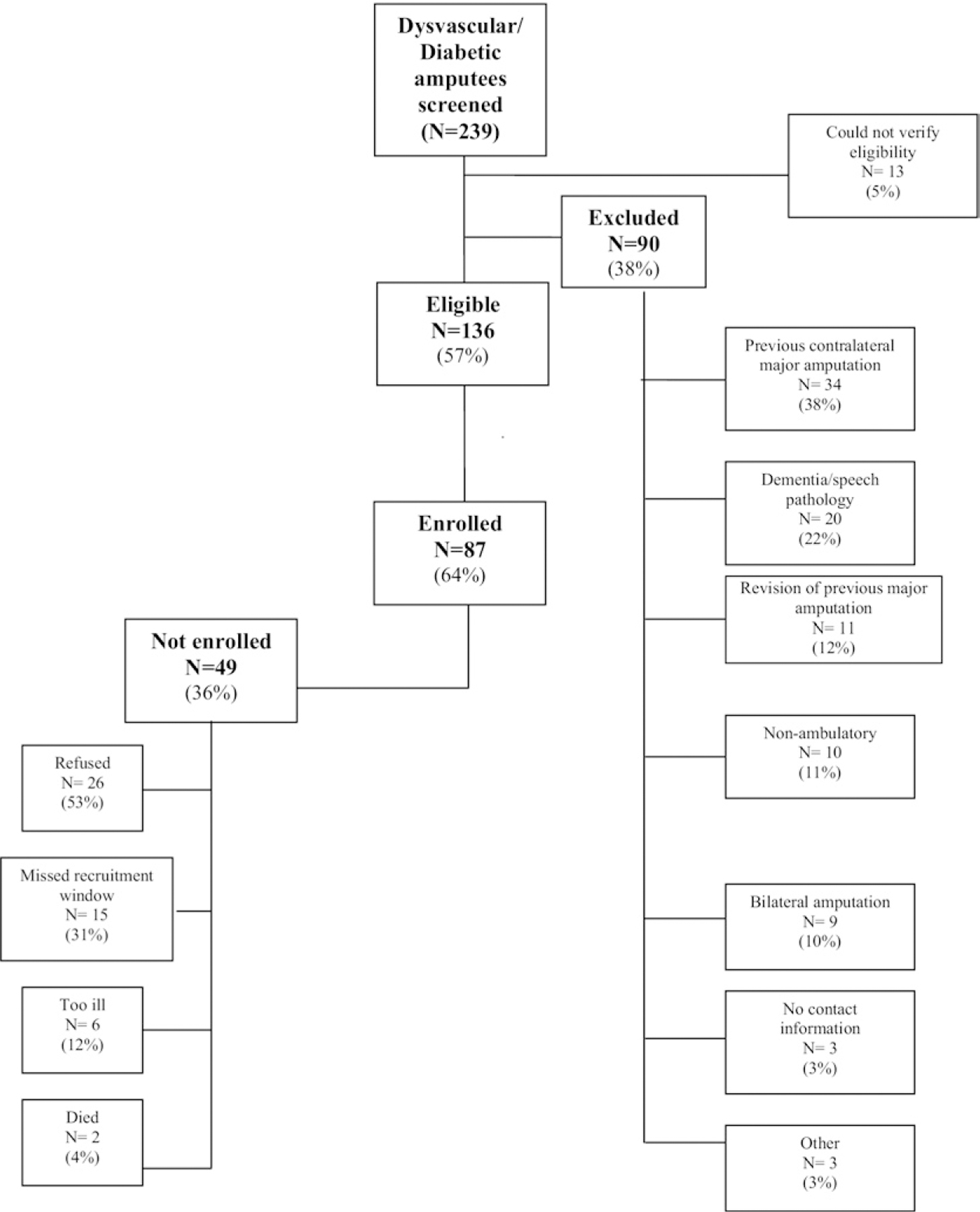
Prospective cohort study of 87 amputees experiencing a first major unilateral amputation surgery. Seventy-five (86%) participants completed 12-month follow-up interview.
Twenty-eight subjects (37%) achieved mobility success, defined as returning to or exceeding a baseline level of mobility on the locomotor capability index (LCI-5). Forty-three subjects (57%) were satisfied with their mobility. Individuals who were 65 years of age and older (risk difference [RD] = -0.52; 95% confidence interval [CI]: -0.75, -0.29), reported a current alcohol use disorder (RD = -0.37; 95% CI: -0.48, -0.26), had a history of hypertension (RD = -0.23; 95% CI: -0.43, -0.03) or treatment for anxiety or depression (RD = -0.39; 95% CI: -0.50, -0.28) were less likely to achieve mobility success. Mobility success was associated with mobility satisfaction (RD = 0.36; 95% CI: 0.20, 0.53) and satisfaction with life (RD = 0.28; 95% CI: 0.06, 0.50). Although higher absolute mobility at 12 months was also associated with mobility satisfaction and overall life satisfaction, 50% of individuals who achieved success with low to moderate 12-month mobility function reported they were satisfied with their mobility.
Defining success after amputation in relation to an individual's specific mobility prior to the development of limb impairment which led to amputation provides a useful, patient-centered measure that takes other aspects of health, function, and impairment into account.
有关外周血管疾病和糖尿病患者下肢截肢后长期功能结果的信息仍然有限。本研究探讨了截肢后第一年与移动能力成功相关的因素。
对 87 例首次单侧主要截肢手术的截肢患者进行前瞻性队列研究。75 名(86%)参与者完成了 12 个月的随访访谈。
28 名受试者(37%)实现了移动能力成功,定义为在移动能力指数(LCI-5)上恢复或超过基线水平。43 名受试者(57%)对他们的移动能力感到满意。年龄在 65 岁及以上的个体(风险差异[RD] = -0.52;95%置信区间[CI]:-0.75,-0.29)、报告当前酒精使用障碍(RD = -0.37;95% CI:-0.48,-0.26)、有高血压史(RD = -0.23;95% CI:-0.43,-0.03)或接受焦虑或抑郁治疗(RD = -0.39;95% CI:-0.50,-0.28)的个体不太可能实现移动能力成功。移动能力成功与移动能力满意度(RD = 0.36;95% CI:0.20,0.53)和生活满意度(RD = 0.28;95% CI:0.06,0.50)相关。尽管 12 个月时更高的绝对移动能力也与移动能力满意度和整体生活满意度相关,但 50%的在 12 个月时实现低到中度移动功能成功的个体报告他们对自己的移动能力感到满意。
根据个体在导致截肢的肢体损伤之前的特定移动能力来定义截肢后的成功,提供了一种有用的、以患者为中心的衡量标准,该标准考虑了其他健康、功能和损伤方面。