Department of Microbiology and Immunology, University of Maryland Medical School, Baltimore, Maryland, United States of America.
PLoS One. 2011 Apr 20;6(4):e19016. doi: 10.1371/journal.pone.0019016.
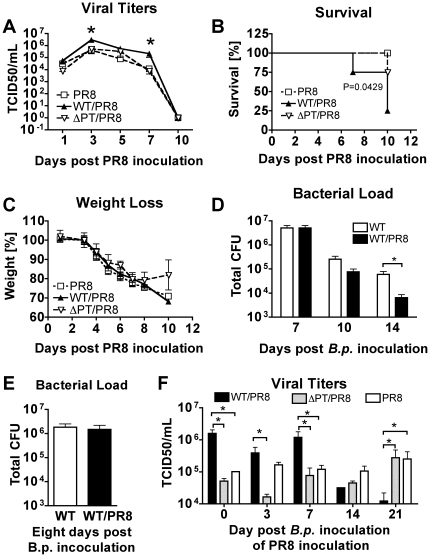
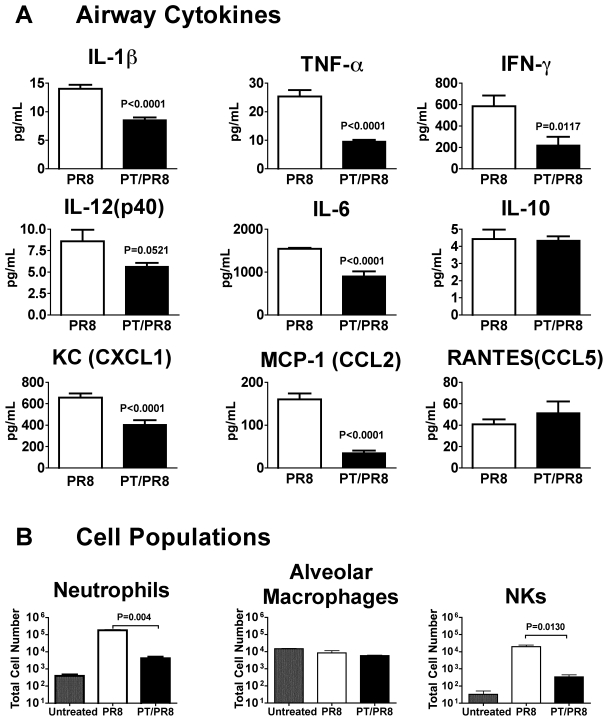
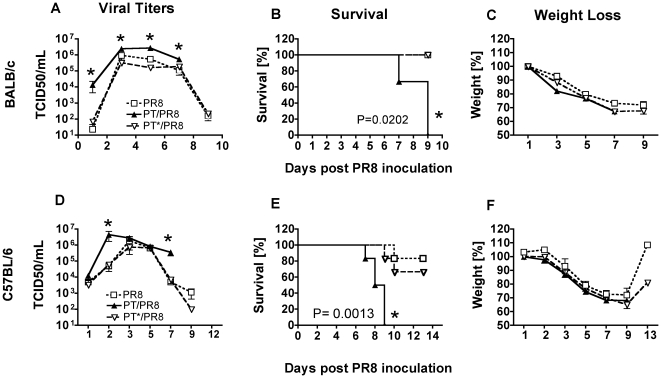
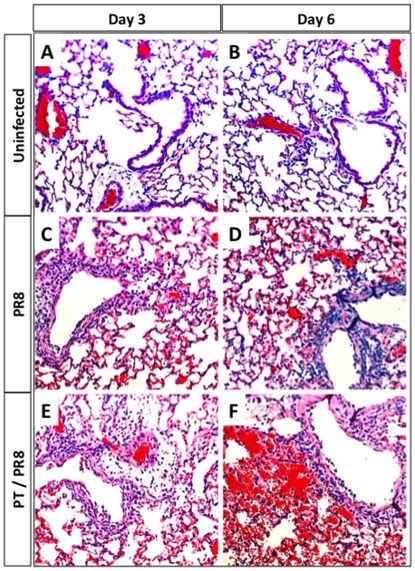
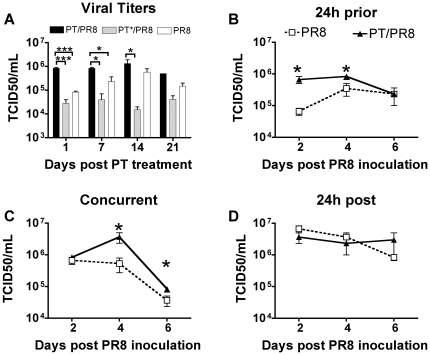
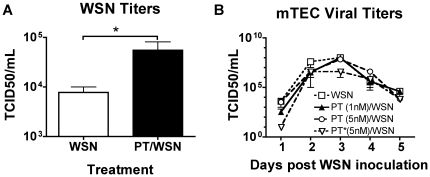
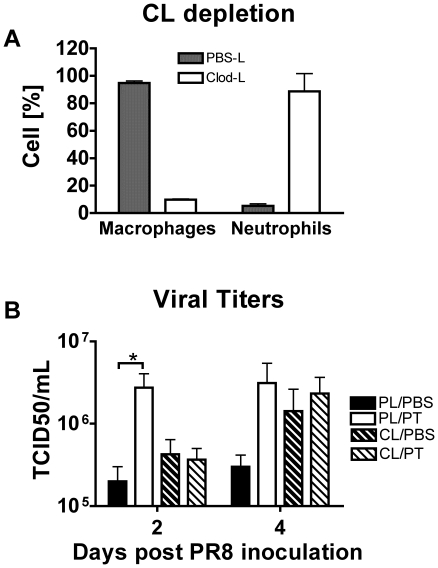
Pertussis (whooping cough) is frequently complicated by concomitant infections with respiratory viruses. Here we report the effect of Bordetella pertussis infection on subsequent influenza virus (PR8) infection in mouse models and the role of pertussis toxin (PT) in this effect. BALB/c mice infected with a wild-type strain of B. pertussis (WT) and subsequently (up to 14 days later) infected with PR8 had significantly increased pulmonary viral titers, lung pathology and mortality compared to mice similarly infected with a PT-deficient mutant strain (ΔPT) and PR8. Substitution of WT infection by intranasal treatment with purified active PT was sufficient to replicate the exacerbating effects on PR8 infection in BALB/c and C57/BL6 mice, but the effects of PT were lost when toxin was administered 24 h after virus inoculation. PT had no effect on virus titers in primary cultures of murine tracheal epithelial cells (mTECs) in vitro, suggesting the toxin targets an early immune response to increase viral titers in the mouse model. However, type I interferon responses were not affected by PT. Whole genome microarray analysis of gene expression in lung tissue from PT-treated and control PR8-infected mice at 12 and 36 h post-virus inoculation revealed that PT treatment suppressed numerous genes associated with communication between innate and adaptive immune responses. In mice depleted of alveolar macrophages, increase of pulmonary viral titers by PT treatment was lost. PT also suppressed levels of IL-1β, IL-12, IFN-γ, IL-6, KC, MCP-1 and TNF-α in the airways after PR8 infection. Furthermore PT treatment inhibited early recruitment of neutrophils and NK cells to the airways. Together these findings demonstrate that infection with B. pertussis through PT activity predisposes the host to exacerbated influenza infection by countering protective innate immune responses that control virus titers.
百日咳(俗称“鸡咳”)常并发呼吸道病毒感染。在此,我们报告了在小鼠模型中博德特氏菌属百日咳感染对随后流感病毒(PR8)感染的影响,以及百日咳毒素(PT)在这一效应中的作用。感染野生型博德特氏菌属百日咳(WT)的 BALB/c 小鼠,随后(直至 14 天后)感染 PR8,其肺部病毒滴度、肺病理和死亡率与感染 PT 缺失突变株(ΔPT)和 PR8 的小鼠相比显著增加。通过鼻内给予纯化的活性 PT 替代 WT 感染足以复制 BALB/c 和 C57/BL6 小鼠中对 PR8 感染的加重作用,但当毒素在病毒接种后 24 小时给予时,PT 的作用丧失。PT 对体外原代培养的鼠气管上皮细胞(mTEC)中的病毒滴度没有影响,这表明毒素针对早期免疫反应,以增加小鼠模型中的病毒滴度。然而,PT 不影响 I 型干扰素反应。PT 处理和对照 PR8 感染小鼠在病毒接种后 12 和 36 小时肺组织的全基因组微阵列分析显示,PT 处理抑制了许多与先天免疫和适应性免疫反应之间通讯相关的基因。在肺泡巨噬细胞耗竭的小鼠中,PT 处理引起的肺部病毒滴度增加丧失。PT 还抑制了 PR8 感染后气道中 IL-1β、IL-12、IFN-γ、IL-6、KC、MCP-1 和 TNF-α的水平。此外,PT 处理抑制了中性粒细胞和 NK 细胞向气道的早期募集。这些发现共同表明,通过 PT 活性感染博德特氏菌属百日咳会通过对抗控制病毒滴度的保护性先天免疫反应,使宿主易患加重的流感感染。