Department of Infection Genetics, University of Veterinary Medicine Hannover, Inhoffenstr, Braunschweig, Germany.
Respir Res. 2011 May 2;12(1):61. doi: 10.1186/1465-9921-12-61.
The lung is critical in surveillance and initial defense against pathogens. In humans, as in mice, individual genetic differences strongly modulate pulmonary responses to infectious agents, severity of lung disease, and potential allergic reactions. In a first step towards understanding genetic predisposition and pulmonary molecular networks that underlie individual differences in disease vulnerability, we performed a global analysis of normative lung gene expression levels in inbred mouse strains and a large family of BXD strains that are widely used for systems genetics. Our goal is to provide a key community resource on the genetics of the normative lung transcriptome that can serve as a foundation for experimental analysis and allow predicting genetic predisposition and response to pathogens, allergens, and xenobiotics.
Steady-state polyA+ mRNA levels were assayed across a diverse and fully genotyped panel of 57 isogenic strains using the Affymetrix M430 2.0 array. Correlations of expression levels between genes were determined. Global expression QTL (eQTL) analysis and network covariance analysis was performed using tools and resources in GeneNetwork http://www.genenetwork.org.
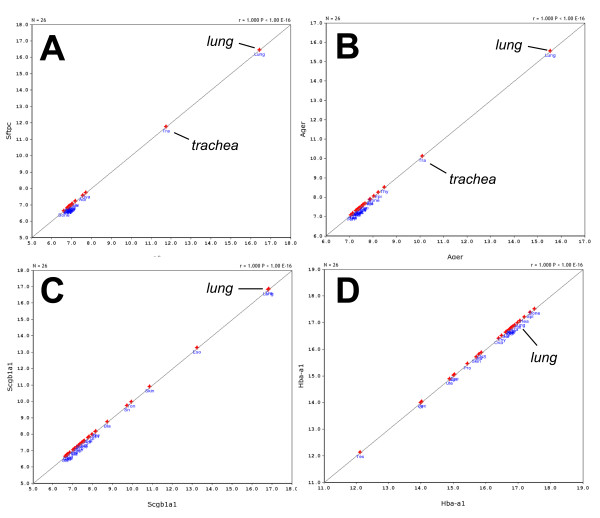
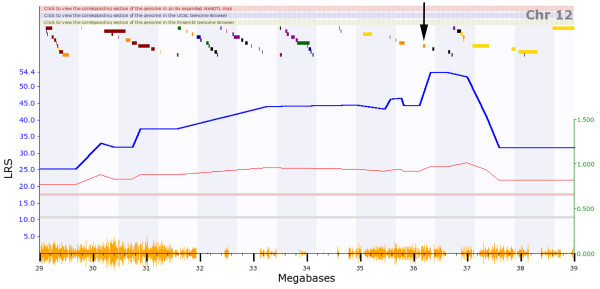
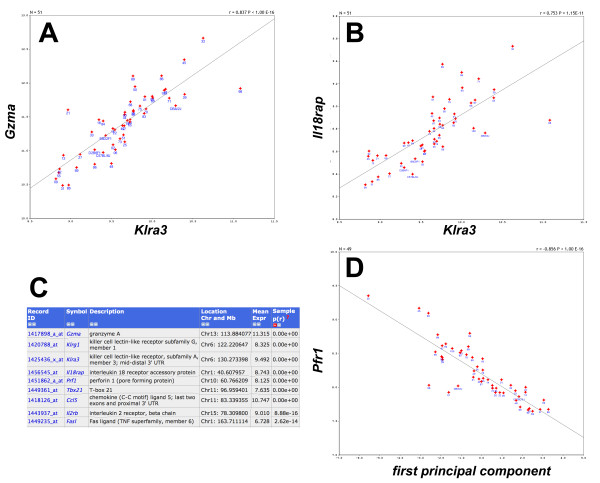
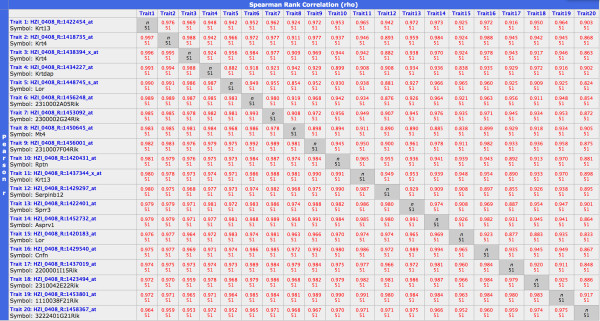
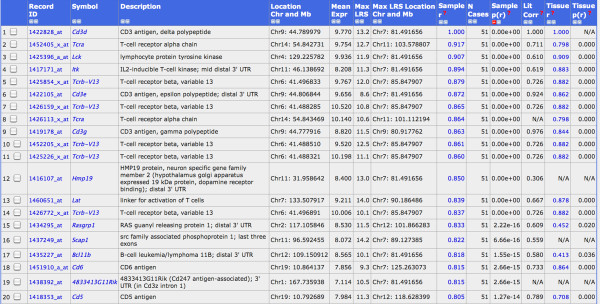
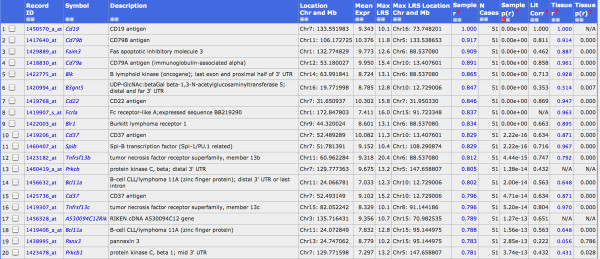
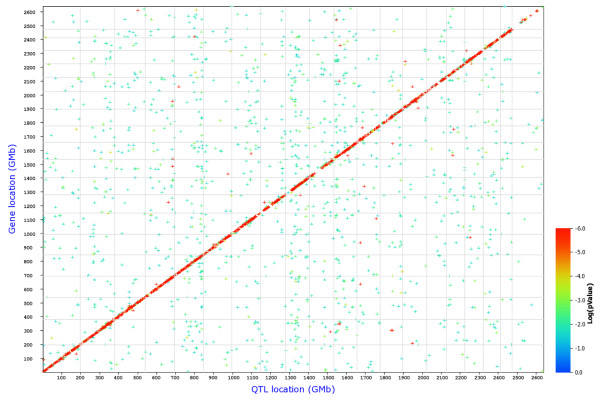
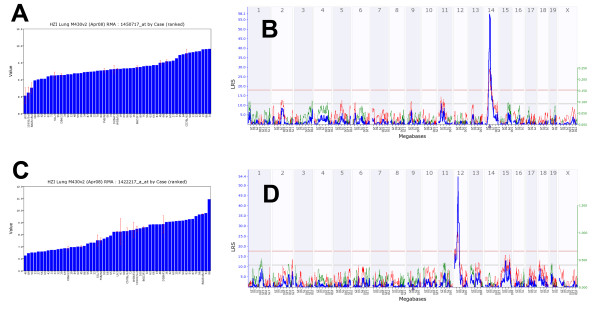
Expression values were highly variable across strains and in many cases exhibited a high heritability factor. Several genes which showed a restricted expression to lung tissue were identified. Using correlations between gene expression values across all strains, we defined and extended memberships of several important molecular networks in the lung. Furthermore, we were able to extract signatures of immune cell subpopulations and characterize co-variation and shared genetic modulation. Known QTL regions for respiratory infection susceptibility were investigated and several cis-eQTL genes were identified. Numerous cis- and trans-regulated transcripts and chromosomal intervals with strong regulatory activity were mapped. The Cyp1a1 P450 transcript had a strong trans-acting eQTL (LOD 11.8) on Chr 12 at 36 ± 1 Mb. This interval contains the transcription factor Ahr that has a critical mis-sense allele in the DBA/2J haplotype and evidently modulates transcriptional activation by AhR.
Large-scale gene expression analyses in genetic reference populations revealed lung-specific and immune-cell gene expression profiles and suggested specific gene regulatory interactions.
肺在监测和抵御病原体的初始防御中起着至关重要的作用。在人类和小鼠中,个体遗传差异强烈调节对感染因子的肺部反应、肺部疾病的严重程度以及潜在的过敏反应。为了初步了解遗传易感性和肺部分子网络,这些网络是导致疾病易感性个体差异的基础,我们对近交系小鼠品系和广泛用于系统遗传学的 BXD 品系大家族的正常肺基因表达水平进行了全面分析。我们的目标是提供一个关于正常肺转录组遗传学的关键社区资源,作为实验分析的基础,并允许预测遗传易感性和对病原体、过敏原和异源生物的反应。
使用 Affymetrix M430 2.0 阵列,在一个多样化且完全基因分型的 57 个同基因品系面板上检测稳定状态的 polyA+mRNA 水平。确定基因之间表达水平的相关性。使用 GeneNetwork http://www.genenetwork.org 中的工具和资源进行全基因组表达数量性状基因座(eQTL)分析和网络协方差分析。
表达值在品系之间高度可变,在许多情况下表现出较高的遗传力因素。鉴定出一些仅在肺组织中表达的基因。使用所有品系中基因表达值之间的相关性,我们定义并扩展了肺中的几个重要分子网络的成员资格。此外,我们能够提取免疫细胞亚群的特征,并描述共变和共享的遗传调节。研究了与呼吸道感染易感性相关的已知 QTL 区域,并鉴定了几个顺式 eQTL 基因。映射了大量顺式和反式调节的转录本和具有强调节活性的染色体区间。Cyp1a1 P450 转录物在 Chr 12 上的 36±1 Mb 处具有很强的反式作用 eQTL(LOD 11.8)。该间隔包含转录因子 Ahr,其在 DBA/2J 单倍型中具有关键的错义等位基因,显然调节 AhR 的转录激活。
在遗传参考群体中的大规模基因表达分析揭示了肺特异性和免疫细胞基因表达谱,并提出了特定的基因调控相互作用。