Department of Biomedicine, University of Bergen, Bergen, Norway.
PLoS One. 2011 Apr 26;6(4):e19217. doi: 10.1371/journal.pone.0019217.
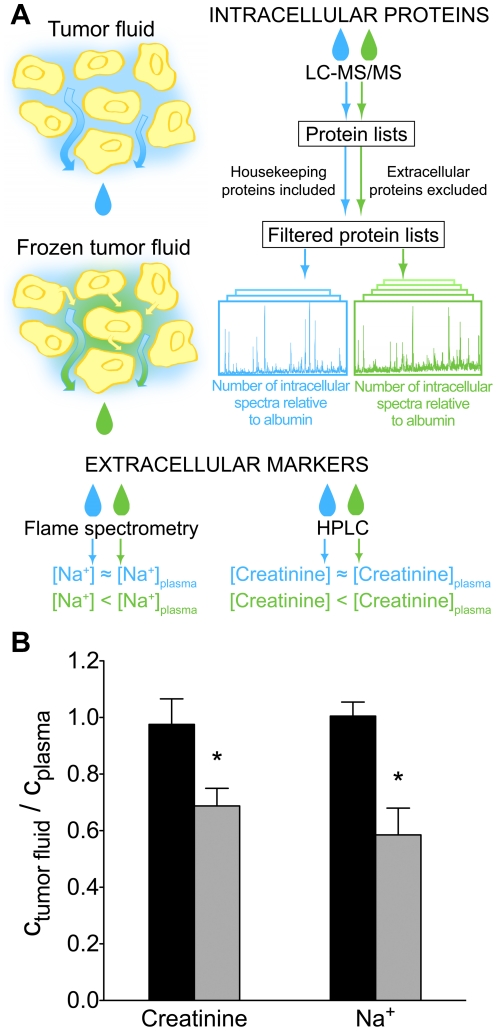
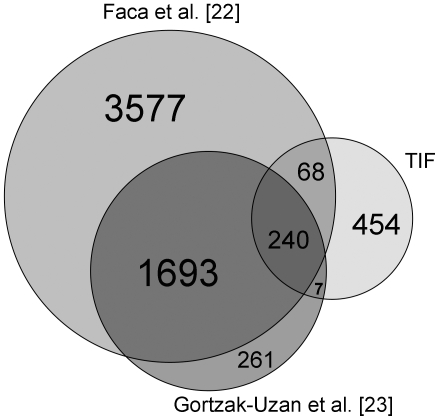
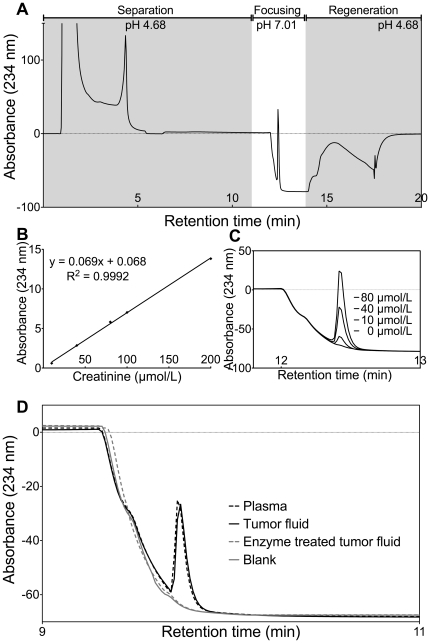
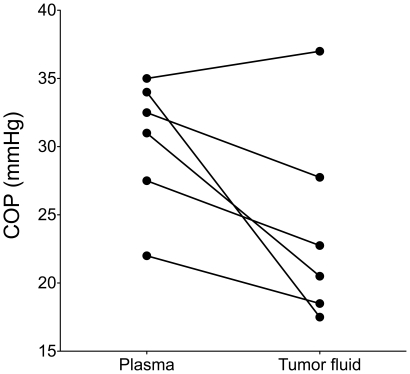
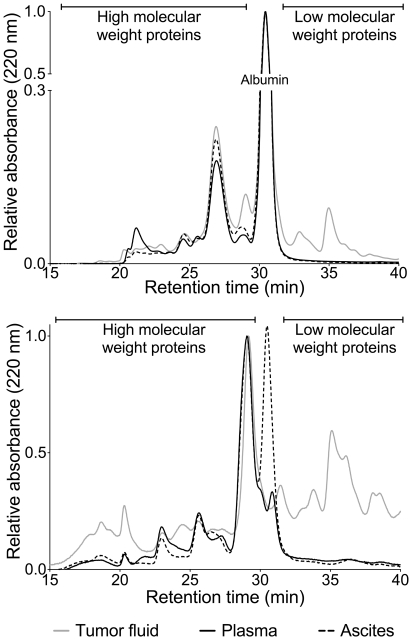
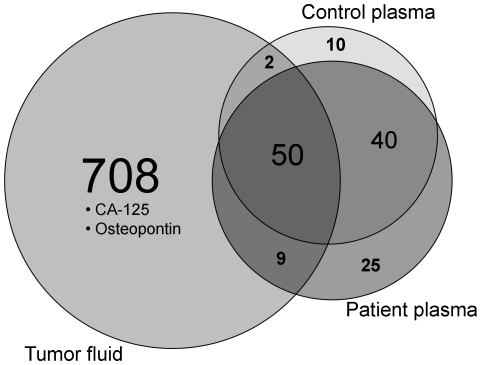
Major efforts have been invested in the identification of cancer biomarkers in plasma, but the extraordinary dynamic range in protein composition, and the dilution of disease specific proteins make discovery in plasma challenging. Focus is shifting towards using proximal fluids for biomarker discovery, but methods to verify the isolated sample's origin are missing. We therefore aimed to develop a technique to search for potential candidate proteins in the proximal proteome, i.e. in the tumor interstitial fluid, since the biomarkers are likely to be excreted or derive from the tumor microenvironment. Since tumor interstitial fluid is not readily accessible, we applied a centrifugation method developed in experimental animals and asked whether interstitial fluid from human tissue could be isolated, using ovarian carcinoma as a model. Exposure of extirpated tissue to 106 g enabled tumor fluid isolation. The fluid was verified as interstitial by an isolated fluid:plasma ratio not significantly different from 1.0 for both creatinine and Na(+), two substances predominantly present in interstitial fluid. The isolated fluid had a colloid osmotic pressure 79% of that in plasma, suggesting that there was some sieving of proteins at the capillary wall. Using a proteomic approach we detected 769 proteins in the isolated interstitial fluid, sixfold higher than in patient plasma. We conclude that the isolated fluid represents undiluted interstitial fluid and thus a subproteome with high concentration of locally secreted proteins that may be detected in plasma for diagnostic, therapeutic and prognostic monitoring by targeted methods.
已经投入了大量精力来鉴定血浆中的癌症生物标志物,但由于蛋白质组成的巨大动态范围,以及疾病特异性蛋白质的稀释,使得在血浆中进行发现具有挑战性。研究重点正在转向使用近端体液进行生物标志物发现,但缺乏验证分离样本来源的方法。因此,我们旨在开发一种在近端蛋白质组(即肿瘤间质液)中寻找潜在候选蛋白的技术,因为这些生物标志物很可能被排泄或来源于肿瘤微环境。由于肿瘤间质液不易获取,我们应用了在实验动物中开发的离心方法,并询问是否可以分离出人组织的间质液,以卵巢癌作为模型。将切除的组织暴露于 106g 的力下可以分离肿瘤液。通过分离液:血浆比肌酐和 Na(+)的比值均不显著不同于 1.0 来验证分离液为间质液,肌酐和 Na(+)两种物质主要存在于间质液中。分离液的胶体渗透压为血浆的 79%,表明在毛细血管壁上存在一些蛋白质的筛滤。使用蛋白质组学方法,我们在分离的间质液中检测到 769 种蛋白质,是患者血浆中的六倍。我们得出结论,分离的液体代表未稀释的间质液,因此是一种具有高浓度局部分泌蛋白的亚蛋白质组,通过靶向方法可以在血浆中检测到这些蛋白,用于诊断、治疗和预后监测。