Queensland Institute of Medical Research, Herston, Australia.
PLoS Negl Trop Dis. 2011 Apr 26;5(4):e1043. doi: 10.1371/journal.pntd.0001043.
While considerable genomic and transcriptomic data are available for Schistosoma mansoni, many of its genes lack significant annotation. A transcriptomic study of individual tissues and organs of schistosomes could play an important role in functional annotation of the unknown genes, particularly by providing rapid localisation data and thus giving insight into the potential roles of these molecules in parasite development, reproduction and homeostasis, and in the complex host-parasite interaction.
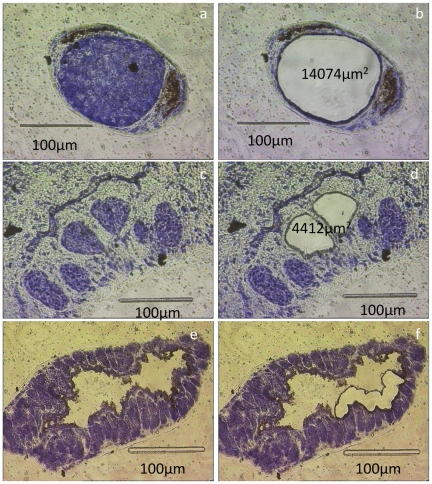
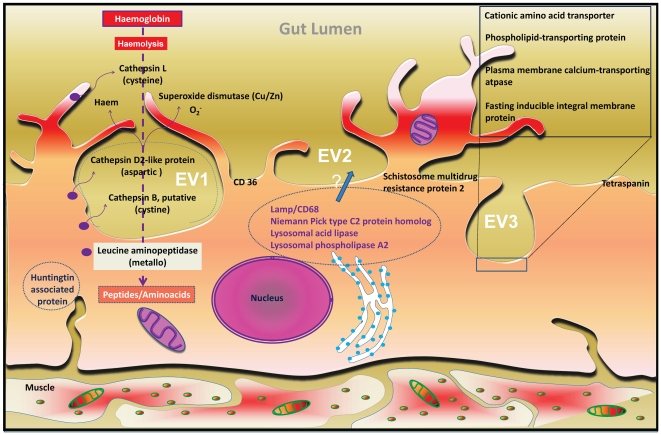
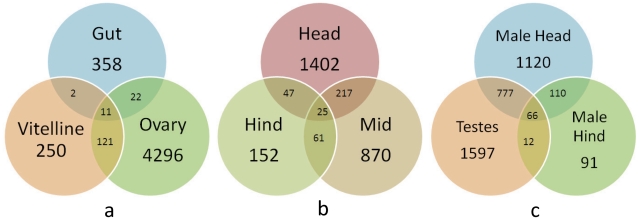
METHODOLOGY/PRINCIPAL FINDINGS: Quantification of gene expression in tissues of S. mansoni was achieved by a combination of laser microdissection microscopy (LMM) and oligonucleotide microarray analysis. We compared the gene expression profile of the adult female gastrodermis and male and female reproductive tissues with whole worm controls. The results revealed a total of 393 genes (contigs) that were up-regulated two-fold or more in the gastrodermis, 4,450 in the ovary, 384 in the vitelline tissues of female parasites, and 2,171 in the testes. We have also supplemented these data with the identification of highly expressed genes in different regions of manually dissected male and female S. mansoni. Though relatively crude, this dissection strategy provides low resolution localisation data for critical regions of the adult parasites that are not amenable to LMM isolation.
This is the first detailed transcriptomic study of the reproductive tissues and gastrodermis of S. mansoni. The results obtained will help direct future research on the functional aspects of these tissues, expediting the characterisation of currently unannotated gene products of S. mansoni and the discovery of new drug and vaccine targets.
尽管有大量的曼氏血吸虫基因组和转录组数据,但许多基因缺乏显著的注释。对曼氏血吸虫单个组织和器官的转录组研究可以在未知基因的功能注释中发挥重要作用,特别是通过提供快速的本地化数据,从而深入了解这些分子在寄生虫发育、繁殖和内稳态以及复杂的宿主-寄生虫相互作用中的潜在作用。
方法/主要发现:通过激光显微切割显微镜(LMM)和寡核苷酸微阵列分析相结合的方法,实现了曼氏血吸虫组织中基因表达的定量。我们比较了成年雌性胃皮层和雄性和雌性生殖组织与全虫对照的基因表达谱。结果共发现 393 个基因(contigs)在胃皮层中上调了两倍或更多,在卵巢中上调了 4450 个,在雌性寄生虫的卵黄组织中上调了 384 个,在睾丸中上调了 2171 个。我们还补充了在手动解剖的雄性和雌性曼氏血吸虫不同区域中高度表达基因的鉴定。虽然相对粗糙,但这种解剖策略为难以通过 LMM 分离的成虫关键区域提供了低分辨率的本地化数据。
这是对曼氏血吸虫生殖组织和胃皮层的首次详细转录组研究。获得的结果将有助于指导对这些组织的功能方面的未来研究,加速曼氏血吸虫目前未注释基因产物的特征描述和新药物和疫苗靶点的发现。