Stoppa-Lyonnet D, Carter P E, Meo T, Tosi M
Unité d'Immunogénétique, Institut Pasteur, Paris, France.
Proc Natl Acad Sci U S A. 1990 Feb;87(4):1551-5. doi: 10.1073/pnas.87.4.1551.
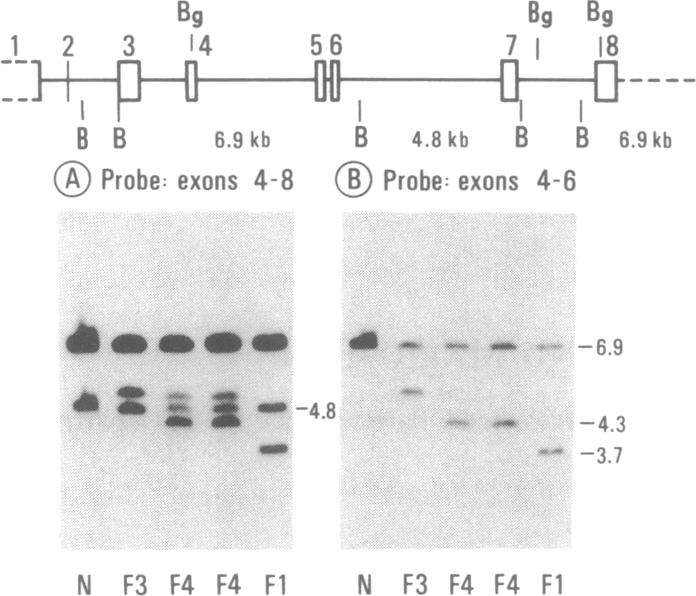
Frequent alterations in the structure of the complement component C1 inhibitor gene have been found in patients affected by the common variant of hereditary angioedema, characterized by low plasma levels of C1 inhibitor. This control protein limits the enzymic activity of the first component of complement and of other plasma serine proteases. Sequence comparisons of a 4.6-kilobase-long segment of the normal gene and the corresponding gene segments isolated from two patients carrying family-specific DNA deletions point to unusually long clusters of tandem repeats of the Alu sequence family as a source of genetic instability in this locus. Unequal crossovers, in a variety of registers, among Alu sequences of the clusters result in deletions of variable length that encompass exon 4. In a third family, exon 4 was instead found to be duplicated along with the same tracts of flanking introns lost in one of the deletions. In addition to undergoing Alu-mediated partial deletions and duplications, the gene is also a target for more recent retroposition events. Gross alterations in the C1 inhibitor gene account for about 20% of the hereditary angioedema chromosomes and consequently make this gene a prime example of the mutagenic liability of Alu repeats.
遗传性血管性水肿常见变异型患者中,补体成分C1抑制因子基因结构频繁改变,其特征为血浆C1抑制因子水平较低。这种调控蛋白可限制补体第一成分及其他血浆丝氨酸蛋白酶的酶活性。对正常基因4.6千碱基长片段与从两名携带家族特异性DNA缺失的患者中分离出的相应基因片段进行序列比较,发现Alu序列家族串联重复的异常长簇是该基因座遗传不稳定的根源。簇内Alu序列在各种排列方式下发生不等交换,导致包含外显子4的可变长度缺失。在第三个家族中,外显子4却与在一次缺失中丢失的相同侧翼内含子片段一起被复制。除了发生Alu介导的部分缺失和重复外,该基因还是近期逆转座事件的靶点。C1抑制因子基因的重大改变约占遗传性血管性水肿染色体的20%,因此该基因成为Alu重复序列致突变性的典型例子。