Cancer Control Research Program, BC Cancer Agency, Vancouver, Canada.
BMC Cancer. 2011 May 9;11:164. doi: 10.1186/1471-2407-11-164.
Gastric and esophageal cancers are among the most lethal human malignancies. Their epidemiology is geographically diverse. This study compares the survival of gastric and esophageal cancer patients among several ethnic groups including Chinese, South Asians, Iranians and Others in British Columbia (BC), Canada.
Data were obtained from the population-based BC Cancer Registry for patients diagnosed with invasive esophageal and gastric cancer between 1984 and 2006. The ethnicity of patients was estimated according to their names and categorized as Chinese, South Asian, Iranian or Other. Cox proportional hazards regression analysis was used to estimate the effect of ethnicity adjusted for patient sex and age, disease histology, tumor location, disease stage and treatment.
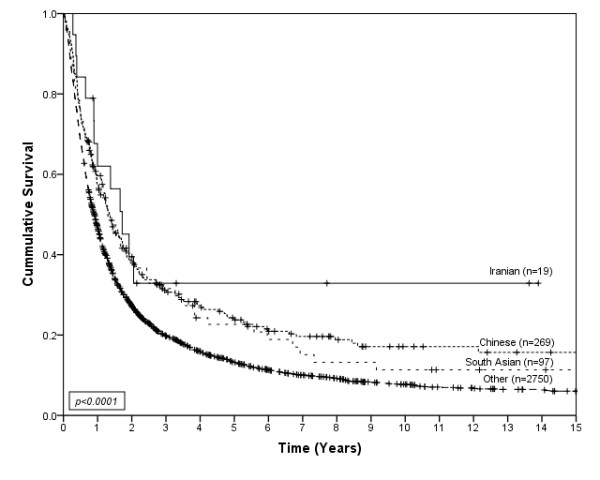
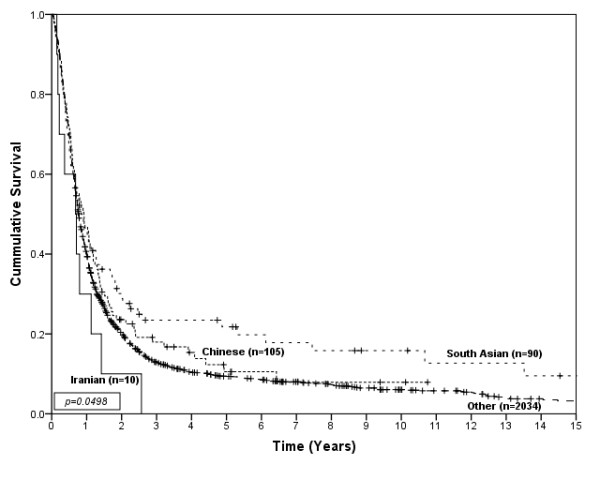
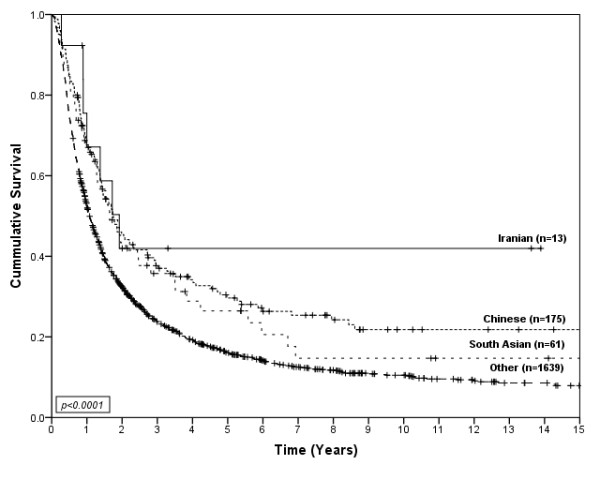
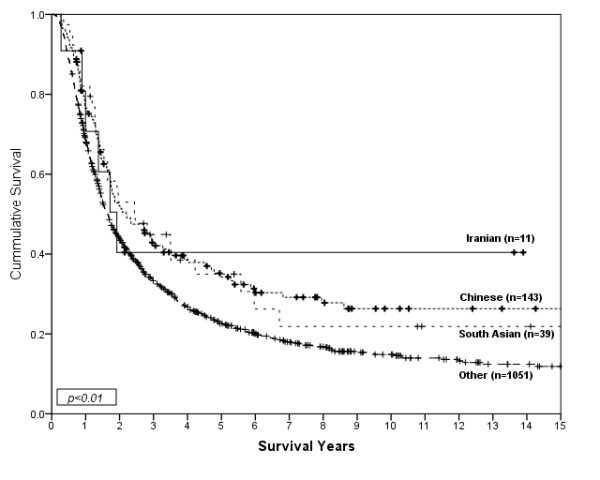
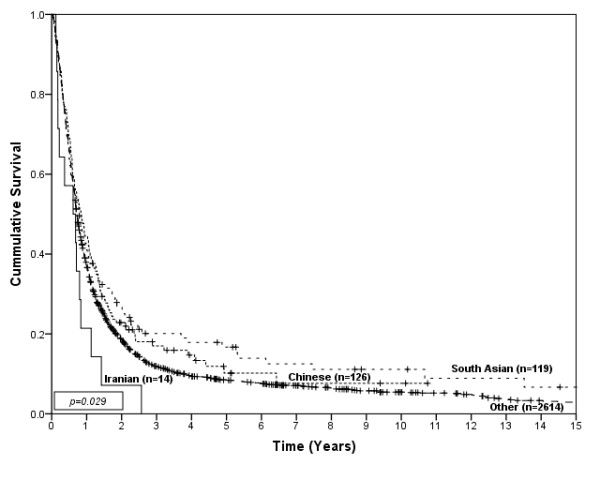
The survival of gastric cancer patients was significantly different among ethnic groups. Chinese patients showed better survival compared to others in univariate and multivariate analysis. The survival of esophageal cancer patients was significantly different among ethnic groups when the data was analyzed by a univariate test (p = 0.029), but not in the Cox multivariate model adjusted for other patient and prognostic factors.
Ethnicity may represent underlying genetic factors. Such factors could influence host-tumor interactions by altering the tumor's etiology and therefore its chance of spreading. Alternatively, genetic factors may determine response to treatments. Finally, ethnicity may represent non-genetic factors that affect survival. Differences in survival by ethnicity support the importance of ethnicity as a prognostic factor, and may provide clues for the future identification of genetic or lifestyle factors that underlie these observations.
胃癌和食管癌是人类最致命的恶性肿瘤之一。它们的流行病学具有明显的地域差异。本研究比较了包括华裔、南亚裔、伊朗裔和其他族裔在内的几种族裔群体在不列颠哥伦比亚省(BC)的胃癌和食管癌患者的生存情况。
数据来源于 1984 年至 2006 年间基于人群的 BC 癌症登记处,这些数据来自诊断为浸润性食管癌和胃癌的患者。根据患者的姓名,将其种族分为华裔、南亚裔、伊朗裔或其他族裔。采用 Cox 比例风险回归分析来估计在调整患者性别和年龄、疾病组织学、肿瘤位置、疾病分期和治疗等因素后,种族对生存的影响。
胃癌患者的生存情况在不同种族之间存在显著差异。在单因素和多因素分析中,与其他族裔相比,华裔患者的生存情况更好。在单因素测试中,食管癌患者的生存情况在不同种族之间存在显著差异(p = 0.029),但在 Cox 多因素模型中,调整了其他患者和预后因素后,这种差异并不显著。
种族可能代表潜在的遗传因素。这些因素可能通过改变肿瘤的病因学及其扩散的机会,从而影响宿主-肿瘤的相互作用。或者,遗传因素可能决定对治疗的反应。最后,种族可能代表影响生存的非遗传因素。不同种族之间的生存差异支持将种族作为预后因素的重要性,并可能为未来确定这些观察结果背后的遗传或生活方式因素提供线索。