MRC Epidemiology Unit, Institute of Metabolic Science and UKCRC Centre for Diet and Activity Research, Addenbrooke's Hospital, Cambridge, United Kingdom.
Am J Prev Med. 2011 Jun;40(6):645-58. doi: 10.1016/j.amepre.2011.02.025.
Data are available on correlates of physical activity in children and adolescents, less is known about the determinants of change. This review aims to systematically review the published evidence regarding determinants of change in physical activity in children and adolescents.
Prospective quantitative studies investigating change in physical activity in children and adolescents aged 4-18 years were identified from seven databases (to November 2010): PubMed, SCOPUS, PsycINFO, Ovid MEDLINE, SPORTDdiscus, Embase, and Web of Knowledge. Study inclusion, quality assessment, and data extraction were independently validated by two researchers. Semi-quantitative results were stratified by age (4-9 years, 10-13 years, and 14-18 years).
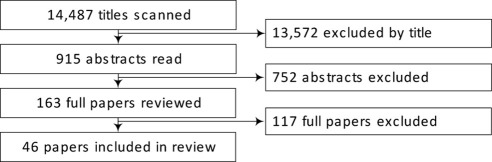
Of the 46 studies that were included, 31 used self-reported physical activity; average methodologic quality was 3.2 (SD=1.2), scored 0-5. Of 62 potential determinants identified, 30 were studied more than three times and 14 reported consistent findings (66% of the reported associations were in the same direction). For children aged 4-9 years, girls reported larger declines than boys. Among those aged 10-13 years, higher levels of previous physical activity and self-efficacy resulted in smaller declines. Among adolescents (aged 14-18 years), higher perceived behavioral control, support for physical activity, and self-efficacy were associated with smaller declines in physical activity.
Few of the variables studied were consistently associated with changes in physical activity, although some were similar to those identified in cross-sectional studies. The heterogeneity in study samples, exposure and outcome variables, and the reliance on self-reported physical activity limit conclusions and highlight the need for further research to inform development and targeting of interventions.
已有大量关于儿童和青少年身体活动相关因素的资料,但对于身体活动变化的决定因素知之甚少。本综述旨在系统地回顾已发表的关于儿童和青少年身体活动变化决定因素的证据。
从七个数据库(截至 2010 年 11 月)中确定了 7 项前瞻性定量研究,这些研究调查了 4-18 岁儿童和青少年身体活动的变化:PubMed、SCOPUS、PsycINFO、Ovid MEDLINE、SPORTDdiscus、Embase 和 Web of Knowledge。研究纳入、质量评估和数据提取由两名研究人员独立验证。半定量结果按年龄(4-9 岁、10-13 岁和 14-18 岁)分层。
在纳入的 46 项研究中,有 31 项使用了自我报告的身体活动;平均方法学质量为 3.2(SD=1.2),得分为 0-5 分。在确定的 62 个潜在决定因素中,有 30 个被研究了三次以上,有 14 个报告了一致的发现(报告的关联中有 66%的方向相同)。对于 4-9 岁的儿童,女孩的下降幅度大于男孩。对于 10-13 岁的儿童,较高的先前身体活动水平和自我效能感导致下降幅度较小。对于青少年(14-18 岁),较高的感知行为控制、对身体活动的支持和自我效能感与身体活动的下降幅度较小有关。
虽然一些变量与横断面研究中确定的变量相似,但在所研究的变量中,很少有变量与身体活动的变化始终相关。研究样本、暴露和结局变量的异质性,以及对自我报告身体活动的依赖,限制了结论的得出,并强调需要进一步研究,以为干预措施的制定和目标人群的确定提供信息。