Department of Pathology and Immunology, Washington University School of Medicine, St. Louis, Missouri, USA.
Nat Immunol. 2011 Jun;12(6):536-43. doi: 10.1038/ni.2037. Epub 2011 May 15.
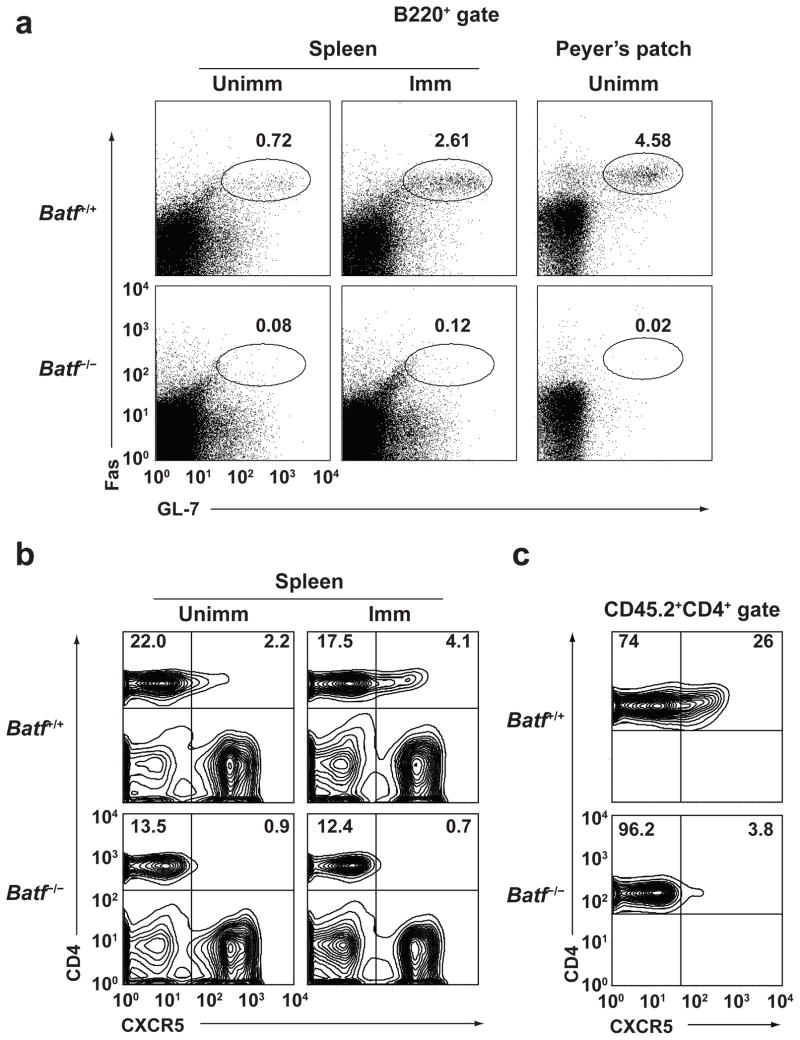
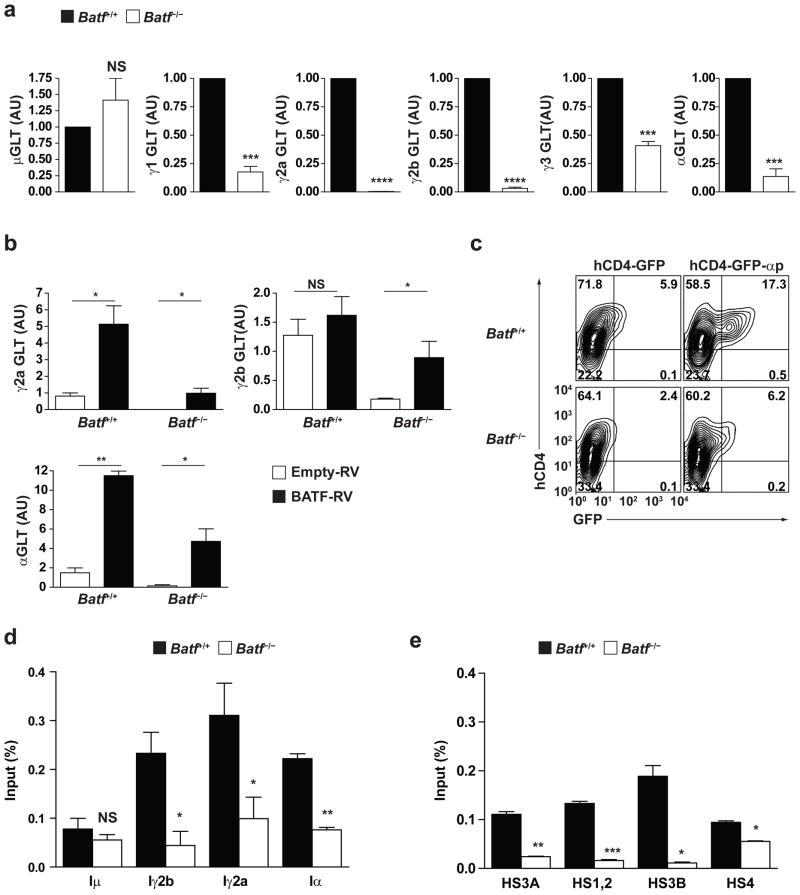
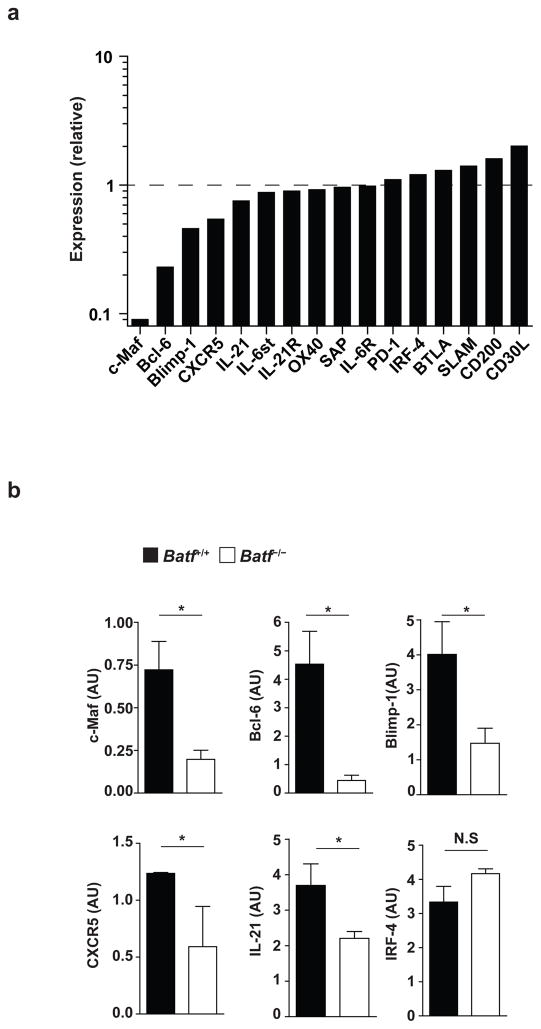
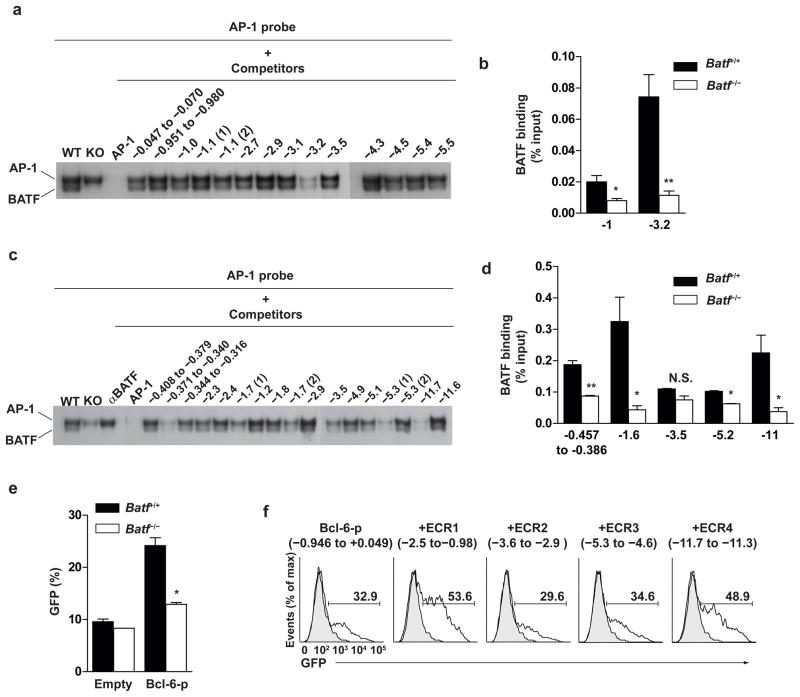
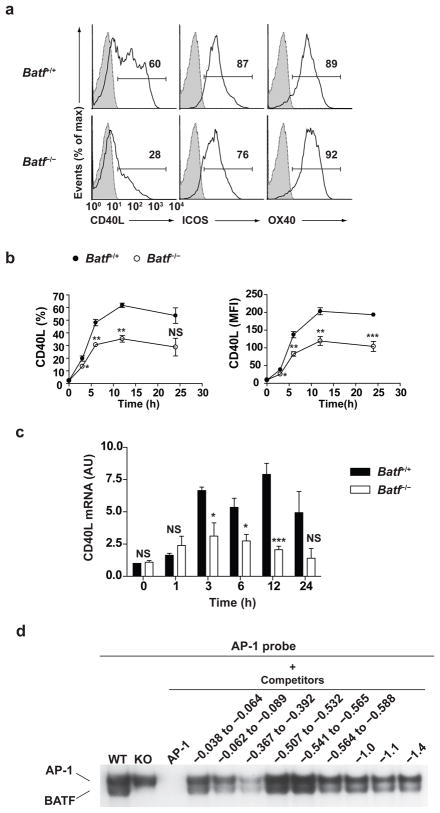
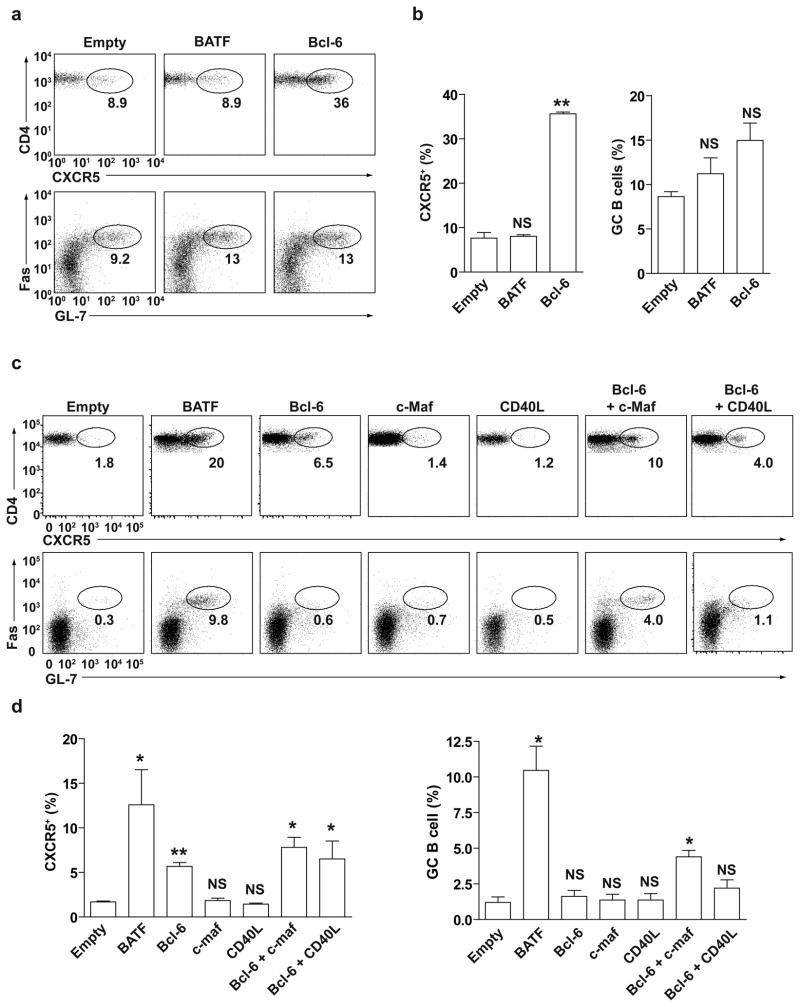
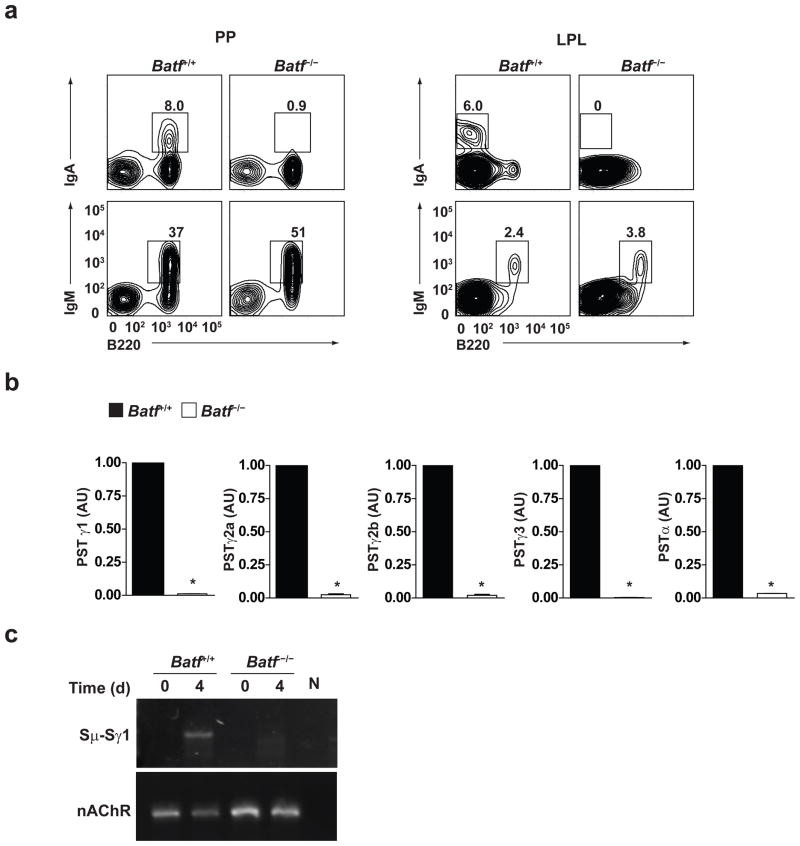
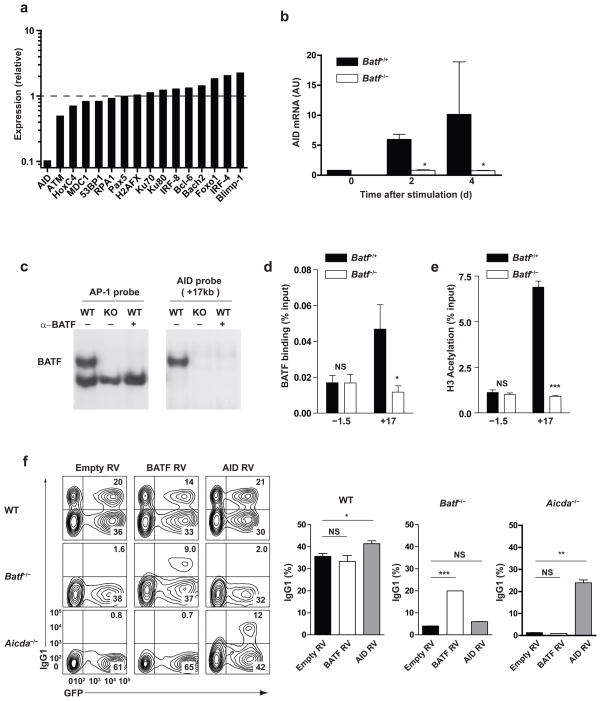
The transcription factor BATF controls the differentiation of interleukin 17 (IL-17)-producing helper T cells (T(H)17 cells) by regulating expression of the transcription factor RORγt itself and RORγt target genes such as Il17. Here we report the mechanism by which BATF controls in vivo class-switch recombination (CSR). In T cells, BATF directly controlled expression of the transcription factors Bcl-6 and c-Maf, both of which are needed for development of follicular helper T cells (T(FH) cells). Restoring T(FH) cell activity to Batf(-/-) T cells in vivo required coexpression of Bcl-6 and c-Maf. In B cells, BATF directly controlled the expression of both activation-induced cytidine deaminase (AID) and of germline transcripts of the intervening heavy-chain region and constant heavy-chain region (I(H)-C(H)). Thus, BATF functions at multiple hierarchical levels in two cell types to globally regulate switched antibody responses in vivo.
转录因子 BATF 通过调节自身转录因子 RORγt 和 RORγt 靶基因(如 Il17)的表达来控制白细胞介素 17(IL-17)产生的辅助性 T 细胞(T(H)17 细胞)的分化。在这里,我们报告了 BATF 控制体内类别转换重组(CSR)的机制。在 T 细胞中,BATF 直接控制转录因子 Bcl-6 和 c-Maf 的表达,这两者对于滤泡辅助性 T 细胞(T(FH)细胞)的发育都是必需的。在体内恢复 Batf(-/-)T 细胞的 T(FH)细胞活性需要共表达 Bcl-6 和 c-Maf。在 B 细胞中,BATF 直接控制激活诱导胞嘧啶脱氨酶(AID)和重链间隔区和恒定重链区(I(H)-C(H))的种系转录本的表达。因此,BATF 在两种细胞类型中多个层次上发挥作用,以全局调节体内的抗体转换反应。