
溶菌酶 C-1 的新作用:溶菌酶 C-1 可在疟原虫保护按蚊中发挥作用。
A new role for an old antimicrobial: lysozyme c-1 can function to protect malaria parasites in Anopheles mosquitoes.
机构信息
Department of Entomology, University of Wisconsin, Madison, Wisconsin, United States of America.
出版信息
PLoS One. 2011 May 6;6(5):e19649. doi: 10.1371/journal.pone.0019649.
BACKGROUND
Plasmodium requires an obligatory life stage in its mosquito host. The parasites encounter a number of insults while journeying through this host and have developed mechanisms to avoid host defenses. Lysozymes are a family of important antimicrobial immune effectors produced by mosquitoes in response to microbial challenge.
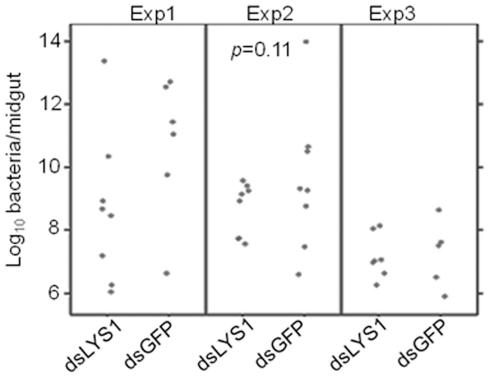
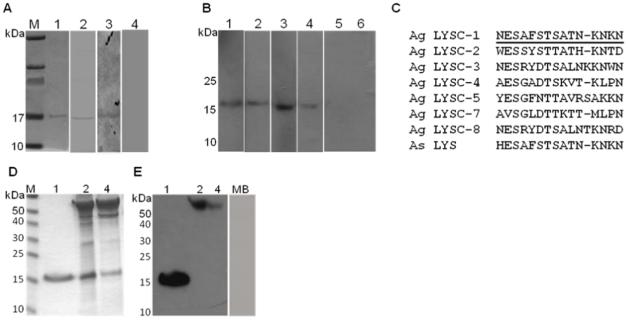
METHODOLOGY/PRINCIPAL FINDINGS: A mosquito lysozyme was identified as a protective agonist for Plasmodium. Immunohistochemical analyses demonstrated that Anopheles gambiae lysozyme c-1 binds to oocysts of Plasmodium berghei and Plasmodium falciparum at 2 and 5 days after infection. Similar results were observed with Anopheles stephensi and P. falciparum, suggesting wide occurrence of this phenomenon across parasite and vector species. Lysozyme c-1 did not bind to cultured ookinetes nor did recombinant lysozyme c-1 affect ookinete viability. dsRNA-mediated silencing of LYSC-1 in Anopheles gambiae significantly reduced the intensity and the prevalence of Plasmodium berghei infection. We conclude that this host antibacterial protein directly interacts with and facilitates development of Plasmodium oocysts within the mosquito.
CONCLUSIONS/SIGNIFICANCE: This work identifies mosquito lysozyme c-1 as a positive mediator of Plasmodium development as its reduction reduces parasite load in the mosquito host. These findings improve our understanding of parasite development and provide a novel target to interrupt parasite transmission to human hosts.
背景
疟原虫在其蚊宿主中需要一个必需的生活阶段。寄生虫在穿越宿主的过程中会遇到许多攻击,因此已经开发出了一些机制来避免宿主防御。溶菌酶是一类重要的抗菌免疫效应物,蚊子在受到微生物挑战时会产生这种物质。
方法/主要发现:鉴定出一种蚊子溶菌酶作为疟原虫的保护性激动剂。免疫组织化学分析表明,疟原虫感染后 2 天和 5 天,冈比亚按蚊溶菌酶 c-1 与疟原虫伯氏疟原虫和疟原虫 falciparum 的卵囊结合。在冈比亚按蚊和疟原虫 falciparum 中也观察到了类似的结果,这表明这种现象在寄生虫和载体物种中广泛存在。溶菌酶 c-1 不与培养的配子结合,重组溶菌酶 c-1 也不影响配子的活力。在冈比亚按蚊中用 dsRNA 介导的 LYSC-1 沉默显著降低了伯氏疟原虫感染的强度和流行率。我们得出的结论是,这种宿主抗菌蛋白直接与疟原虫卵囊相互作用,并促进其在蚊子中的发育。
结论/意义:这项工作鉴定出蚊子溶菌酶 c-1 是疟原虫发育的正向调节剂,因为其减少会降低蚊子宿主中的寄生虫负荷。这些发现提高了我们对寄生虫发育的认识,并为阻断寄生虫向人类宿主传播提供了一个新的靶标。


 Zotero 插件